Gurugram Arrests Deepen Row Over Forensic Report on Bhagwant Mann Video
Gurugram police have arrested two men accused of fabricating a forensic report tied to a viral video involving Punjab CM Bhagwant Mann, sharpening a debate over digital evidence and forensic integrity.
Commentary & Analysis ·
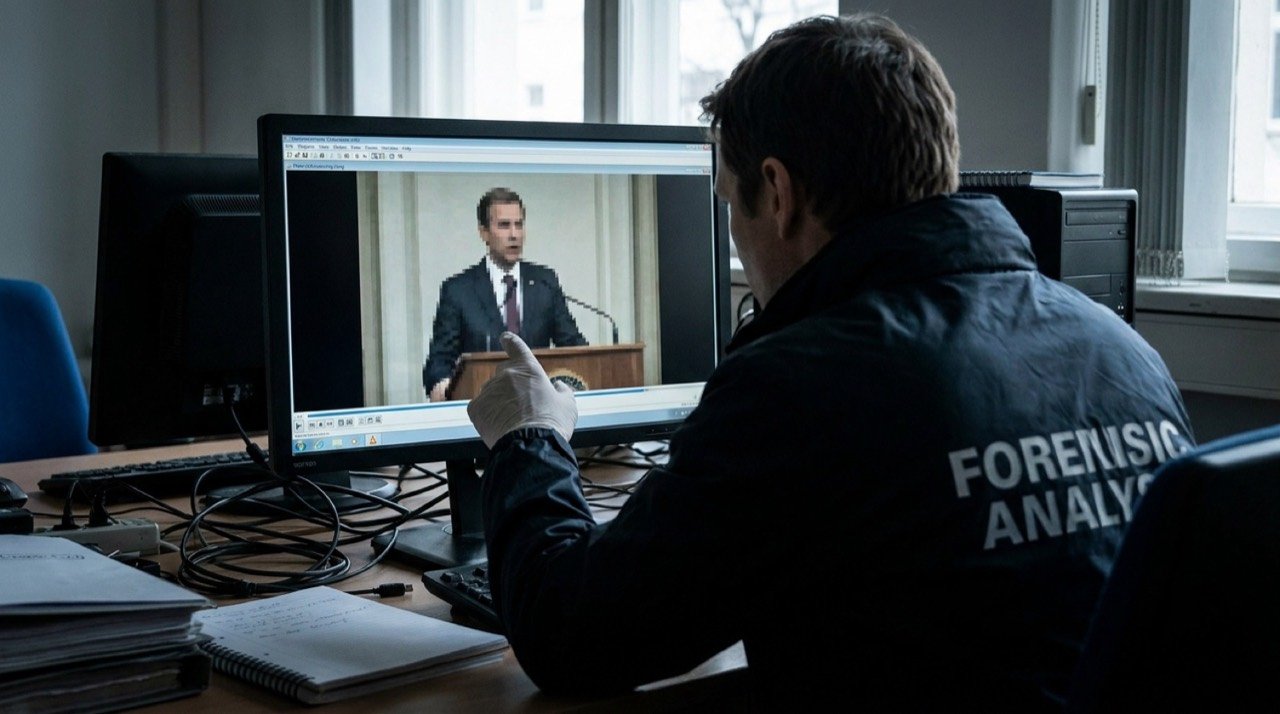
A political controversy over a viral video has taken a sharp legal turn, with Gurugram police arresting two men accused of attempting to fabricate a forensic report linked to footage involving Punjab Chief Minister Bhagwant Mann. The arrests have moved the dispute beyond partisan sparring into a wider question about the reliability of digital evidence in public life. What began as a familiar cycle of claim and counter-claim over a contested clip has now acquired the weight of a criminal investigation, one that touches not merely on the truth of a single video but on the trustworthiness of the process meant to establish that truth.
The arrests and the complaint
According to police accounts cited by news outlets, a complaint triggered the registration of an FIR and the subsequent arrests in Gurugram. Investigators allege that an effort was made to manufacture a forensic finding rather than produce a genuine, independent assessment of the video in question. This distinction matters enormously. A forensic report is not simply another opinion to be weighed against others in the court of public sentiment; it carries the presumption of scientific neutrality, and it is often relied upon by courts, election authorities and the media precisely because it is supposed to sit outside the political fray. If the allegation is proven, what was manufactured was not just a document but a claim to objectivity that others were expected to trust.
Mann has maintained that the video circulating in his name was manipulated. The allegations against the two arrested men remain subject to investigation, and the courts will ultimately test whether a report was indeed fabricated and to what end. It is worth being precise about what is established and what is not: an FIR has been registered, arrests have been made, and a complaint set the process in motion. The motive behind the alleged fabrication, the identity of any beneficiaries, and the eventual judicial finding on authenticity are all still open questions that only a fuller investigation and, in time, a trial can settle.
Why forensic integrity matters
Forensic analysis is meant to be the neutral arbiter when the authenticity of a recording is disputed. When the integrity of that analysis is itself called into question, it undermines confidence in the very tool designed to settle such conflicts, leaving public opinion to swing on unverified claims. This is a peculiarly corrosive kind of damage, because it does not merely cast doubt on one video or one report. It raises the possibility, in the minds of an already sceptical public, that any forensic report on any contested clip could in principle be gamed. Once that suspicion takes hold, even a rigorously produced report can be dismissed by partisans as compromised, simply because the idea of compromise has been shown to be plausible.
With deepfakes and editing tools now widely accessible, the gap between a real recording and a doctored one can be invisible to the naked eye. That places enormous weight on credible, tamper-proof forensic processes and on the chain of custody that protects evidence from interference. In an era when a video can be altered convincingly with consumer-grade software, the public has effectively no independent means of judging authenticity for themselves. They must rely on institutions, laboratories and processes designed for the purpose. An alleged attempt to corrupt that process, whatever its outcome in this specific case, is a reminder of how fragile that reliance is, and how much damage a single bad actor can inflict on public confidence in the system as a whole.
A political flashpoint with national resonance
The episode underlines how quickly digital material can become politically explosive when its authenticity is contested. A single clip, amplified across social platforms, can dominate a news cycle long before any verified assessment is available, shaping perceptions that are hard to reverse. By the time a forensic report, genuine or otherwise, finally emerges, the video may already have done its political work, having been shared, debated and absorbed into partisan narratives that are resistant to correction even when the underlying facts are later clarified.
Two men were arrested in Gurugram over an alleged fabricated forensic report. An FIR followed a complaint, and the case remains under investigation. CM Bhagwant Mann has said the video was manipulated. The dispute highlights vulnerabilities in handling digital evidence, and it illustrates a pattern that is likely to recur: authenticity rows can escalate into national political controversies far beyond the state or individual initially involved. A video concerning a sitting chief minister inevitably draws attention well beyond Punjab and Haryana, feeding into wider debates about the use and abuse of digital media in Indian politics.
What this means for institutions and safeguards
As the investigation proceeds, the case is likely to feed a larger national conversation about how India authenticates digital content in politics, courts and journalism. Police forces, forensic laboratories and courts are all being asked, in effect, to keep pace with a technology curve that moves faster than the institutional safeguards built to govern it. Building trust in forensic institutions and tightening safeguards against manipulation may prove as consequential as the outcome of this particular FIR. That could mean stronger chain-of-custody protocols for digital evidence, greater transparency about which laboratories or experts produce forensic findings in politically sensitive cases, and clearer standards for what counts as an admissible, verifiable report.
For political parties and public figures, the case also carries a practical lesson. Claims of manipulation, however sincerely made, will increasingly need to be backed by processes that can withstand scrutiny themselves. It is not enough for a forensic report to exist; the report must be produced by a process that is itself demonstrably resistant to interference, or the exercise of authentication becomes self-defeating.
The NE Times View
A fabricated forensic report weaponised in a political row is a serious assault on the one thing that should be above partisanship: the integrity of evidence. This case is bigger than Bhagwant Mann. As deepfakes proliferate, courts and police need certified, tamper-evident forensic chains, because once fake reports gain currency, even genuine evidence becomes deniable. The real risk here is not confined to any single politician or party; it is the slow erosion of a shared factual baseline that any functioning democracy depends upon. If forensic findings can be bought, forged or doubted with equal ease, then every future dispute over a video, a document or a recording becomes harder to resolve, and public trust drains away not because the truth is unknowable, but because the mechanisms for establishing it have been made suspect. That is a cost no single case can fully capture, and it is why this investigation deserves attention well beyond the immediate political contest it began within.
Key takeaways
- Gurugram police have arrested two men over an alleged attempt to fabricate a forensic report tied to a video involving Punjab CM Bhagwant Mann, following a complaint and FIR.
- Mann has said the video circulating in his name was manipulated; the courts will ultimately determine whether the forensic report itself was fabricated and why.
- The case exposes how dependent public trust has become on forensic institutions as deepfakes and editing tools make authenticity harder to judge by eye.
- A single contested clip can shape political narratives long before any verified forensic assessment is available, making early amplification as consequential as eventual findings.
- The episode is likely to intensify calls for certified, tamper-evident forensic chains and stronger safeguards, since the credibility of the process now matters as much as the credibility of any one video.
You may also like to read
Gurgaon Arrests Reopen Scrutiny of Bhagwant Mann Video Forensic Row
Two arrests in Gurgaon over an allegedly manipulated video of Punjab CM Bhagwant Mann have pushed a state political dispute into a wider reckoning over digital evidence and forensic independence.
Kejriwal's Punjab Visit Comes as Akal Takht Summons Looms Over Mann Government
AAP convenor Arvind Kejriwal toured Punjab to rally workers just days before the Akal Takht's June 29 summons of Chief Minister Bhagwant Mann's cabinet over a contentious Sikh affairs law.
Nitin Nabin's Punjab Outreach Signals BJP's Early 2027 Election Push
BJP national president Nitin Nabin's Punjab visit sharpened the party's positioning for the 2027 Assembly polls, with sharp attacks on CM Bhagwant Mann and plans to contest all 117 seats.
Punjab Moves to Cap Private School Fee Hikes at Five Percent
The Punjab Cabinet has cleared an ordinance limiting annual private school fee increases to five percent and mandating refunds of excess collections, in a bid to bring predictability for parents.
More from this section
More
K Kavitha Party Denied TRS Name by Election Commission
The Election Commission has refused to register K Kavitha's Telangana Rakshana Sena under the TRS acronym after objections, forcing a branding reset for the new party at a politically sensitive moment in Telangana.
Lalu Prasad Yadav Security Downgrade, Bungalow Order Stir Bihar
A government order downgrading Lalu Prasad Yadav's security cover and asking him to vacate an official bungalow has opened a fresh political flashpoint in Bihar, with the RJD chief's reaction fuelling the row.
Manipur CM's Churachandpur Visit: First Since 2023 Unrest
The Manipur Chief Minister travelled to Churachandpur for a BJP MLA's funeral, his first visit to the district since the 2023 violence, lending the sombre occasion an unmistakable political significance.