Gujarat Court Convicts AAP MLA Chaitar Vasava in Extortion Case
A Gujarat court has convicted Aam Aadmi Party MLA Chaitar Vasava in an extortion-related case, a verdict with significant stakes for tribal politics in south Gujarat and the AAP's regional standing.
Commentary & Analysis ·

A Gujarat court has convicted Aam Aadmi Party (AAP) MLA Chaitar Vasava in an extortion-related case, a ruling that lands at the intersection of legal accountability and the politics of tribal representation in south Gujarat. Vasava is among the AAP's most recognisable faces in the state, and that visibility gives the verdict an immediate political charge well beyond the confines of the courtroom in which it was delivered.
According to reports, the matter stemmed from allegations involving pressure exerted on forest officials. Cases of this kind, where an elected representative is accused of using the weight of office to lean on officials in the course of their duties, tend to draw scrutiny not only for the specific facts at issue but for what they suggest about the conduct expected of public representatives more broadly. The court's finding now sets in motion a sequence of questions around sentencing, appeal and any consequences under election law, each of which could shape Vasava's near-term political future in ways that go beyond this single case.
How the case arose and what conviction actually means here
It is worth being precise about what has and has not happened. A conviction has been recorded, but the practical consequences for Vasava's political career will depend heavily on details that are not yet settled: the quantum of sentence, whether it triggers statutory disqualification thresholds under election law, and whether an appellate court stays or overturns the finding. Indian jurisprudence draws an important distinction between conviction and the exhaustion of appeal, and until that process runs its course, the matter remains legally live even as it becomes politically potent. Because the precise sentence and the route of appeal will determine the practical fallout, the conviction is best read as the beginning of a longer legal process rather than its conclusion.
This distinction matters for how the public and commentators ought to weigh the news. A headline conviction can create an impression of finality that the legal process itself does not yet support. Higher courts routinely revisit trial court findings, and sentences can be modified, suspended pending appeal, or in some instances set aside altogether. None of this diminishes the seriousness of a conviction on extortion-related charges, but it does mean that the full weight of consequence, legal and political, will only become clear over the coming months.
Why it matters for Gujarat politics
Vasava is a prominent tribal leader, and his standing extends well beyond his own constituency into the AAP's broader effort to build a durable base among Adivasi voters in the region. South Gujarat's tribal belt has historically been contested terrain between the Congress, the BJP and more recently the AAP, each seeking to position itself as the credible voice for Adivasi concerns around land, forest rights and local development. A conviction touches that project directly, even as the party retains avenues to contest the outcome in higher courts.
The AAP's presence in Gujarat has been built substantially on the strength of individual leaders like Vasava who carry credibility with specific communities. When a leader of that stature faces a conviction, the effect is rarely confined to his own seat; it becomes a data point that rivals can use to question the party's broader claims about the quality and integrity of its representatives. Rivals are likely to seize on the verdict to challenge the AAP's claims on clean governance, while the party can be expected to frame the case in political terms and stress the presumption of innocence pending appeal. Both responses are predictable, and neither should be taken as a substitute for the legal record itself.
The politics of selective targeting and the burden it places on due process
Cases against opposition politicians in India routinely invite claims of selective or politically motivated prosecution, and this one will be no exception. Such claims are not always without merit, but they are also not a defence against an adverse court finding. The proper response, and the one this newspaper would encourage among readers and political actors alike, is to separate the question of political motive in the initiation of a case from the question of whether the evidence produced in court actually supports the charge. Courts, not press conferences, are the venue where that latter question gets settled, and it is the appellate process that will now carry the burden of testing whether the trial court's findings hold up.
At the same time, it would be naive to pretend that the political context is irrelevant. Extortion allegations against a sitting MLA from a party actively trying to expand in a state where it has struggled to gain ground carry an obvious utility for opponents, regardless of the underlying facts. Readers should hold both truths simultaneously: the possibility of legitimate wrongdoing, and the near-certainty that the verdict will be deployed as a political weapon irrespective of its ultimate legal fate.
What to watch next
The coming phase will turn on the formal order, the quantum of sentence and whether disqualification provisions come into play, alongside how quickly an appeal is filed. Several specific threads deserve close attention in the days and weeks ahead.
The sentence handed down and its severity will be the first marker, since Indian election law ties disqualification consequences to specific thresholds of punishment rather than to conviction alone. Whether disqualification provisions actually apply will depend on that sentencing outcome, and it is this technical detail, more than the conviction itself, that will determine whether Vasava faces any immediate impediment to continuing in his current role. The timing and grounds of an expected appeal will also matter, since an early and vigorously argued appeal signals confidence in overturning the finding, while delay can be read differently by observers. Beyond the legal mechanics, AAP's public response and political messaging will shape how the episode is absorbed by the party's base, and reaction across south Gujarat's tribal belt will be the real test of whether this verdict dents the party's standing where it has invested the most political capital.
The wider implication for parties courting tribal constituencies
Beyond the specifics of this case, the episode is a reminder of a structural vulnerability facing any party that builds its regional strategy around a small number of high-profile individual leaders rather than broader institutional depth. When representation in a community is concentrated in one or two recognisable figures, legal or political setbacks to those individuals carry outsized consequences for the party's standing as a whole. This is a dynamic that extends well beyond the AAP and Gujarat, but it is thrown into sharp relief here given how closely Vasava's personal credibility has been tied to the party's tribal outreach in the state.
For voters in the affected constituencies, the more durable question is likely to be less about this individual case and more about whether the party can continue to deliver credible representation on the issues, forest rights, land access, and local development, that underpin its appeal in the first place, regardless of how this particular legal matter resolves.
The NE Times View
A conviction carries weight, but it lands in politically charged terrain where every verdict invites accusations of selective targeting. Vasava's standing in south Gujarat's tribal belt makes this a setback for AAP's fragile regional footprint, one that arrives regardless of how the appeal eventually concludes, simply by virtue of the uncertainty it now introduces. The NE Times View: the appeal process will matter as much as the verdict; voters should judge the evidence, not the party label, and watch whether the case survives higher scrutiny intact. Until that scrutiny concludes, both overstating and dismissing the significance of this conviction would be premature.
Key takeaways
- A Gujarat court has convicted AAP MLA Chaitar Vasava in an extortion-related case involving alleged pressure on forest officials, but sentencing and appeal will determine the real consequences.
- Whether election-law disqualification provisions apply depends on the quantum of sentence, not on the conviction alone, making the formal order the key document to watch next.
- Vasava's prominence in south Gujarat's tribal belt means the verdict carries political weight for AAP's Adivasi outreach well beyond his own constituency.
- Expect rivals to invoke the conviction against AAP's governance claims and AAP to stress the presumption of innocence pending appeal; neither response settles the underlying legal question.
- The appeal's timing, grounds and outcome will matter as much as the original verdict in determining Vasava's and AAP's political trajectory in the region.
You may also like to read
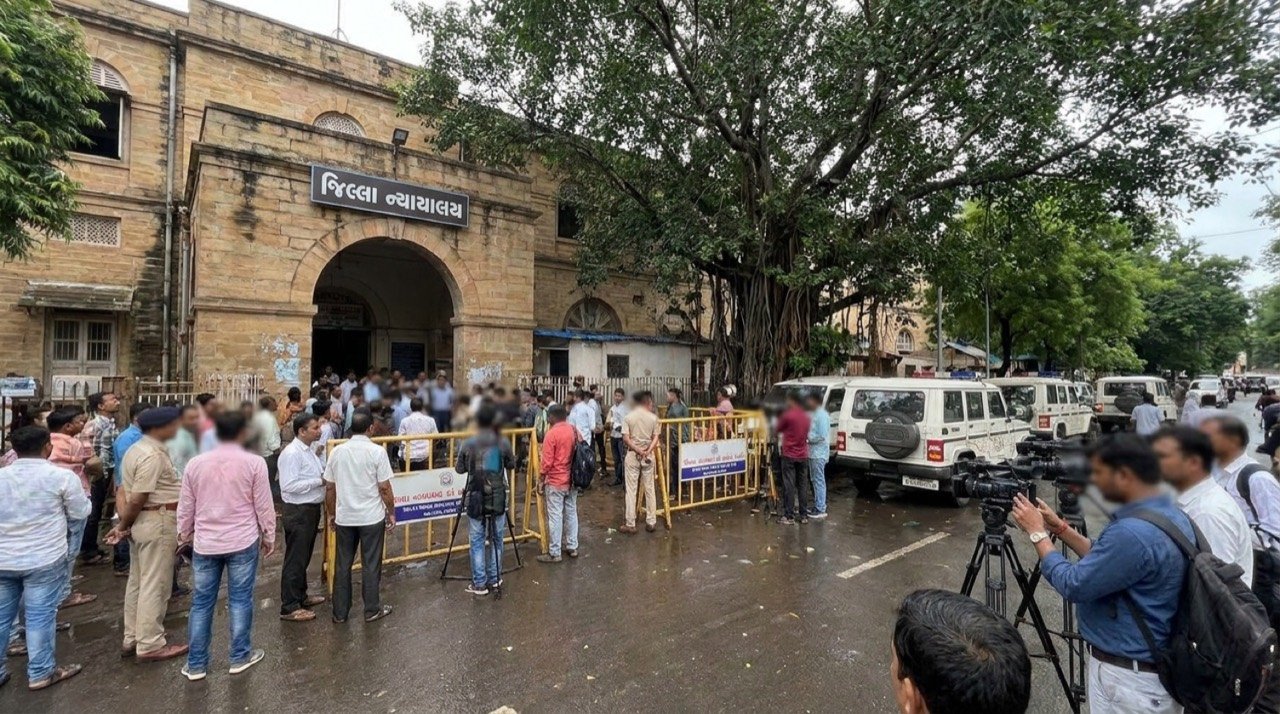
Gujarat Court Sentences AAP MLA Chaitar Vasava to Seven Years in Forest Officials Case
A Narmada district court has sentenced AAP MLA Chaitar Vasava and eight others to seven years in prison in a 2023 case involving forest officials, with implications for tribal-belt politics.
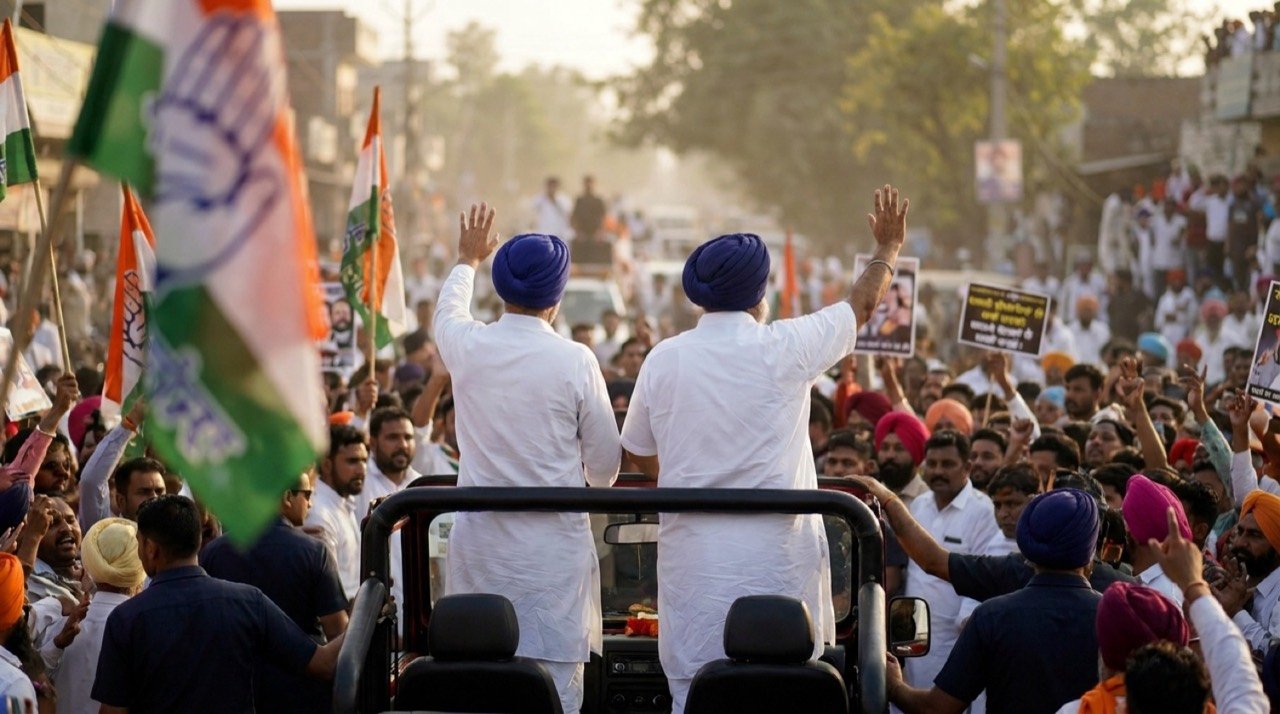
Kejriwal's Punjab Visit Comes as Akal Takht Summons Looms Over Mann Government
AAP convenor Arvind Kejriwal toured Punjab to rally workers just days before the Akal Takht's June 29 summons of Chief Minister Bhagwant Mann's cabinet over a contentious Sikh affairs law.

Supriya Sule Signals Conditional NCP (SP) Support for Delimitation Bill While Rejecting Alliance Speculation
Supriya Sule says NCP (SP) may support the Centre's delimitation proposal if Lok Sabha seats rise by 50% across all states, while denying an imminent NDA switch.
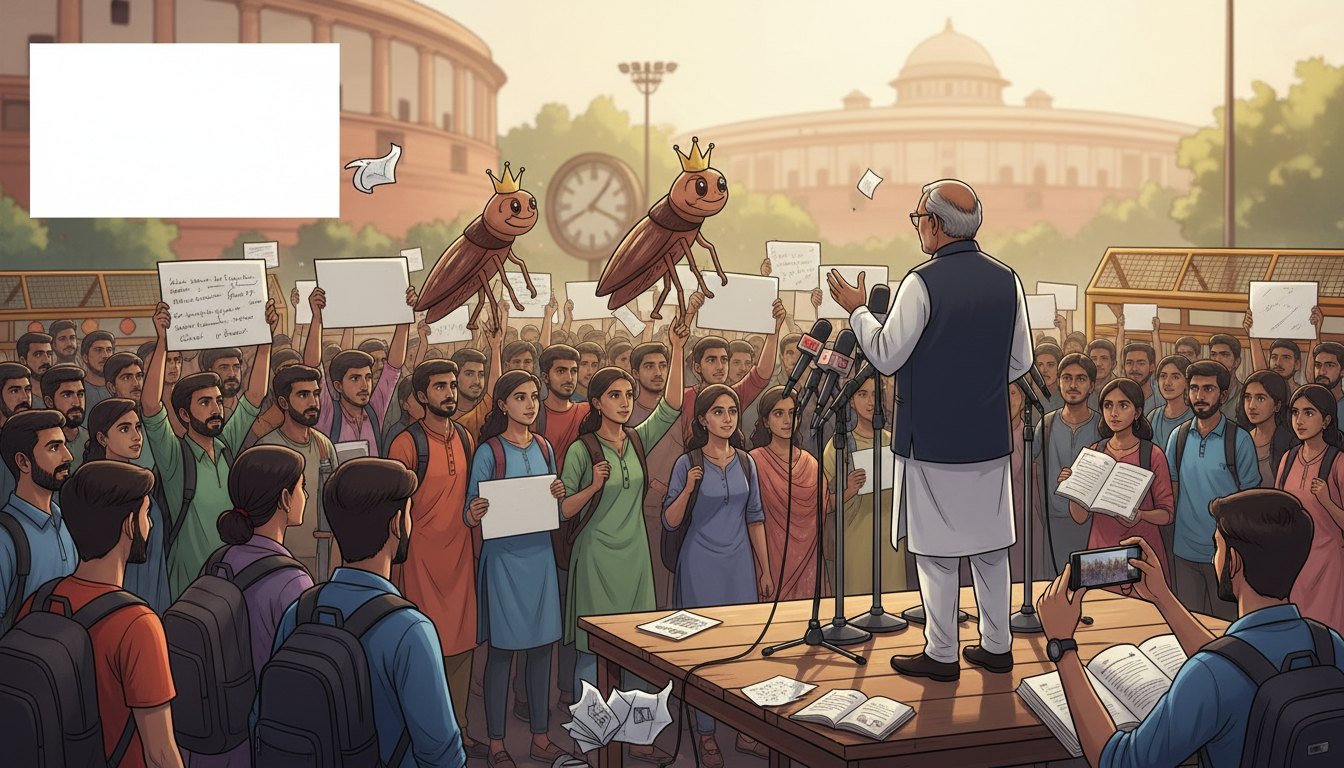
Uddhav Thackeray Backs Cockroach Janta Party Protest as Youth Movement Plans 20 July Parliament March
A satirical online formation has grown into a wider campaign over examination accountability, drawing support from established political leaders while testing whether digital anger can sustain organised action.
More from this section
More
K Kavitha Party Denied TRS Name by Election Commission
The Election Commission has refused to register K Kavitha's Telangana Rakshana Sena under the TRS acronym after objections, forcing a branding reset for the new party at a politically sensitive moment in Telangana.
Lalu Prasad Yadav Security Downgrade, Bungalow Order Stir Bihar
A government order downgrading Lalu Prasad Yadav's security cover and asking him to vacate an official bungalow has opened a fresh political flashpoint in Bihar, with the RJD chief's reaction fuelling the row.
Manipur CM's Churachandpur Visit: First Since 2023 Unrest
The Manipur Chief Minister travelled to Churachandpur for a BJP MLA's funeral, his first visit to the district since the 2023 violence, lending the sombre occasion an unmistakable political significance.