Chandrachur Singh Confronts Officials Over Demolished Home Ramp
Actor Chandrachur Singh has publicly questioned municipal officials after a ramp outside his home was demolished, turning a routine civic action into a wider conversation about urban governance and resident rights.
Commentary & Analysis ·
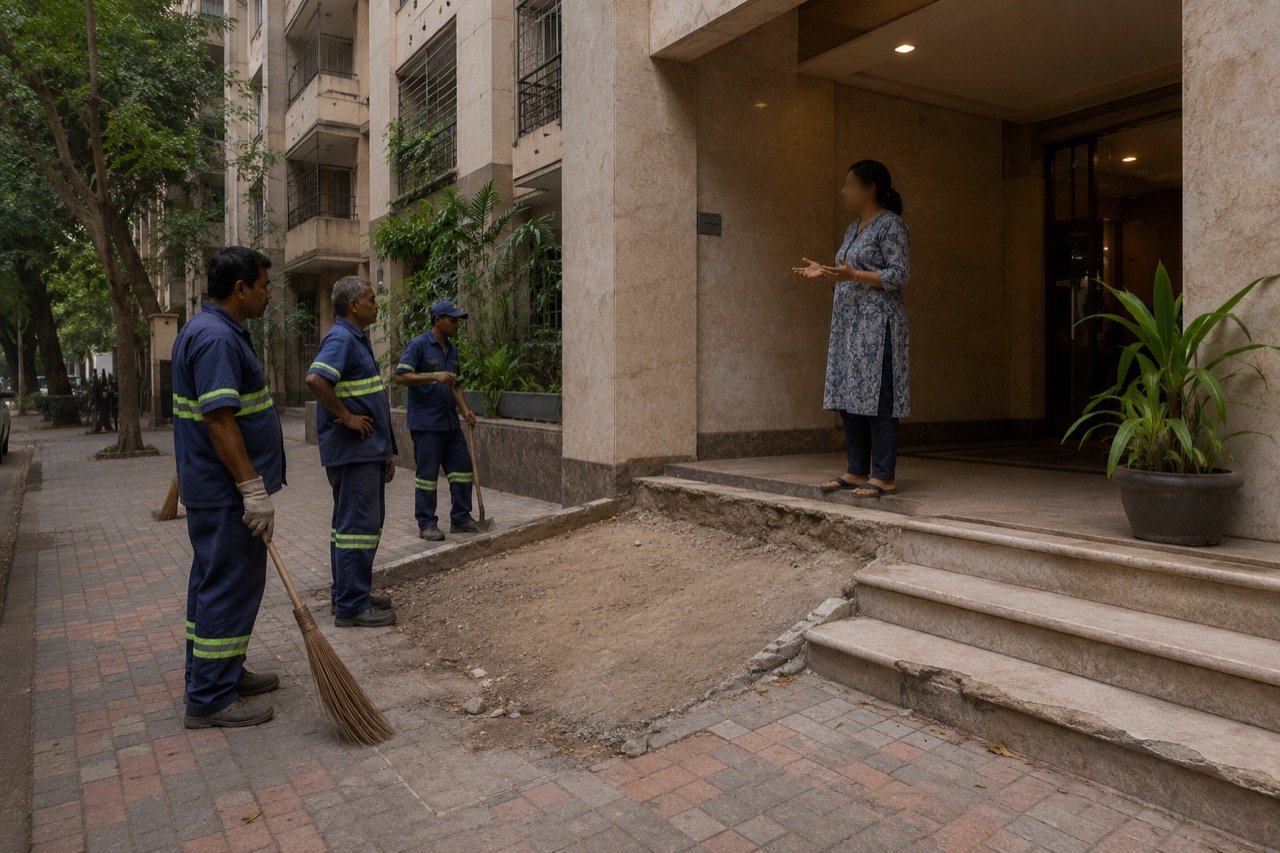
Actor Chandrachur Singh found himself in the July 5 news cycle for reasons far removed from cinema. According to Indian Express, the actor publicly questioned officials after a ramp outside his home was demolished, with his exchange drawing attention online. The episode sits at an unusual intersection: a film personality is at its centre, but the substance is municipal action, property rules and how civic bodies communicate with residents. On the surface, it is a small story about a strip of concrete. Underneath, it touches on questions that recur in almost every Indian city, about who has the authority to alter the built environment around a private home, what notice residents are owed, and how disputes of this kind are supposed to be resolved once cameras and social media enter the frame.
What is known so far
The core facts are limited but clear. A ramp outside the actor's residence was removed in a civic action, and Singh responded by questioning the officials involved about the basis for the demolition. Without official documentation in the public domain, competing claims about permissions and encroachment cannot yet be settled, and the incident is best described as a dispute awaiting clarification. This is an important caveat. In the absence of a written order, a survey report or a formal notice being made public, both the resident's objection and the civic body's presumed justification remain assertions rather than established fact. That is not unusual in the early hours of a story like this, but it does mean that any commentary, including this one, should resist the temptation to assign blame before the paper trail catches up with the headlines.
Why a ramp becomes a story
Demolition and anti-encroachment drives routinely affect ordinary residents, shopkeepers and housing societies across Indian cities, usually without cameras present. When a recognisable public figure raises the same questions on video, the everyday friction of urban governance suddenly gets an audience. Ramps, access points and building edges may look like minor infrastructure, but they shape daily life for residents and are precisely where citizens and regulators most often collide. A ramp is rarely just a ramp. It can be a mobility aid for elderly or disabled members of a household, a practical solution to a level difference between a plot and the road, or, in the eyes of a municipal surveyor, an unauthorised extension onto public land. The same structure can be read in entirely different ways depending on where one stands, and that is exactly why such disputes tend to be intractable until someone produces a document that settles the question of permission.
The wider pattern of urban enforcement
What makes this episode notable is not the demolition itself but the visibility it has been given. Civic enforcement actions of this kind happen with some regularity in Indian towns and cities, often as part of drives against encroachment on pavements, roads or public land. In most cases, the residents affected have neither the platform nor the inclination to publicise their grievance, and the matter is settled, or left unsettled, quietly between the household and the local authority. A film actor questioning officials on camera changes the dynamics of that interaction. It does not change the underlying legal or administrative facts, but it does change who is watching, and that in turn can change how quickly, and how transparently, an explanation is offered. This is worth dwelling on because it illustrates a structural feature of how accountability often works in practice, not through routine disclosure, but through moments of friction that happen to attract attention.
Stakeholder perspectives
From the resident's side, the natural expectation is that any structure attached to one's home, especially one with a practical or accessibility purpose, would not be removed without prior notice and an opportunity to respond or produce documentation. From the civic body's side, officials engaged in encroachment enforcement typically operate under the presumption that structures extending onto public right-of-way, regardless of who built them or why, fall within their remit to remove, particularly if such structures were never sanctioned in the first place. Both positions are reasonable in the abstract. The dispute here is not over principle but over the specific facts: was the ramp within the property's legal boundary, had any notice been served, and was due process followed. None of that has been publicly established, which is precisely why Singh's public questioning, however pointed, functions more as a demand for disclosure than as a verdict on wrongdoing by either party.
What resolution would look like
The next meaningful development would be an official clarification from the civic body, or a documented resolution between the actor and the authorities, either of which would move the story from viral moment to settled record. A clarification could take the form of a public statement citing the specific provision or survey under which the ramp was deemed unauthorised, along with confirmation of whatever notice process, if any, preceded the demolition. Alternatively, the two sides could reach a private resolution, whether that means reconstruction of the ramp within permitted limits, an acknowledgment of procedural lapse, or an agreement that the original structure indeed exceeded what was allowed. Until one of those things happens, the story will likely remain in the realm of competing narratives rather than verified fact, kept alive mainly by the attention a public figure brings to it.
The NE Times View
The instinct to read this as celebrity outrage misses the more useful point. Chandrachur Singh's questions are the same ones thousands of residents ask after civic actions every year: what was removed, under what authority, and with what notice. Celebrity attention is a blunt instrument, but it does force transparency conversations that anonymous complaints rarely achieve. The fair outcome here is not a winner but a paper trail, civic bodies that document and explain their actions leave far less room for disputes like this to fester. If a film star's gate is what it takes to have that conversation, Indian cities should take the opening. There is also a broader lesson for civic administration here: the cost of proactive documentation, a notice served, a survey recorded, a reason communicated, is far lower than the cost of having to explain, after the fact and under public scrutiny, why an action was taken. Whether the ramp in question was legitimate or not, the episode is a reminder that process, not personality, is what ultimately protects both residents and regulators from disputes escalating into spectacle.
Key takeaways
- A ramp outside actor Chandrachur Singh's home was demolished in a civic action, and he publicly questioned officials about it, per Indian Express reporting from July 5.
- The underlying facts, whether the ramp was authorised, whether notice was given, remain unverified in the absence of public documentation from the civic body.
- The episode reflects a routine tension in Indian urban governance between anti-encroachment enforcement and residents' expectations of due process.
- Celebrity visibility has amplified a type of dispute that ordinarily affects residents without drawing scrutiny or explanation.
- Resolution will depend on an official clarification or a documented settlement between the actor and the authorities, which would move the matter from viral moment to verified record.
You may also like to read
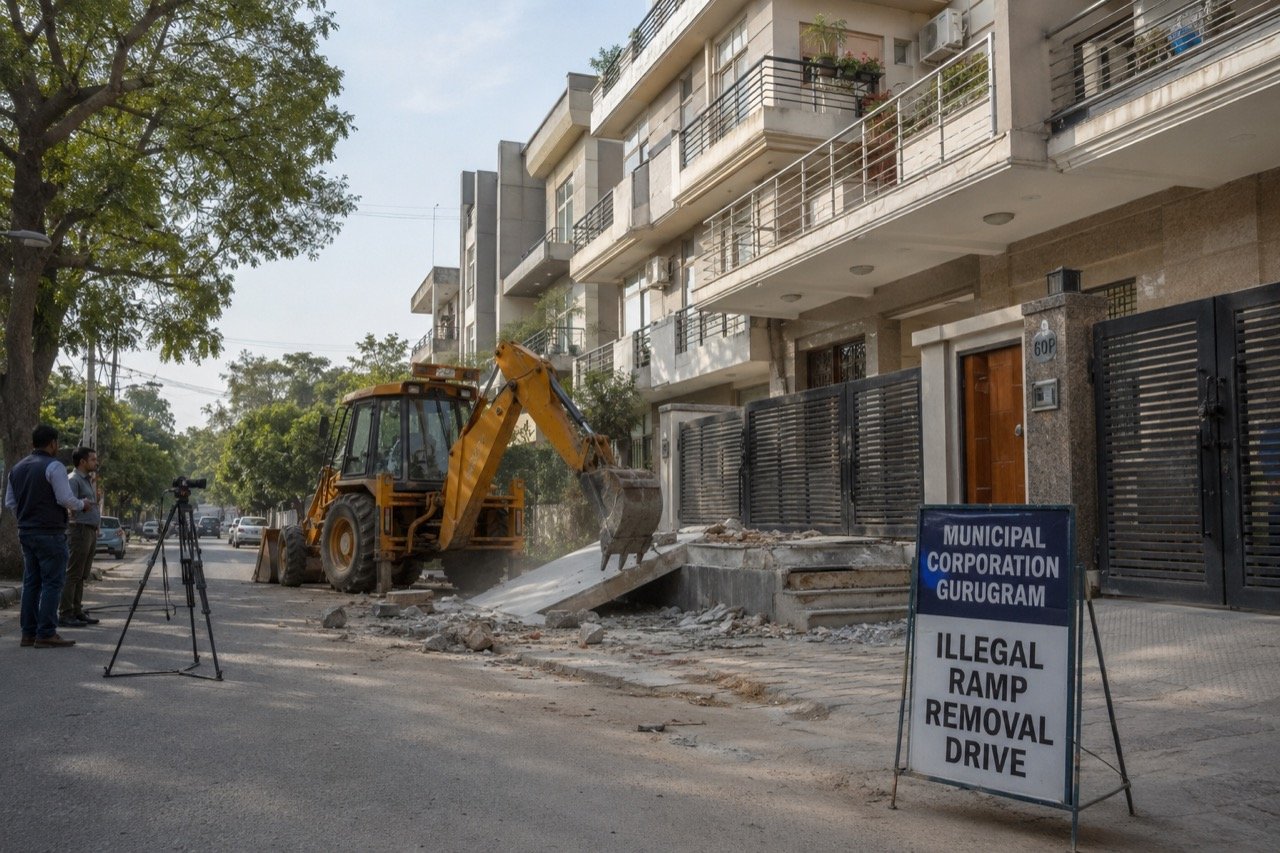
Chandrachur Singh Demolition Video Makes Gurugram Civic News Viral
A demolition drive outside actor Chandrachur Singh's Gurugram home became national entertainment news after visuals showed him calmly questioning municipal officials as a ramp was removed.

How SRK and Farah Khan Helped Shreyas Talpade Buy His First Home
Shreyas Talpade's recollection of the support Shah Rukh Khan and Farah Khan offered when he bought his first home has struck a chord, revealing the quieter friendships that operate behind Bollywood's cameras.
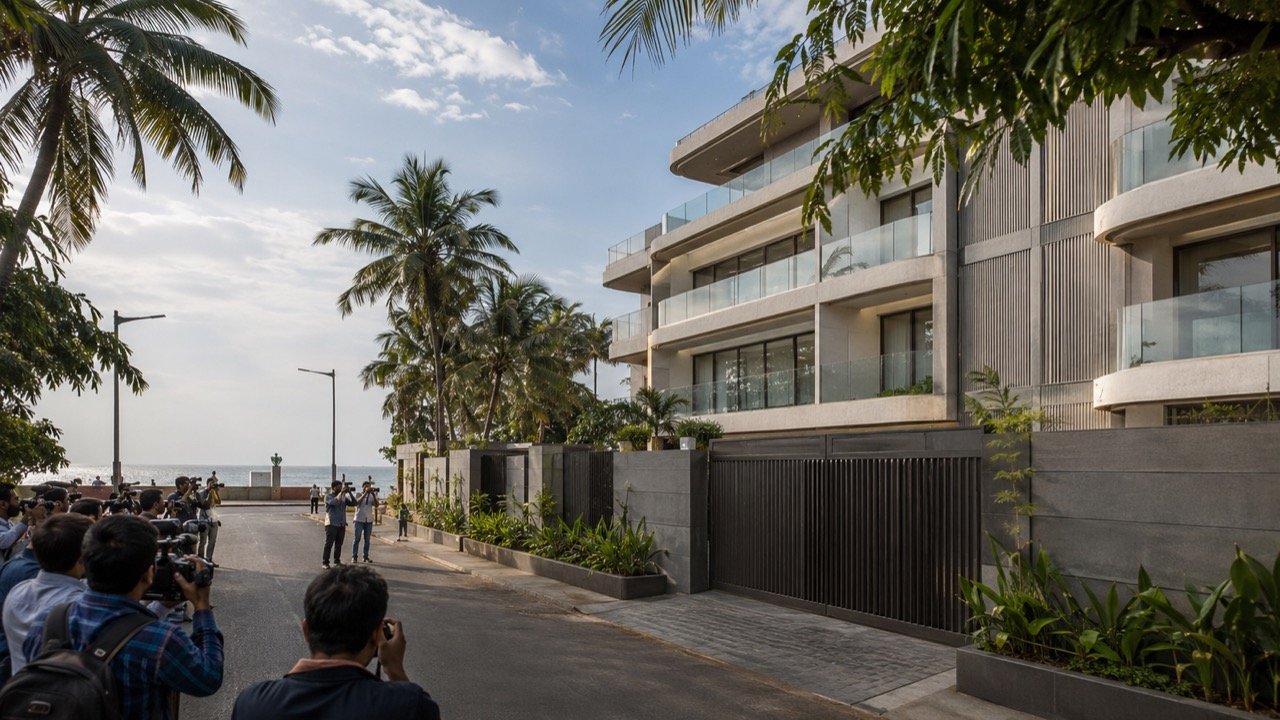
Salman Khan Gets Approval for New Six-Storey Bandra Home
Mumbai's most recognisable celebrity address may be changing hands as Salman Khan receives planning clearance for a new seaside residence in Bandra, raising questions about the future of Galaxy Apartments as a fan landmark.

Arijit Singh Overtakes Taylor Swift to Become Spotify's Most-Followed Artist
The Bollywood playback giant has become the world's most-followed musician on Spotify, the first non-English-language artist to hold the crown.
More from this section
More
72nd National Film Awards: Fans Back Mammootty, Allu Arjun, Sai Pallavi
Speculation around the 72nd National Film Awards is intensifying as fan communities across India's language film industries champion favourites including Mammootty, Allu Arjun and Sai Pallavi ahead of any official announcement.

Aamir Khan Marries Gauri Spratt in Private Pali Hill Ceremony
Aamir Khan and Gauri Spratt tied the knot at the actor's Pali Hill home in Mumbai on July 5, turning a deliberately small family ceremony into Bollywood's biggest story of the day.

Akanksha Chamola's Lock Upp 2 Confession Sets Reality TV Abuzz
A personal revelation by Akanksha Chamola ahead of Lock Upp 2 has handed the reality show a viral talking point, underlining how confession-driven formats continue to dominate Indian television conversation.