Centre Set to Summon Meta Over Instagram Ads Endangering Children
The government reportedly plans to summon Meta over Instagram advertisements alleged to promote child sexual abuse material, thrusting ad-review systems and platform accountability to the centre of India's tech-policy debate.
Commentary & Analysis ·
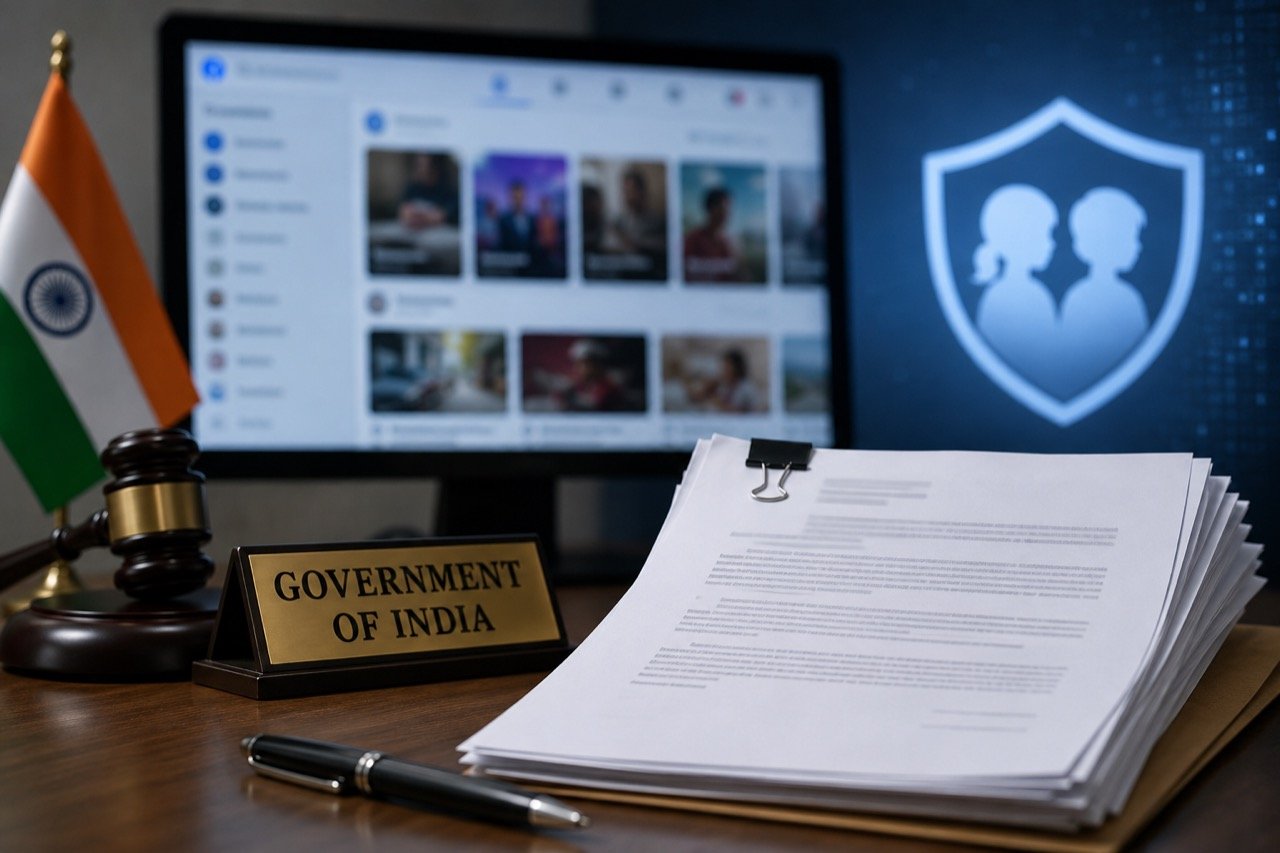
The Centre's reported decision to summon Meta over Instagram advertisements alleged to have promoted child sexual abuse material has pushed platform safety, advertising review and child protection to the forefront of India's technology-policy conversation. The development, first carried by Hindustan Times as a major digital-safety item, raises questions that go well beyond a single lapse by one company. It touches on how paid advertising systems function, how much oversight regulators can realistically exercise over algorithmic distribution, and how India intends to hold global platforms accountable when children's safety is at stake.
Why paid ads raise the stakes
What makes the allegation especially serious is that advertising systems are not passive notice boards. They are monetised, algorithmically boosted distribution engines, and platforms are expected to screen out unlawful and harmful material before it is amplified for money. This is a critical distinction. Organic content posted by users can, at least in theory, slip past moderation because of sheer volume and the limits of automated detection. Advertising is different: it passes through a paid submission and review pipeline that the platform itself controls end to end, and it is then actively pushed to audiences using the company's own targeting infrastructure. In other words, Meta is not simply hosting the material in this case — its systems are alleged to have facilitated its reach.
The uncomfortable question at the heart of the case is how such advertisements could clear Meta's review process at all. Regulators will want to know whether the failure was one of automated screening, human oversight, or targeting systems, and what corrective measures the company will be required to adopt. Each of these possibilities points to a different kind of institutional failure. A breakdown in automated screening would suggest that Meta's detection models are not tuned adequately for this category of harm. A lapse in human oversight would suggest that escalation and review teams are under-resourced or poorly trained for India-specific risks. And a fault in targeting systems would raise the deeper concern that harmful material was not just approved but actively distributed to particular audiences, compounding the harm.
The mechanics of ad review under scrutiny
For a case like this to surface publicly, it typically means that existing internal safeguards — automated content classifiers, keyword and image matching against known child-safety databases, and human review queues — did not function as intended, or were bypassed. This is precisely why the Centre's summons is likely to focus not merely on the specific advertisements in question but on the architecture of Meta's ad-review pipeline as a whole. A single missed advertisement could be dismissed as an isolated error. A pattern, or a systemic gap in how the review pipeline handles this category of content, would be a far more serious finding, and one that would justify sustained regulatory intervention rather than a one-time correction.
It is also worth noting that advertising review carries a different set of obligations than content moderation more broadly. Because platforms profit directly from approved advertisements, the burden of proof for adequate screening is generally considered higher. A company cannot reasonably claim it lacked visibility into content it was paid to distribute and promote.
Growing scrutiny of big platforms in India
Large social networks operating in India already face intensifying scrutiny over content moderation, ad targeting, grievance redressal and cooperation with lawful investigations. This case does not arise in isolation; it lands amid a broader pattern of regulators, courts and civil society groups pressing platforms on how effectively they enforce their own stated policies. India's scale as a market for these platforms — with hundreds of millions of users — makes the stakes of any systemic gap in enforcement correspondingly large. A flaw that allows even a small fraction of harmful advertisements through can translate into significant real-world exposure given the size of the user base.
The next signals to watch include Meta's formal response, any government notices, compliance timelines and concrete changes to ad-screening systems. How quickly and how transparently Meta responds will itself be read as a signal of intent. A defensive or minimal response would likely invite further regulatory pressure, while a detailed accounting of what went wrong and what is being fixed could help rebuild some trust. The public interest here lies in enforcement and prevention, not in the details of the material itself, and responsible reporting on this case should continue to reflect that distinction.
What accountability could look like
If the Centre proceeds with a formal summons, the range of possible outcomes spans from voluntary corrective commitments by Meta to more formal regulatory directions, depending on what the government's inquiry uncovers. Precedent from other jurisdictions suggests that meaningful accountability in cases like this usually involves independent audits of ad-review systems, clearer disclosure of how child-safety detection tools are trained and updated, and enforceable timelines for remediation rather than open-ended promises. Whether Indian regulators pursue a similarly structured approach, or a lighter-touch resolution, will be an important indicator of how seriously this case is being treated relative to the harm alleged.
Stakeholders beyond government and Meta also have a role to watch here. Child-safety advocacy groups are likely to press for transparency on the scale of the failure — how many advertisements were involved, how long they ran, and how many users may have been exposed. Advertisers who use Meta's platforms have their own interest in knowing that the ad ecosystem they participate in is properly policed. And other technology companies operating similar advertising systems in India will be watching closely, since any standards set here could shape expectations across the industry.
The NE Times View
This case should mark a turning point in how India regulates platform advertising. For too long, the safety debate has focused on removing harmful content after users report it, while paid distribution — the most powerful amplification tool a platform owns — has escaped equivalent scrutiny. If a company profits from an ad, it must own the consequences of running it, and child safety is the one area where 'we caught it late' can never be an acceptable answer.
The government should use this summons to demand audited ad-review standards, meaningful penalties and public transparency reports. Anything less would treat a systemic failure as a one-off embarrassment. A summons that results only in a private assurance, without independent verification or public accountability, would fail to address the underlying question of why a monetised, actively promoted advertisement of this nature was ever approved in the first place. India has both the market leverage and the regulatory tools to insist on more, and this case offers a clear opportunity to use them.
Key takeaways
- The Centre is reportedly set to summon Meta over Instagram advertisements alleged to have promoted child sexual abuse material, as first reported by Hindustan Times.
- Because advertisements are monetised and actively distributed by Meta's own systems, the case raises sharper accountability questions than typical content-moderation failures.
- Regulators are expected to examine whether the lapse originated in automated screening, human oversight, or targeting systems, and what corrective steps Meta will be required to take.
- Key signals to watch include Meta's formal response, any government notices, compliance timelines, and concrete changes to ad-screening systems.
- The NE Times View holds that the government should use this case to demand audited ad-review standards, real penalties and public transparency, rather than treating it as an isolated incident.
You may also like to read

Instagram refreshes Reels, Stories and Notes in a busy June update
New fonts, a global rollout of Trial Reels and a redesigned Notes experience headline a month of incremental changes aimed at keeping creators engaged.

Kunal Shah Named WhatsApp Global Head, Putting India at Centre of Meta's Strategy
CRED founder Kunal Shah has been named global head of WhatsApp as Meta deepens its India bets, placing an Indian fintech entrepreneur in charge of the platform's largest market.

Meta Backs CRED With $900 Million As Kunal Shah Is Tapped To Lead WhatsApp Globally
Meta is investing about $900 million in Indian fintech CRED and has chosen founder Kunal Shah to lead WhatsApp globally, a twin move that ties one of the world's biggest platforms ever closer to Indian consumer technology.

Kunal Shah Named WhatsApp Global CEO as Meta Leads $900 Million CRED Round
CRED founder Kunal Shah has been named global CEO of WhatsApp as Meta leads a $900 million round valuing the Indian fintech at about $4.5 billion, placing a homegrown founder atop one of the world's biggest apps.
More from this section
More
CG Semi Sanand Plant Opens, Boosting India's Semiconductor Drive
Prime Minister Narendra Modi inaugurated CG Semi's chip assembly and test facility in Sanand, Gujarat, giving India's semiconductor mission a working manufacturing milestone rather than another policy promise.

Chinese E-Rickshaw Apps Banned in India Over Remote Disable Risk
The Centre has ordered the removal of three Chinese apps — BAT-BMS, Lossigy and Epoch-i-ion — over fears they could remotely disable battery-run e-rickshaws, turning mobility software into a public safety concern.

Connected Car Rules: India Plans Vehicle Software Update Norms
With cars increasingly run by software, the government is reportedly preparing update and security norms aimed at preventing vehicle hijacking and governing how connected cars in India are patched and protected.