Bihar NEET Re-Test Arrests Expose Alleged Dummy Candidate Racket
Police in Bihar's Lakhisarai district have arrested 30 people over alleged impersonation during the NEET-UG 2026 re-test, citing fake Aadhaar cards and the involvement of biometric verification staff.
Commentary & Analysis ·
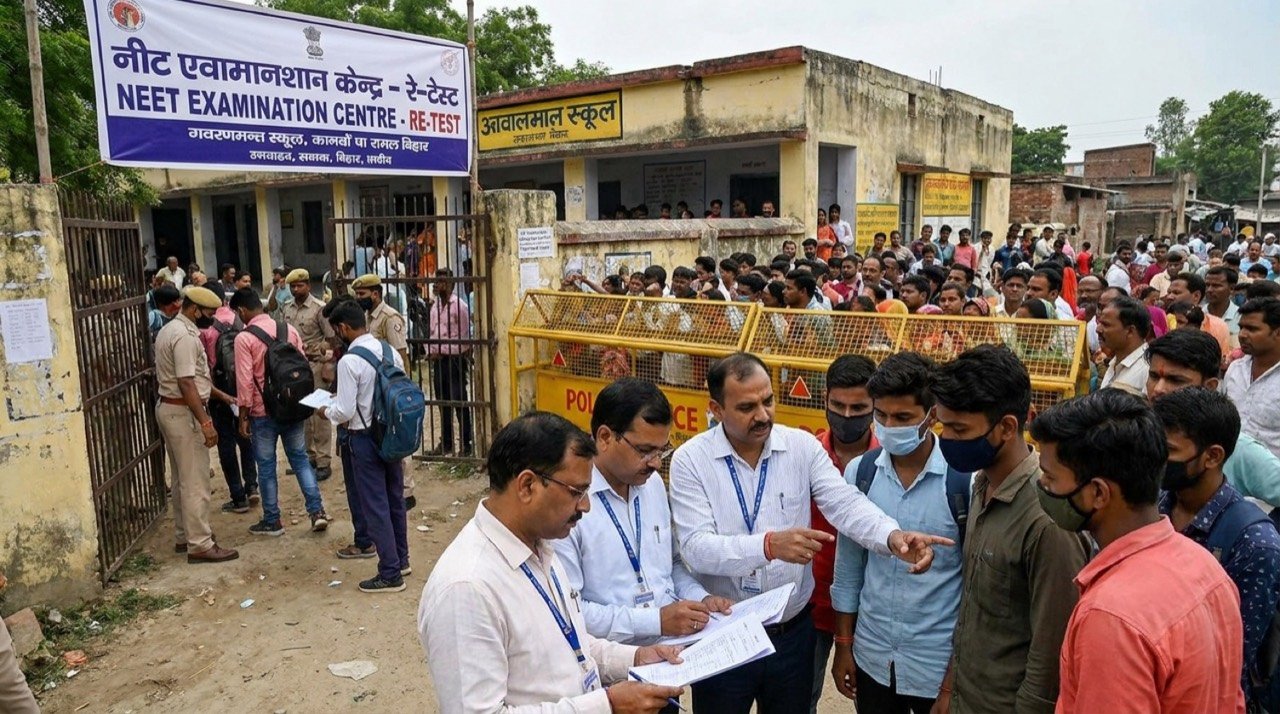
Police in Bihar's Lakhisarai district have arrested 30 people after uncovering an alleged impersonation racket during the NEET-UG 2026 re-test, in a case that has renewed scrutiny of the integrity of India's most competitive medical entrance examination. The arrests, coming during a re-test convened specifically to address earlier irregularities, suggest that the networks profiting from examination fraud are neither small nor easily deterred, and that the mechanisms meant to guarantee a clean exam can themselves be compromised from within.
Who was arrested and how the scheme allegedly worked
According to officials, those taken into custody included alleged dummy candidates who appeared in place of registered aspirants, facilitators accused of arranging the scheme, and, significantly, personnel responsible for biometric verification at the centre. The inclusion of verification staff among the accused is the detail that separates this case from a routine impersonation bust. It indicates, at least on the available facts, that the fraud did not rely solely on forged paperwork slipping past vigilant checkers, but allegedly on the checkers themselves being complicit. Investigators said fake Aadhaar cards and forged documents were used to help impersonators pass identity checks, allowing substitutes to sit the exam under another candidate's name. For a scheme like this to function, multiple points of failure have to align: a forger has to produce convincing fake identification, a facilitator has to coordinate candidates and payments, and, in this instance, someone inside the examination apparatus allegedly has to look the other way, or actively assist, at the moment biometric data is meant to catch exactly this kind of substitution.
Why a re-test was being held in the first place
NEET-UG is the single gateway to undergraduate medical seats across India, drawing well over a million candidates each year for a strictly limited number of MBBS places. That scale of competition is precisely what generates the incentive structure behind malpractice: when the reward for a marginally better score is a medical seat that can define a family's social and financial trajectory, the willingness to pay for an edge, legal or otherwise, rises accordingly. Re-tests are typically ordered after irregularities surface in an earlier round, which means the very fact that Lakhisarai was hosting a re-test already signals that the examination process had been disrupted once. That a fresh racket was allegedly uncovered during the re-test itself, rather than the original sitting, is the more troubling element. It suggests that whatever additional scrutiny accompanies a re-test, additional police presence, closer monitoring, heightened awareness among officials, was not sufficient to deter organised operators, and may even have been factored into their planning.
The wider integrity question facing high-stakes exams
This case adds to a long-running set of concerns about the security of high-stakes examinations in India, where biometric authentication and document verification are meant to function as the last line of defence against impersonation. The logic of such systems assumes an adversarial relationship between the candidate attempting fraud and the official checking credentials. When the official is instead alleged to be a participant in the fraud, that entire model of defence collapses. Biometric scanners, fingerprint matching and photo verification are only as reliable as the willingness of the people operating them to act on what those systems reveal. A camera that flags a mismatch is useless if the person reviewing the flag chooses to approve the candidate anyway. This is why the presence of verification personnel among the 30 arrested carries weight disproportionate to their numbers: it reframes the story from one about resourceful cheats to one about institutional vulnerability.
What this means for candidates, families and the credibility of medical admissions
For the vast majority of NEET-UG aspirants who sit the exam honestly, cases like this are corrosive in a specific way. They do not merely represent unfairness in the abstract; they raise the possibility that seats have, in the past, gone to candidates who did not earn them on merit, potentially displacing genuine aspirants who missed a cutoff by a narrow margin. For families that have invested years of coaching fees and forgone other opportunities in pursuit of a medical seat, the suggestion that some competitors bought their way past identity checks, with the alleged help of the very officials meant to stop them, is likely to deepen an already substantial trust deficit in examination administration. It also puts pressure on authorities to explain what safeguards exist to identify candidates who may have benefited from similar schemes in prior sittings, even if those schemes were never detected.
Tightening protocols versus adapting networks
Education and examination authorities have repeatedly tightened protocols in response to past scandals, introducing multi-layer biometrics and stricter document checks. Yet each new arrest of this kind demonstrates that determined networks adapt alongside the defences built against them. This is a familiar pattern in any adversarial system: a static set of rules will eventually be reverse-engineered and circumvented by actors with sufficient financial motivation, especially when the payoff, a medical degree and the lifetime earning potential it confers, is large enough to justify the risk and cost of running a racket. The alleged role of insiders in this instance is likely to draw particular attention from investigators, since it points to a failure mode that no amount of additional technology can fully resolve. Biometric hardware can be upgraded, but the personnel entrusted to interpret and act on its output remain a human variable that oversight structures have struggled to fully secure.
What comes next in the investigation
As the probe continues, the focus will turn to how deep the network ran, whether candidates and centres elsewhere were involved, and what reforms can close the gaps that allowed forged identities to reach the examination hall in the first place. Investigators will likely need to trace the financial arrangements behind the scheme, identify whether the facilitators operated across multiple centres or districts, and determine how the verification staff came to be involved, whether through coercion, bribery or longer-standing arrangements. The answers to these questions will shape whether this is treated as an isolated lapse in Lakhisarai or as evidence of a more entrenched pattern that examination authorities need to address at a systemic level, potentially including how verification personnel are vetted, rotated and monitored across centres nationwide.
The NE Times View
Arrests over impersonation in a NEET re-test, with fake Aadhaar and verification staff allegedly complicit, confirm that India's exam-integrity problem is now an insider problem. Biometric checks are only as honest as the people running them, and that is the rot worth excising. Catching 30 candidates matters less than dismantling the network and prosecuting the officials who enabled it. Until the supply side of fraud faces real consequences, high-stakes exams will keep breeding rackets. Genuine reform will require examination authorities to treat verification staff as a security-critical layer in their own right, subject to independent audit and accountability, rather than assuming that better hardware alone can compensate for compromised gatekeepers.
Key takeaways
- Thirty people were arrested in Lakhisarai, Bihar, over an alleged impersonation racket during the NEET-UG 2026 re-test.
- Those accused include alleged dummy candidates, facilitators and, notably, biometric verification personnel at the centre.
- Fake Aadhaar cards and forged documents were allegedly used to help impersonators pass identity checks.
- The alleged involvement of verification staff points to an insider breach that undermines the credibility of biometric safeguards.
- The investigation's next phase will determine how widespread the network was and what systemic reforms might follow.
You may also like to read
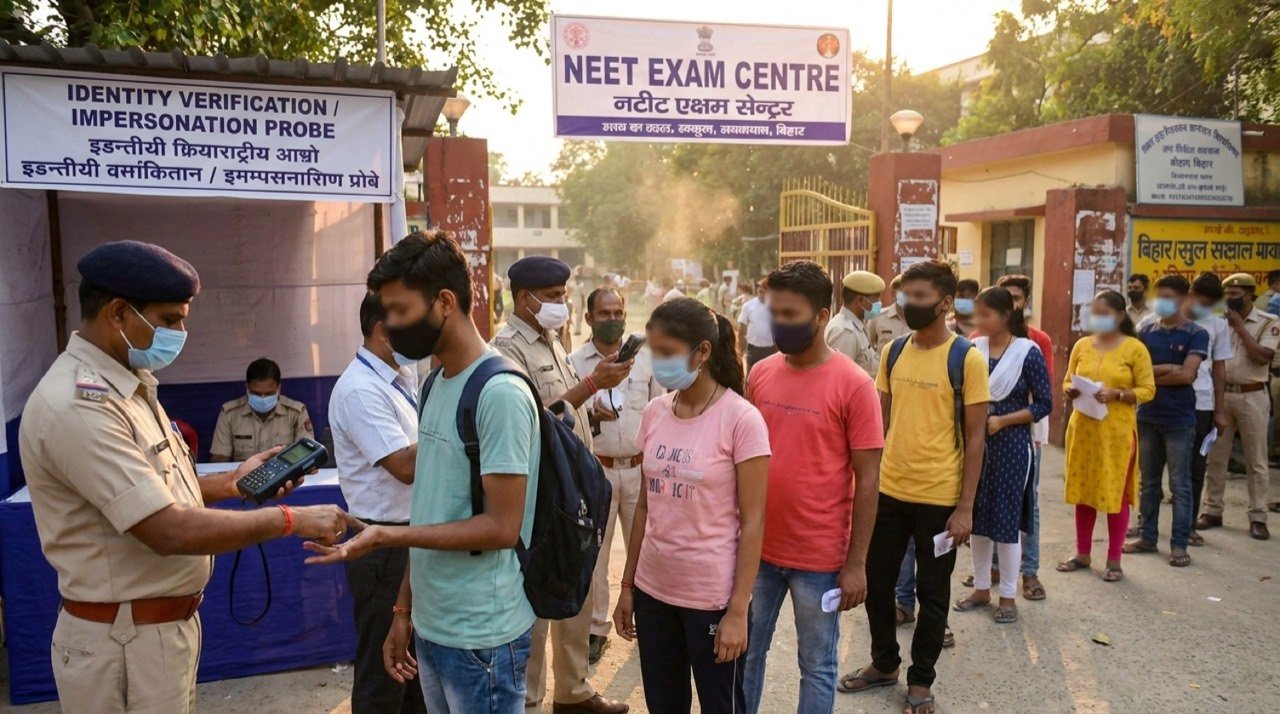
Bihar NEET Re-Test Arrests Expose Alleged Impersonation Network
Police in Bihar have arrested around 30 people over alleged irregularities at the NEET-UG re-test, with dummy candidates and exam staff among those held, reigniting concern over entrance-exam security.
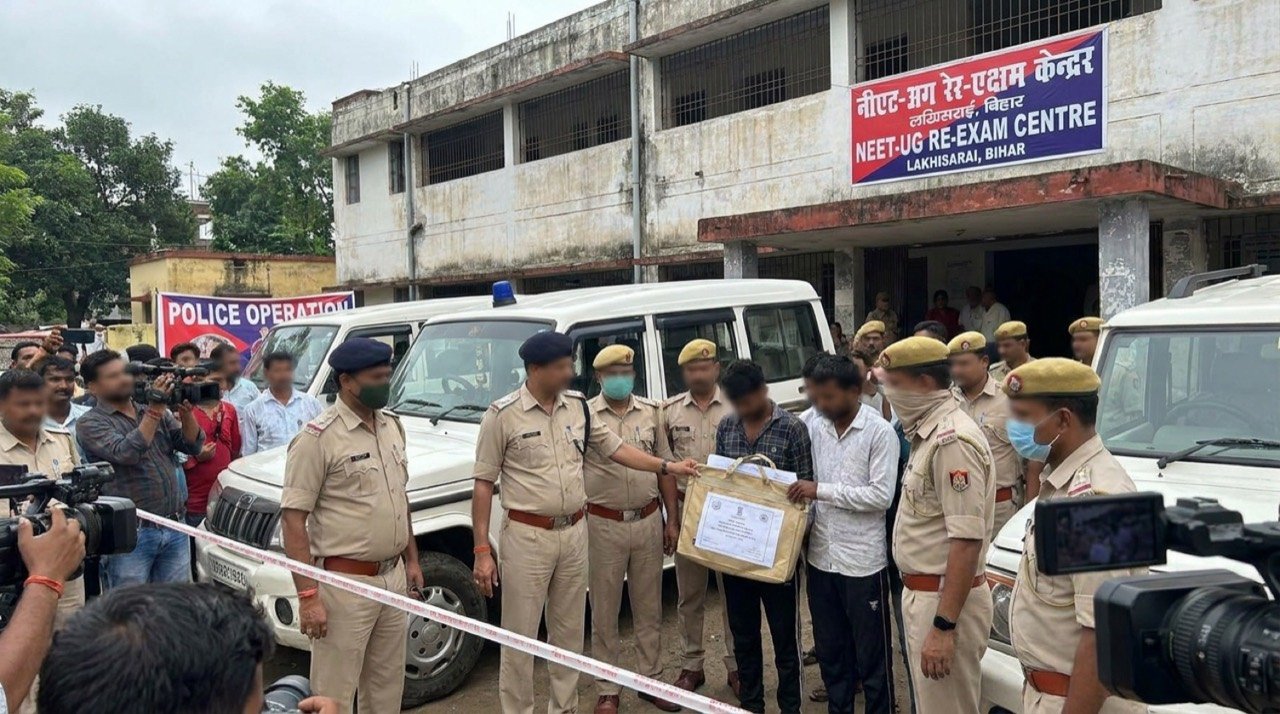
Bihar Police Arrest 30 in NEET-UG Re-Exam Cheating Racket at Lakhisarai
Bihar Police say they busted a NEET-UG re-exam cheating racket in Lakhisarai, arresting 30 people including nine impersonators, with deals of up to Rs 12 lakh allegedly struck.
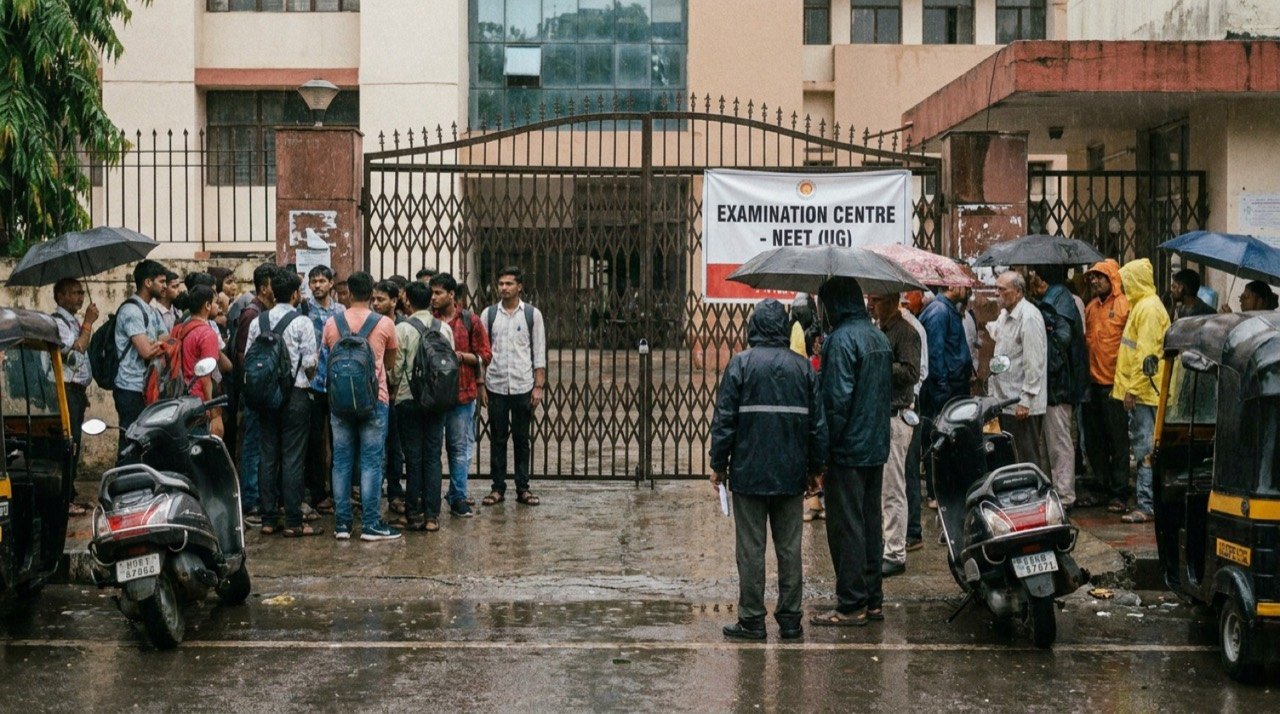
NEET Re-Test Gate Closures Revive Debate Over Exam Fairness
Students turned away minutes late at the NEET re-test have reignited a hard question for India's high-stakes exams: how should rigid rules and uniform deadlines accommodate real-life disruption?
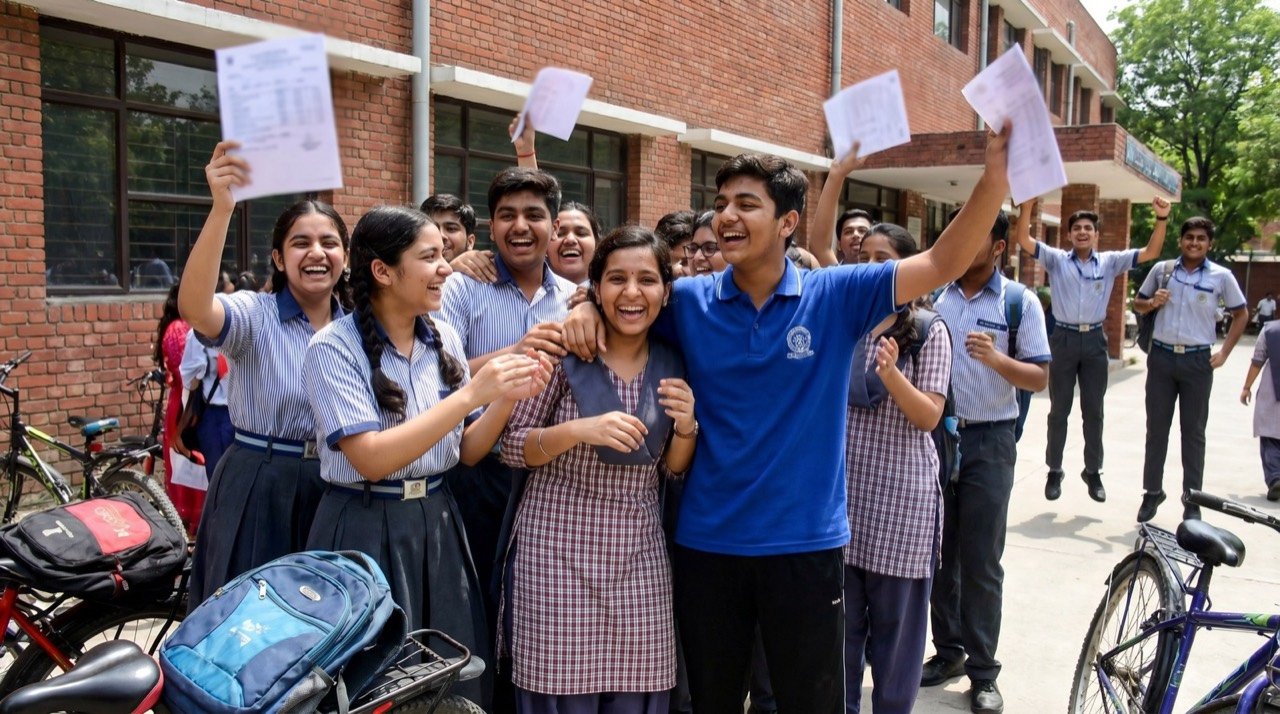
Exam Season Peaks as CBSE and CUET Results Near, NEET Looms
June marks a high point in India's academic calendar, with CBSE preparing to declare Class 10 second-board results, CUET-UG scores due shortly and the NEET undergraduate exam scheduled for later in the month.
More from this section
More
AICTE Industry Fellowship 2026: Rs 1.5 Lakh Scheme Closes July 5
The AICTE Industry Fellowship Programme 2026, which places technical-education faculty inside leading companies on a Rs 1.5 lakh monthly stipend, reached its application deadline on July 5.
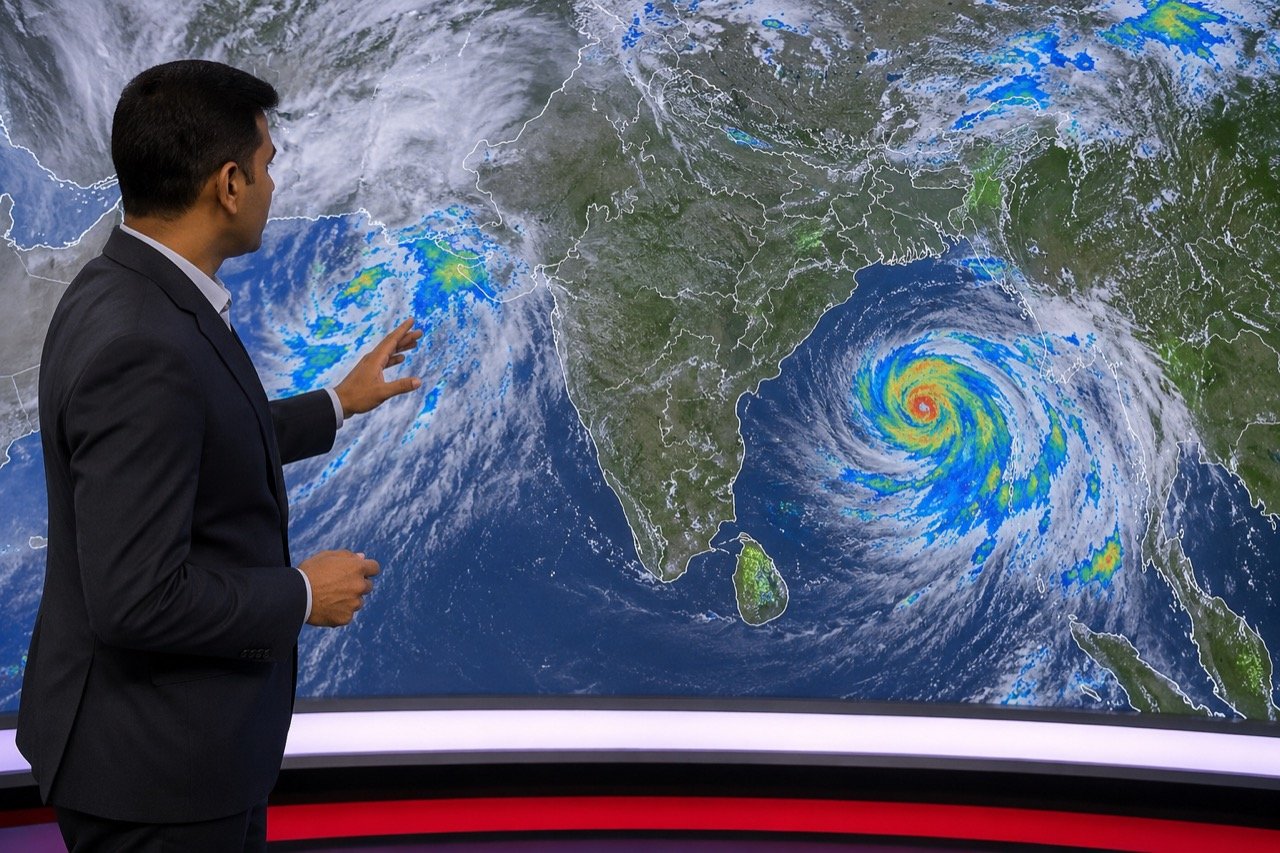
Bay of Bengal Low Pressure System Revives Monsoon Over Western India
A low-pressure system over the Bay of Bengal has pushed the monsoon back into an active phase, bringing steady heavy rain to Kerala, coastal Karnataka and Maharashtra, and putting Mumbai and Pune on preparedness watch.
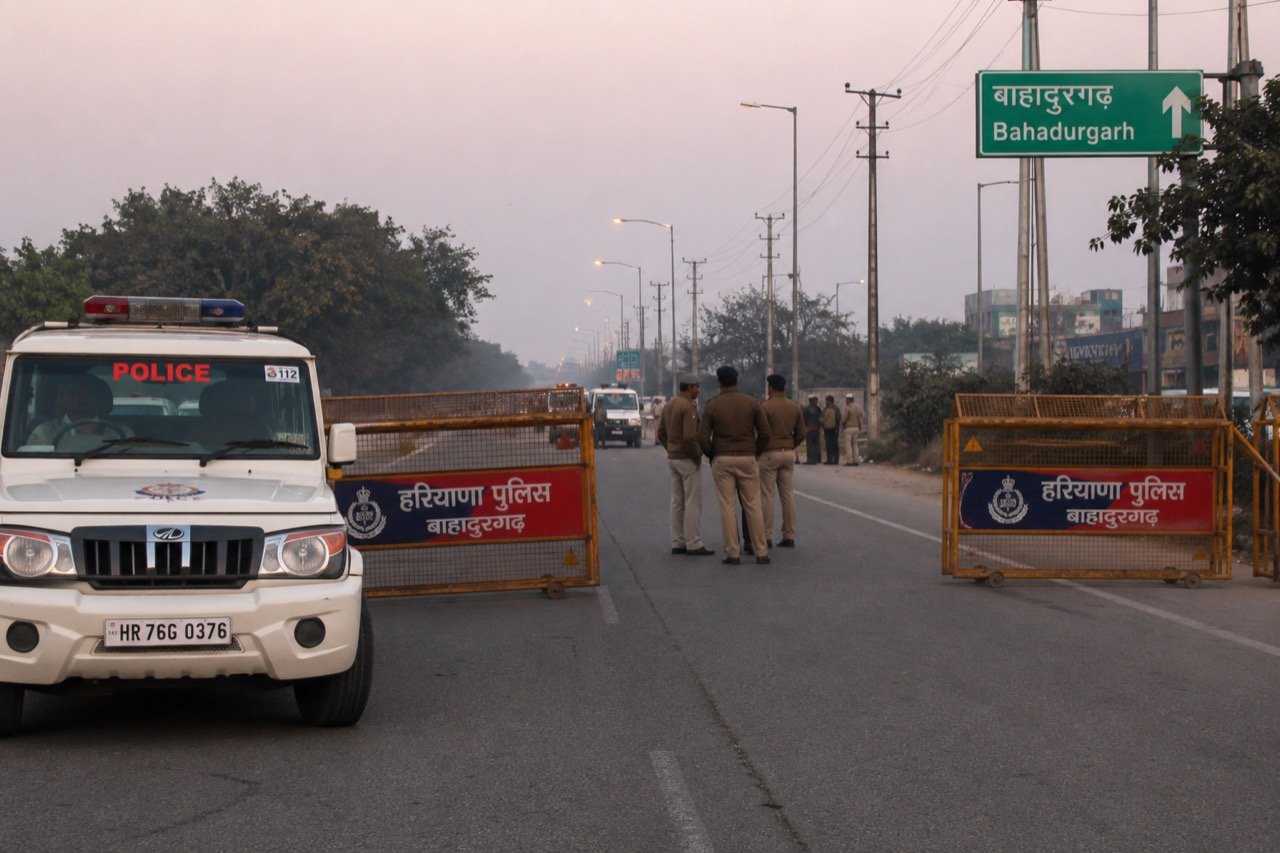
Bishnoi Gang Suspects Injured in Haryana Encounter as Police Tighten Net
A joint Haryana-Delhi Police operation in Bahadurgarh left two suspected Lawrence Bishnoi gang members injured, spotlighting the multi-state coordination now central to India's fight against organised crime networks.