Bidadi Township Protest Becomes First Major Test for Karnataka CM DK Shivakumar
Farmers and the opposition are pressing Karnataka Chief Minister DK Shivakumar over the 9,000-acre Greater Bengaluru township near Bidadi, as final land-acquisition orders reignite a long-running land-rights dispute.
Commentary & Analysis ·

Farmers and opposition parties are mounting sustained pressure on Karnataka Chief Minister DK Shivakumar over the Greater Bengaluru Integrated Township project near Bidadi, a scheme that has surged back to the centre of state politics as final acquisition orders go out. Reported as spanning around 9,000 acres and long in the works, the project has become the first major stress test of his tenure. That it should be a land question, rather than a fiscal or coalition dispute, that provides this early test says something about how governance in Karnataka is actually experienced by ordinary people: not through budget speeches, but through the fate of the fields around them.
A long-running dispute reignites
The township proposal is not new, but the issuing of final acquisition orders has sharpened the confrontation considerably. What had been, for well over a year, a simmering grievance in the affected villages has now been converted into an urgent, live standoff, because acquisition orders change the nature of a dispute. A proposal on paper can be debated, amended, delayed. An order that has been finalised begins to feel irreversible to those on the receiving end of it, which is precisely why the protest movement has hardened rather than faded with time. For many residents, the dispute is less about urban planning in the abstract than about consent, compensation and the survival of agricultural communities on Bengaluru's fast-expanding fringe. These are not abstract policy categories to the families involved; they describe whether a household continues to draw a dairy income, whether a plot of fertile land that has supported a family for generations remains theirs to farm, and whether the next generation has anything to inherit beyond a cash settlement.
Development versus land rights
The state government's case is a familiar one in India's urbanising states: that planned expansion, if executed well, can create jobs and ease the pressure on an already overstretched Bengaluru, whose infrastructure has for years struggled to keep pace with its population and economic growth. Positioning the township as a model of orderly growth rather than chaotic, unplanned sprawl is, on its own terms, a reasonable ambition. Cities that expand without any planning framework tend to produce exactly the congestion, poor services and informal settlement patterns that a scheme like this is meant to avoid. But farmers counter, with equal legitimacy, that development cannot be built by displacing villages without genuine consent and fair safeguards. This is the crux of the matter, and it is a tension that recurs across India wherever agricultural land sits in the path of urban expansion: the aggregate economic case for a project can be sound, while the individual case for how it is imposed on specific communities remains deeply contested. Whether Bidadi is remembered as a success or a warning will depend less on the merits of the township concept itself than on the manner of its execution.
Why this dispute cuts so deep
Land is not a neutral asset in rural India, and treating it as such is often the first mistake urban planners make. For a farming household, land is simultaneously a livelihood, a form of savings, an inheritance and, frequently, an identity. Compensation packages calculated purely in monetary terms can look generous on a balance sheet while still failing to replace what a family actually loses: an income stream tied to dairy production, a social network rooted in a particular village, and a degree of autonomy that a lump-sum payment does not restore. This is why disputes like Bidadi so often outlast the initial announcement of a project by years, and why they attract the sympathy and organisational backing of opposition parties, who see in such grievances a ready-made political cause. It also explains why the government's insistence on the project's broader economic logic, however sound in theory, tends to land poorly with those who feel it is being imposed upon them rather than negotiated with them.
Political and legal stakes mount
The standoff now carries administrative, legal and political weight all at once, and the timing is especially sensitive for Shivakumar's standing within the state leadership. He inherited, or in some sense chose, a project whose scale, roughly 9,000 acres, guarantees that it will be scrutinised closely regardless of how it unfolds. The elements in play are stark: final acquisition orders covering that land, farmer concerns over dairy incomes and the loss of fertile land, opposition parties amplifying the protest for political advantage, and unresolved questions over whether consent was genuinely secured and whether compensation safeguards are adequate. Into this mix comes the invitation extended to JD(S) leader HD Kumaraswamy for talks on June 26, a move that signals the government's awareness that this cannot simply be pushed through by administrative fiat. Whether that dialogue produces a genuine recalibration of terms, or merely a temporary pause before acquisition proceeds regardless, will be closely watched by farmers' groups and opposition politicians alike, each with different expectations about what the meeting should produce.
What Shivakumar's response will signal
How a chief minister handles a dispute of this kind reveals more about a government's instincts than almost any other type of decision, because it forces a choice between competing constituencies that cannot both be fully satisfied. Growth-oriented administrations are often tempted to treat farmer protests as an obstacle to be managed and eventually overcome rather than a legitimate constituency to be negotiated with in good faith. Shivakumar's challenge is to demonstrate that growth, land rights and public trust can be balanced rather than traded off against one another. That will mean visible, credible movement on compensation terms, transparent communication about how consent was or was not obtained, and a willingness to adjust the project's scope or terms if the talks with Kumaraswamy and continued farmer mobilisation reveal genuine, unaddressed grievances. Failure to do so risks entrenching Bidadi as a symbol of top-down governance at precisely the moment Shivakumar needs to consolidate authority within his own party and government.
The NE Times View
A 9,000-acre township is exactly the kind of project that defines a chief minister: growth ambition on one side, farmer livelihoods and land rights on the other. Shivakumar's handling will signal whether his government negotiates or steamrolls. The NE Times view is that big urban expansion need not be zero-sum, but only if compensation is fair, consent is genuine and transparency is real; otherwise Bidadi becomes a cautionary tale rather than a model. The coming weeks, beginning with the talks invited with Kumaraswamy, will offer an early and unusually clear indication of which path this government intends to take, not just on this project but on the broader question of how Karnataka manages the collision between urban ambition and rural rights that is likely to recur again and again as Bengaluru continues to expand.
Key takeaways
- Final acquisition orders for the roughly 9,000-acre Bidadi township have reignited a farmer protest movement that has simmered for over a year.
- The dispute centres on consent, fair compensation and the survival of dairy-dependent agricultural livelihoods on Bengaluru's expanding fringe.
- Opposition parties have amplified the protest, adding political weight to what is also an administrative and legal standoff.
- Talks with JD(S) leader HD Kumaraswamy, invited for June 26, represent an early test of whether negotiation can defuse the confrontation.
- How Shivakumar balances growth ambitions with land rights and transparency will shape both the project's future and his political authority.
You may also like to read
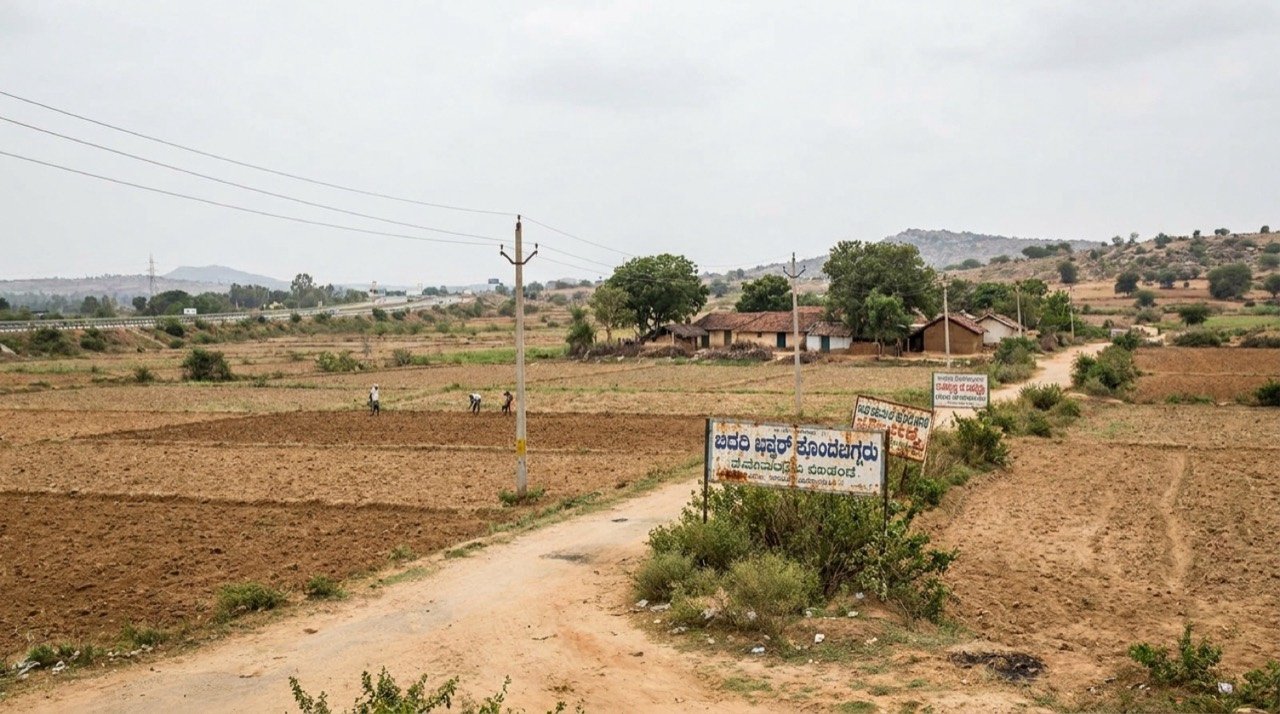
Bidadi Township Debate Intensifies in Karnataka Over Land and Growth
The proposed Greater Bengaluru Integrated Township near Bidadi has become a political flashpoint, as Shivakumar and Kumaraswamy spar over an open debate and farmers raise land and livelihood concerns.
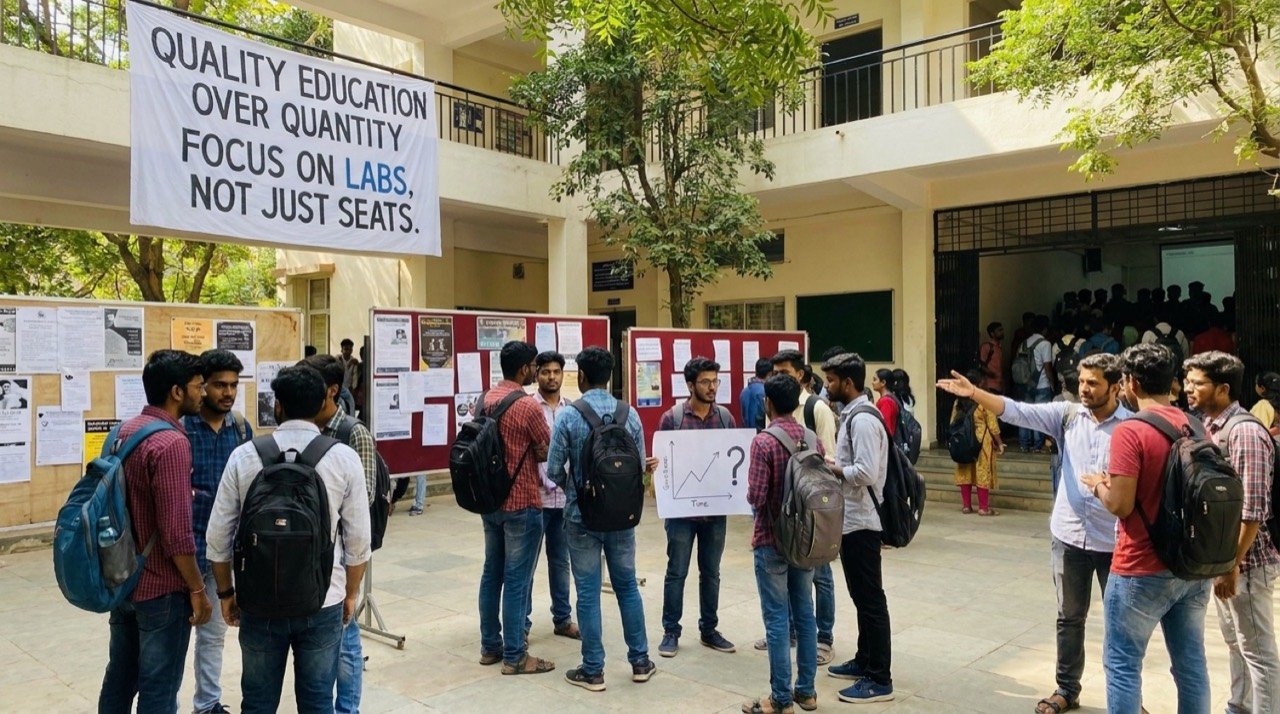
Karnataka's Computer Science Seat-Cap Debate Tests Higher-Education Demand
Karnataka's standoff over expanding computer science engineering seats has intensified as universities push for capacity while the state guards quality, with CM Shivakumar moving cautiously.
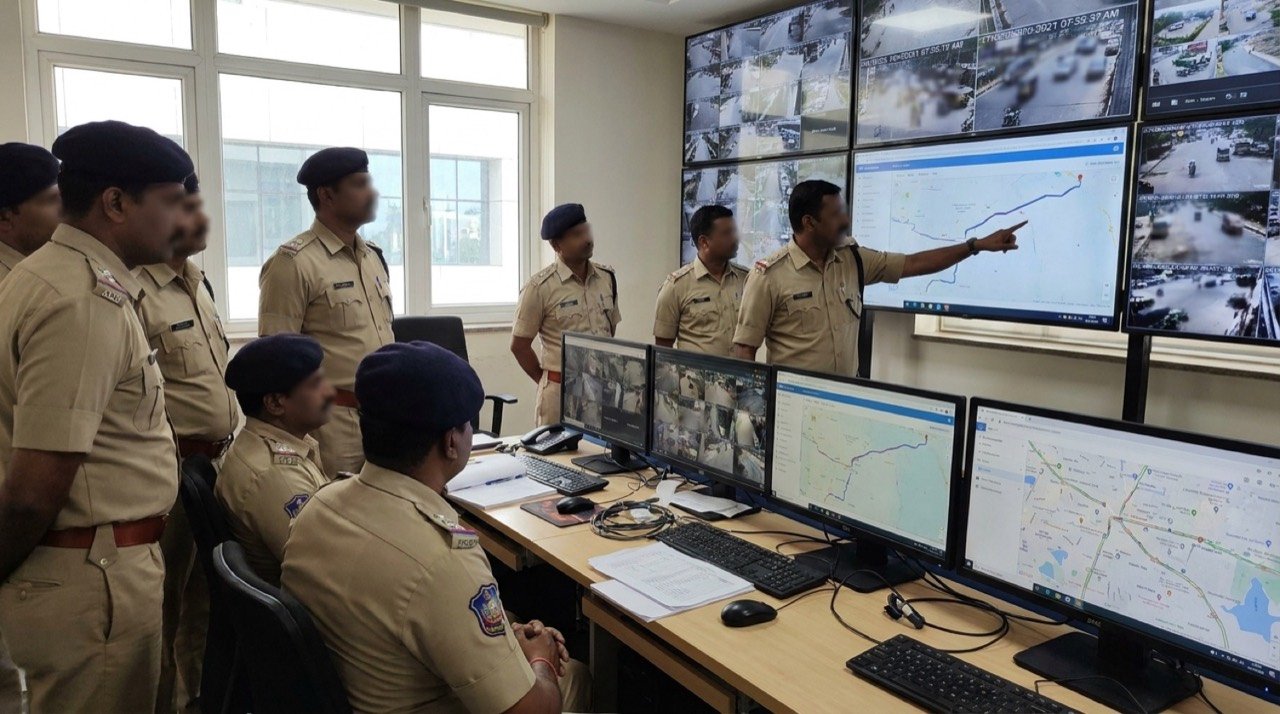
Bengaluru Police Fact-Check: NEET Aspirant's Delay Not Caused by Rally Traffic
Bengaluru police say CCTV footage and route analysis show a NEET candidate left home just 33 minutes before the cut-off, contradicting claims that a Congress rally blocked the route.
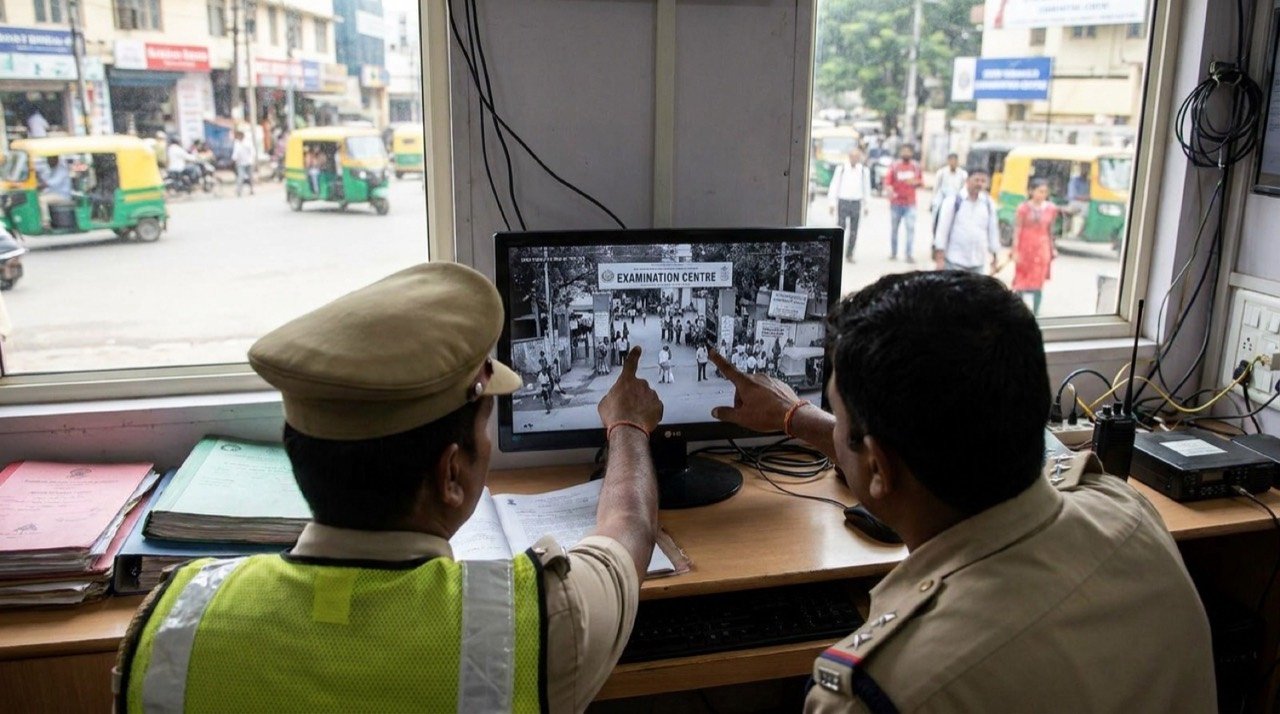
Bengaluru Police Reject Claim That Congress Rally Delayed NEET Aspirant
Bengaluru Traffic Police say CCTV footage does not support viral claims that a Congress rally caused a NEET candidate to miss her re-exam slot, citing a late departure and a longer route.
More from this section
More
AICTE Industry Fellowship 2026: Rs 1.5 Lakh Scheme Closes July 5
The AICTE Industry Fellowship Programme 2026, which places technical-education faculty inside leading companies on a Rs 1.5 lakh monthly stipend, reached its application deadline on July 5.

Bay of Bengal Low Pressure System Revives Monsoon Over Western India
A low-pressure system over the Bay of Bengal has pushed the monsoon back into an active phase, bringing steady heavy rain to Kerala, coastal Karnataka and Maharashtra, and putting Mumbai and Pune on preparedness watch.
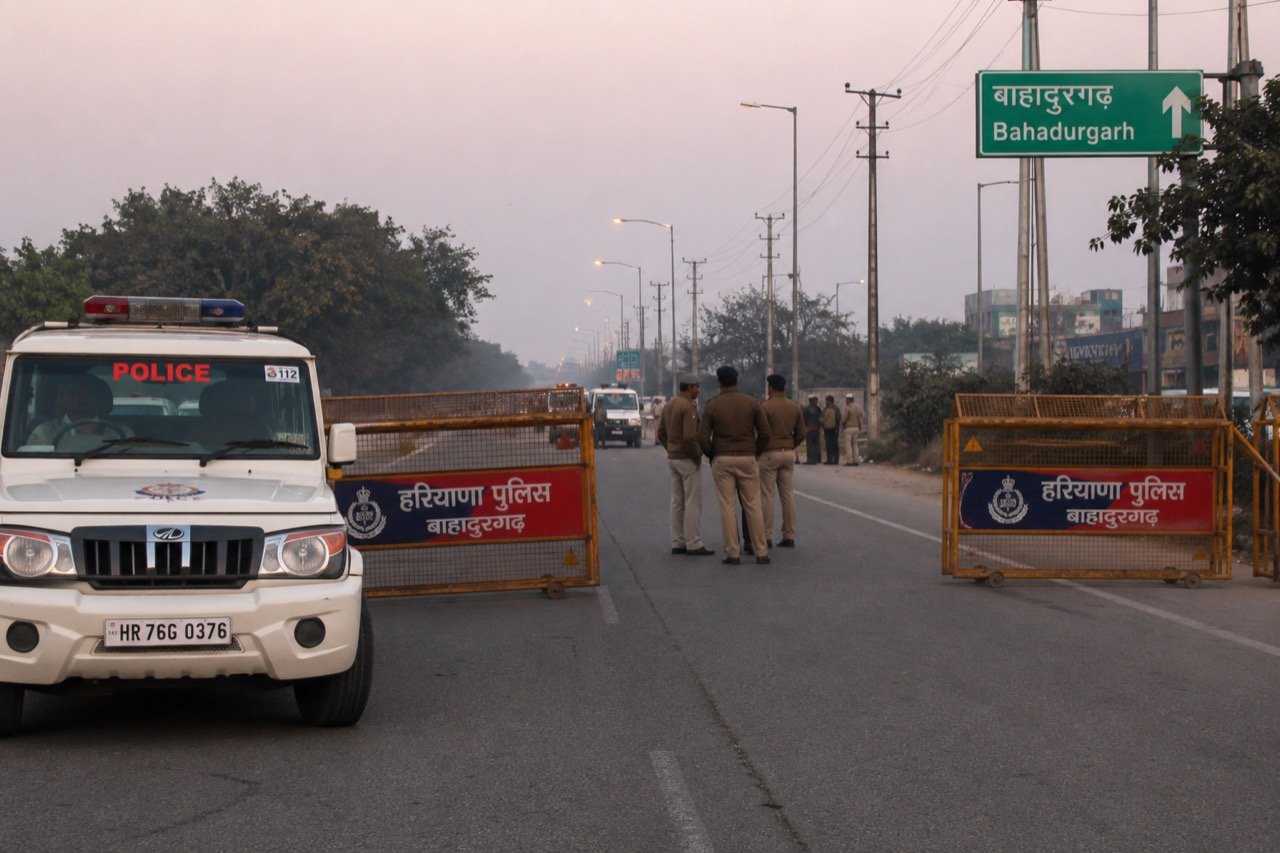
Bishnoi Gang Suspects Injured in Haryana Encounter as Police Tighten Net
A joint Haryana-Delhi Police operation in Bahadurgarh left two suspected Lawrence Bishnoi gang members injured, spotlighting the multi-state coordination now central to India's fight against organised crime networks.