Teejan Bai Dies at 69: The Pandavani Legend's Enduring Legacy
Teejan Bai, the Padma Vibhushan-honoured Pandavani singer who carried Chhattisgarh's folk storytelling tradition to national and international stages, has died at 69, prompting a wave of cultural remembrance across India.
Commentary & Analysis ·
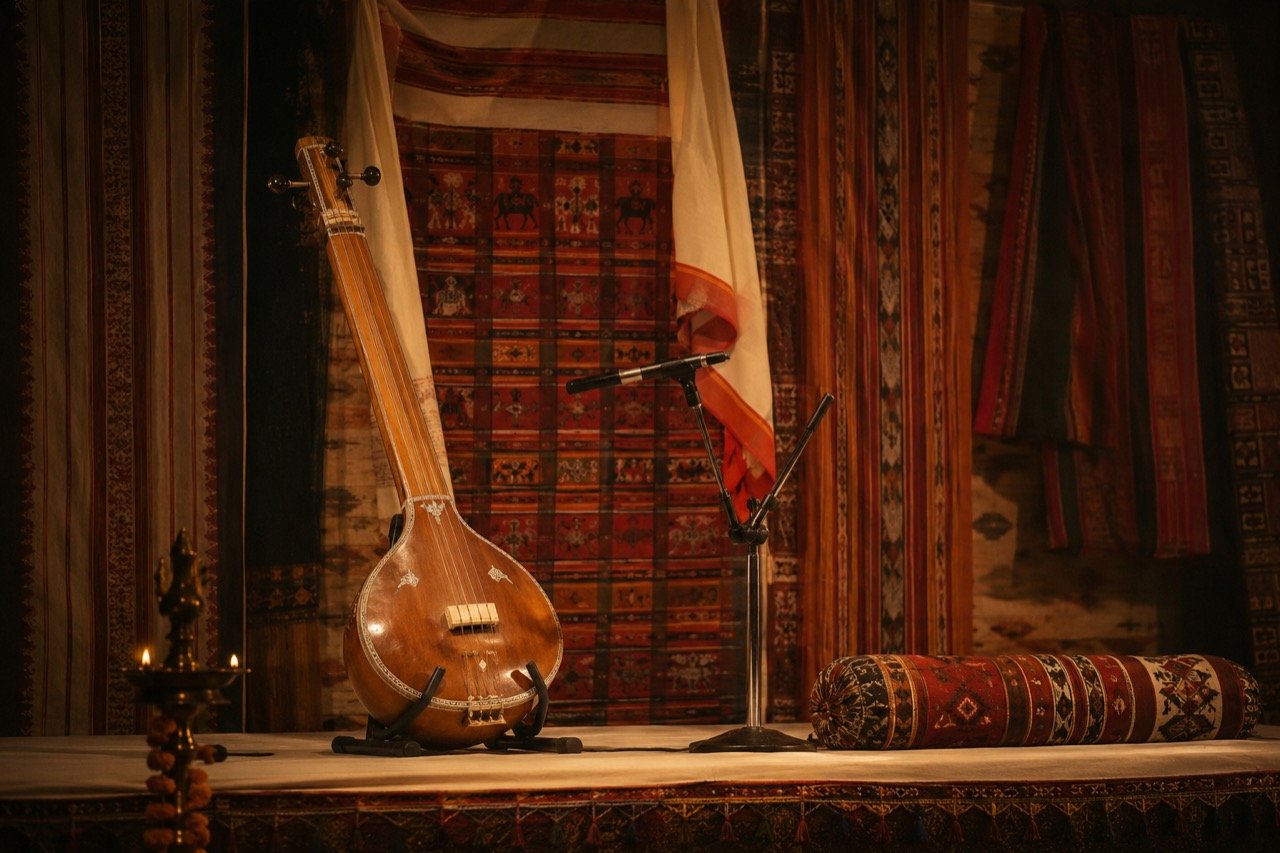
Teejan Bai, the legendary Pandavani singer whose voice carried Chhattisgarh's folk storytelling tradition far beyond its home region, has died at 69, according to reports in the Indian Express and NDTV. Her passing has become a major moment of cultural remembrance, because her career represented one of modern India's most remarkable folk-performance journeys, one that moved from village clearings and temple courtyards to national auditoriums and international stages without ever losing the specific texture of its origin.
From village stages to national honours
Reports noted that Teejan Bai began performing young and grew into the best-known name associated with Pandavani, the narrative singing form built around episodes of the Mahabharata. That trajectory is worth pausing on. Pandavani is not a genre that comes with institutional ladders, agents or media pipelines; it survives through apprenticeship, repetition and the willingness of an audience to sit through an evening of sung narrative. That a performer from within that world could rise to become a recognisable national name says as much about the strength of the tradition as it does about her own talent.
Decades of recognition, including the Padma Vibhushan among national honours, established her as far more than a regional performer. She was a major figure in Indian arts whose stage presence commanded audiences at home and abroad. Civilian honours of that order are rarely bestowed on folk artists, and when they are, it typically follows sustained, decades-long visibility rather than a single breakthrough moment. In Teejan Bai's case, the honour functioned as official acknowledgement of something audiences had already concluded through repeated exposure across generations: that her command of the form was without peer.
Why her journey mattered
Folk traditions are often local, oral and vulnerable to neglect. They depend on memory rather than manuscript, on live transmission from performer to apprentice rather than on institutions built to preserve them. This makes them resilient in one sense and fragile in another; they can adapt quickly, but they can also vanish quickly once the chain of transmission breaks. Teejan Bai's significance lay in transformation: she showed how such a tradition can travel without losing its identity. She did not dilute Pandavani to make it palatable to unfamiliar audiences, nor did she keep it so insular that it never reached beyond Chhattisgarh. Instead, her performances made language, gesture, music and storytelling feel immediate even to audiences with no connection to the form's Chhattisgarhi roots.
That balancing act, staying true to a form's origins while making it legible to outsiders, is one of the hardest things any performer of a regional art can achieve. Many folk forms either remain permanently local, appreciated only by those who grew up around them, or get absorbed into a homogenised "national culture" category that strips away what made them distinctive in the first place. Teejan Bai's career suggests a third path was possible: national visibility achieved without cultural flattening.
A generational marker for Indian audiences
For younger readers, the renewed coverage of her life may serve as a first introduction to Pandavani and to Chhattisgarh's performance heritage altogether. In an entertainment landscape dominated by streaming platforms, algorithmic recommendation and film promotion cycles, a name like Teejan Bai's may not have been on the radar of audiences under 30, and her death, paradoxically, becomes the occasion through which many will first encounter her work and the tradition she embodied.
For older audiences, her death marks the loss of a familiar, commanding stage voice that predated, and outlasted, the digital entertainment era. She belonged to a generation of performers whose reputations were built entirely on live performance, word of mouth and repeated engagements rather than on viral clips or algorithmic reach. Her passing therefore closes a chapter for those who watched Indian folk arts occupy a more central place in the country's cultural life, long before entertainment became synonymous with screens.
The wider stakes for India's folk arts ecosystem
Beyond personal tribute, Teejan Bai's death raises a broader question that applies to every regional performance tradition in India: what happens to a form once its most visible living exponent is gone. Pandavani will not disappear with her passing, other performers carry the tradition forward, but the loss of its most nationally recognised face inevitably changes the visibility calculus for the art form as a whole. National honours, media coverage and institutional attention often cluster around a single towering figure, and when that figure is no longer there to draw attention, the tradition's continued prominence depends far more heavily on deliberate institutional support than on organic recognition.
This is a pattern seen across many of India's regional art forms, whether in music, dance, theatre or oral narrative traditions: a single artist becomes the emblem through which the wider public engages with an entire lineage of practice, and their passing tests whether the ecosystem around them, teaching networks, documentation projects, festival circuits, was strong enough to survive without their singular pull.
The NE Times View
Teejan Bai's death is a reminder that India's entertainment story is not only about films and streaming charts; it includes the artists who built the country's performance landscape long before algorithms decided what trends. Her career proved that a woman from a marginalised community, singing in a regional idiom, could become a national institution on the strength of artistry alone, without the backing of industry infrastructure that props up more commercially dominant entertainment sectors.
The most fitting tribute would be practical: documentation, teaching support and stage time for the Pandavani performers who follow her. Recognition after death is easy; sustained investment in the living practitioners of a tradition is harder and more valuable. India's living cultural archive stays living only if each generation invests in it, through funding for apprenticeships, recording and preserving performances, and giving emerging Pandavani artists the same national stage access that Teejan Bai spent a lifetime earning.
Key takeaways
- Teejan Bai, the pre-eminent Pandavani singer of Chhattisgarh, has died at 69, as reported by the Indian Express and NDTV.
- Her decades-long career, honoured with the Padma Vibhushan among other national recognitions, took a regional oral storytelling tradition to national and international stages.
- Her achievement lay in preserving Pandavani's authentic Chhattisgarhi character while making it accessible to audiences unfamiliar with the form.
- Her passing highlights the fragility of folk traditions that depend on singular, visible exponents to sustain national attention.
- The NE Times View calls for practical follow-through, documentation, teaching support and performance opportunities, to ensure Pandavani's continuity beyond its most famous performer.
You may also like to read
Prashant Tamang, Indian Idol Winner Who United a Community, Dies at 43
Prashant Tamang, the singer and actor who won Indian Idol Season 3 and became one of the most beloved figures the show ever produced, has died at the age of 43.
Aamir Khan Rejects 'Love Jihad' Allegations, Says His Marriages Were Civil and Involved No Conversion
Aamir Khan rejects politically charged allegations about his marriage to Gauri Spratt, stressing that his relationships were civil marriages and involved no religious conversion.
Satluj Censorship Row Deepens as Anurag Kashyap Questions How the Film Was Blocked
Anurag Kashyap says Satluj director Honey Trehan told him the CBFC chair had objections without watching the film, intensifying debate over certification and OTT removal.

Haiwaan First Glimpse Builds Buzz Around Akshay Kumar and Saif Ali Khan's Dark Reunion
Haiwaan's first glimpse is set for 15 July at 8 pm, bringing Akshay Kumar and Saif Ali Khan together in Priyadarshan's high-stakes thriller ahead of a September release.
More from this section
More
72nd National Film Awards: Fans Back Mammootty, Allu Arjun, Sai Pallavi
Speculation around the 72nd National Film Awards is intensifying as fan communities across India's language film industries champion favourites including Mammootty, Allu Arjun and Sai Pallavi ahead of any official announcement.

Aamir Khan Marries Gauri Spratt in Private Pali Hill Ceremony
Aamir Khan and Gauri Spratt tied the knot at the actor's Pali Hill home in Mumbai on July 5, turning a deliberately small family ceremony into Bollywood's biggest story of the day.

Akanksha Chamola's Lock Upp 2 Confession Sets Reality TV Abuzz
A personal revelation by Akanksha Chamola ahead of Lock Upp 2 has handed the reality show a viral talking point, underlining how confession-driven formats continue to dominate Indian television conversation.