National Film Awards Delayed as Jury Deliberations Drag On
The 72nd National Film Awards timeline has reportedly slipped by more than a week, with government sources saying jury deliberations are still underway, keeping India's highest film honours in a holding pattern.
Commentary & Analysis ·

The 72nd National Film Awards have slipped into a waiting phase, with reports indicating the announcement schedule has been pushed back by more than a week. Times of India cited government sources as saying jury deliberations are still underway and that talk of an imminent winners' list is premature. For Indian cinema, the delay is a story in itself, given the awards' cultural weight across Hindi, regional, documentary and technical categories. On the surface, this is a minor administrative postponement. Read closely, though, it tells us something about the scale and seriousness of the exercise the jury has taken on, and about how anxious an industry becomes when a familiar ritual falls even slightly out of rhythm.
Why a procedural delay makes headlines
Unlike box-office rankings, the National Film Awards signal institutional recognition. They can reshape a film's public life, revive a smaller title's visibility and hand technicians, writers, actors and directors a credential that outlasts release-week noise. That is why even a scheduling hiccup draws attention from film industries across the country. A box-office number is transient; it is overtaken within a week by the next release. A National Award, by contrast, attaches itself permanently to a career, a filmography and often a poster. That asymmetry in staying power is precisely why the news cycle treats a delay in announcing them as newsworthy in its own right, even before a single name is known.
It also explains why speculation fills the vacuum so readily. When an institution as consequential as this one goes quiet, the silence itself becomes a subject of coverage. Producers with films in contention, publicists managing awards-season narratives, and critics tracking the year in cinema all have a stake in knowing when the list will land, because the announcement date shapes how campaigns, retrospectives and year-end commentary are timed.
A judging process straining against a fragmented landscape
The reported reason is straightforward: the selection process is simply not finished. Judging national cinema now means comparing films across languages and formats in a fragmented environment where theatrical, streaming and festival circuits overlap. This is not the same task it was even a decade ago, when a national jury could reasonably assume most contenders had passed through a comparable theatrical release window. Today a jury must weigh a Hindi theatrical hit against a Malayalam festival favourite, a Tamil streaming original against a documentary that may have had only a limited festival life. Each of those films arrives via a different distribution path, a different audience size, and a different set of expectations about what "success" or "merit" even looks like.
A delay frustrates expectations, but it may equally reflect the sheer scale of the evaluation. If a jury is genuinely reconciling submissions from multiple industries, formats and languages, more time is not evidence of dysfunction — it may be evidence that the comparison is being taken seriously rather than resolved by shortcut. It is worth remembering that the alternative to a slower, more careful sift is a faster one that leans on convenience: privileging the most commercially visible titles, or the industries with the loudest lobbying presence, simply because there is less time to look further afield.
A map of what gets recognised
The awards arrive at a moment of unusual diversity in Indian cinema — big Hindi releases, Telugu and Tamil event films, Malayalam critical successes, streaming originals and documentaries all share the national conversation. This is itself a relatively recent development. Indian cinema has always been plural, but the degree to which regional and streaming work now competes for the same national attention as mainstream Hindi cinema is a shift worth noting. A national awards jury today is, in effect, being asked to adjudicate across an industry that looks less like a single pyramid with Hindi cinema at its apex and more like a cluster of parallel ecosystems, each with its own scale and audience.
When the list lands, it will be read not just as a roll of winners but as a map of what the cultural establishment chooses to honour, with attention turning quickly to regional representation and the balance between popular and independent work. Every category winner becomes a small data point in a larger argument about whose cinema counts as "national" cinema. Documentary and technical categories, though they rarely generate headlines of their own, often carry the most information about where the jury's attention actually went, since these are the categories least driven by star power or marketing spend.
The cost of a leak economy
The period between a delayed announcement and the eventual list is rarely empty. It tends to fill with unverified predictions, informal industry chatter and the occasional confident "leak" that circulates as though it were settled fact. This is a familiar pattern around any high-stakes institutional decision, and the National Film Awards are no exception. The danger is not simply that some of this speculation will turn out to be wrong. It is that repeated, confident speculation — even when eventually proven false — has a way of hardening into public expectation, so that the actual announcement, whatever it contains, is measured against a rumour rather than judged on its own terms.
For producers and publicists managing awards campaigns, the temptation in this window is to get ahead of the story: to hint, to tease, to position a film as a front-runner while the jury is still working. That temptation is understandable commercially, but it works against the credibility of the process every stakeholder ultimately depends on. An awards system is only as valuable as the public's belief that its results reflect genuine deliberation rather than pre-negotiated outcomes.
The NE Times View
A late list is better than a rushed one. The National Film Awards derive their authority precisely from the perception of careful, unhurried judgment, and a jury that takes extra time to weigh a sprawling, multilingual field is doing its job. The real risk in the interim is the leak economy: unverified winner lists and confident predictions that harden into expectation and sour the eventual announcement. Producers should hold their marketing fire, and audiences should treat every leak as noise until the official word arrives — the ritual is worth the wait only if the wait preserves its credibility. An institution that rushes to meet a calendar date at the expense of its own diligence risks a far costlier outcome than a week's delay: a winners' list that invites the charge of having been decided in haste, rather than deliberated with the care the country's cinema now demands.
Key takeaways
- The 72nd National Film Awards announcement has been pushed back by more than a week, with government sources telling Times of India that jury deliberations are still underway.
- The delay reflects the growing complexity of judging Indian cinema across theatrical, streaming and festival circuits, and across Hindi, regional, documentary and technical categories.
- The eventual winners' list will be read as a signal of how the cultural establishment weighs regional representation against mainstream and independent work.
- The interim period carries a real risk of unverified leaks and predictions that could distort expectations ahead of the official announcement.
- The NE Times View holds that a delayed but careful process is preferable to a rushed one, and that producers and audiences alike should treat pre-announcement chatter with scepticism.
You may also like to read

72nd National Film Awards: Fans Back Mammootty, Allu Arjun, Sai Pallavi
Speculation around the 72nd National Film Awards is intensifying as fan communities across India's language film industries champion favourites including Mammootty, Allu Arjun and Sai Pallavi ahead of any official announcement.

Jacqueline Fernandez Set for First Horror Lead in Bold Genre Bet
Jacqueline Fernandez is reportedly headlining her first out-and-out horror film, a striking genre pivot that arrives just as Indian horror cinema enjoys renewed commercial and creative momentum.

Main Vaapas Aaunga Box Office: Diljit Film Crosses Rs 40 Crore
Diljit Dosanjh's Main Vaapas Aaunga has reportedly crossed Rs 40 crore worldwide after a weekend jump, keeping the Hindi release alive in trade conversation well beyond its opening frame.
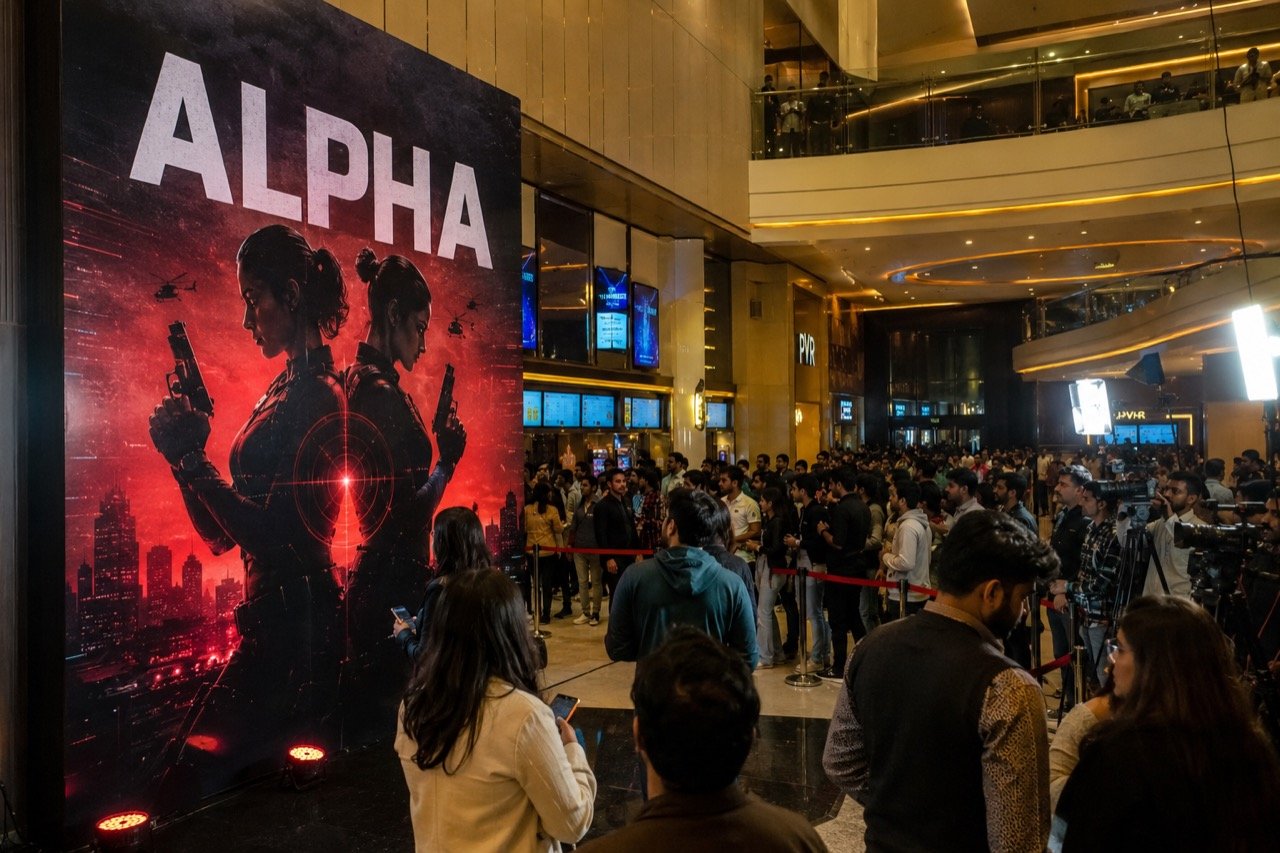
Alpha Box Office: Alia Bhatt's YRF Spy Film Opens Amid Loud Debate
Alia Bhatt and Sharvari's Alpha, the first female-fronted entry in the YRF Spy Universe, opened to better-than-expected numbers even as online trolling and industry pushback made it the weekend's noisiest Hindi cinema story.
More from this section
More72nd National Film Awards: Fans Back Mammootty, Allu Arjun, Sai Pallavi
Speculation around the 72nd National Film Awards is intensifying as fan communities across India's language film industries champion favourites including Mammootty, Allu Arjun and Sai Pallavi ahead of any official announcement.

Aamir Khan Marries Gauri Spratt in Private Pali Hill Ceremony
Aamir Khan and Gauri Spratt tied the knot at the actor's Pali Hill home in Mumbai on July 5, turning a deliberately small family ceremony into Bollywood's biggest story of the day.

Akanksha Chamola's Lock Upp 2 Confession Sets Reality TV Abuzz
A personal revelation by Akanksha Chamola ahead of Lock Upp 2 has handed the reality show a viral talking point, underlining how confession-driven formats continue to dominate Indian television conversation.