Minions and Monsters Reviews Say Chaos Is Drowning Out the Fun
Early review coverage of the animated prequel suggests its relentless energy does not always translate into satisfying comedy, raising a familiar question for franchise animation aimed at families.
Commentary & Analysis ·
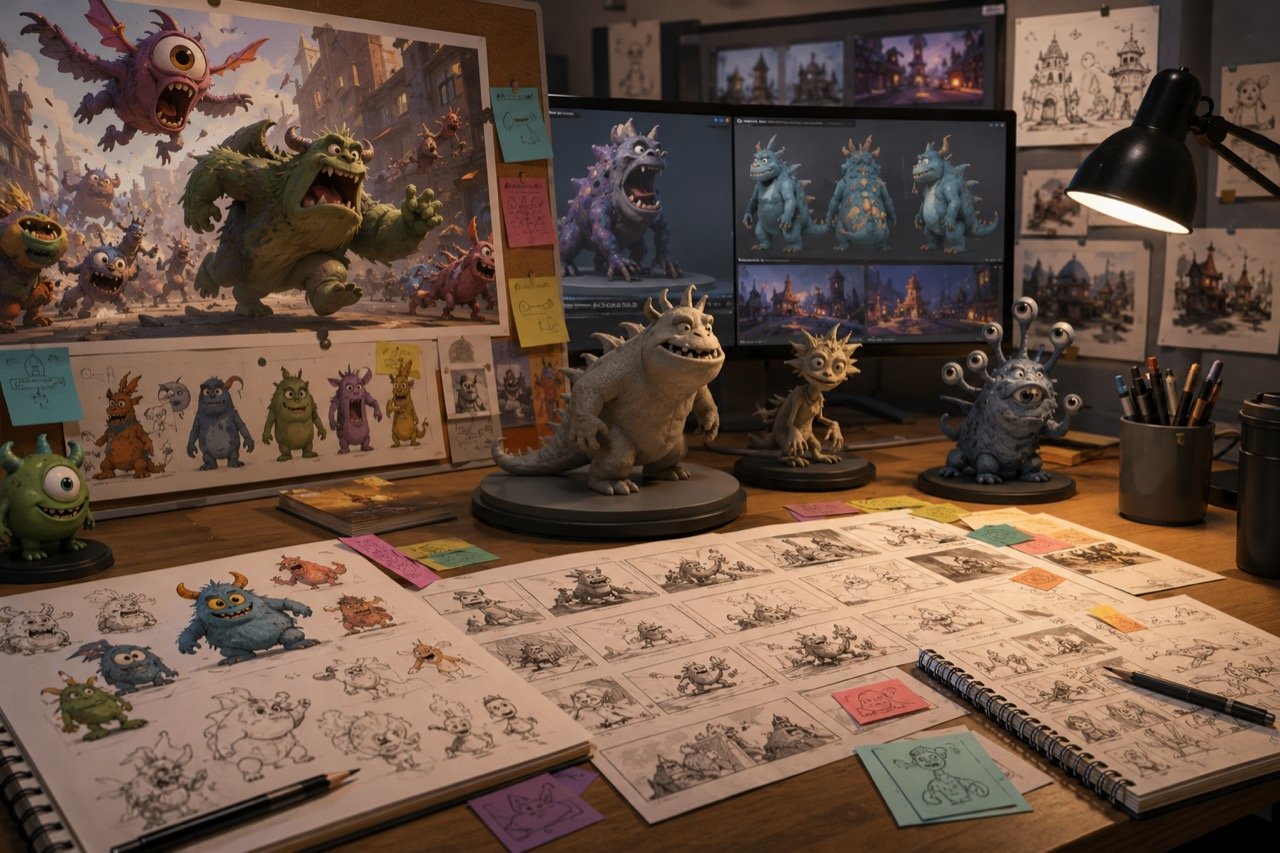
Minions and Monsters has entered July's crowded family-entertainment window as an animated prequel banking on familiar mayhem, but early review coverage suggests the formula is straining. Indian Express, in its review round-up, described the film's fun quotient as buried under a chaotic prequel structure — a pointed critique for a genre that lives or dies on comic rhythm. That single line of criticism carries more weight than it might first appear, because it goes to the heart of what makes family animation succeed or fail commercially, and it arrives at a moment when Indian audiences have unusually sharp comparison points close at hand.
Why "chaos" is a loaded word for this genre
The complaint gets at something specific about family animation. Bright characters, slapstick and breakneck pacing can hold young viewers for a while, but the adults buying the tickets tend to look for wit, emotional clarity and a convincing reason for a prequel to exist at all. When critics say chaos overwhelms fun, they are really asking whether there is any shape beneath the energy. A film can be loud, colourful and relentlessly busy and still fail the basic test that has defined the best animated comedies for decades: does the mayhem serve a joke, a character beat or a story turn, or is it simply movement designed to keep young eyes from wandering? Indian Express's framing suggests Minions and Monsters falls on the wrong side of that line, with spectacle standing in for structure rather than supporting it.
This distinction matters because prequels carry an additional burden that standalone films do not. A prequel has to justify its own existence — explaining an origin, filling a gap, or deepening a mythology audiences already know — while also standing on its own as an entertaining experience. When a prequel leans on chaos rather than craft, it risks looking like an attempt to stretch a proven property rather than a story that needed to be told. That is precisely the concern embedded in a review that flags structure, not just tone, as the problem.
The weekend calculus for Indian families
For Indian families weighing a theatre trip, the practical takeaway is to keep expectations measured. The film may still deliver for audiences content with colour and movement, but viewers hoping for sharper storytelling are likely to come away underwhelmed, if the early notices are a fair guide. This is a familiar dilemma for parents navigating the July release calendar, where a crowded family-entertainment window means multiple options compete for the same weekend outing, and the cost of a wrong choice is not trivial — cinema tickets, snacks and travel time add up, particularly for families making a special outing of it rather than a casual streaming choice at home.
In that context, a review that plainly states the fun is buried under chaos becomes a genuinely useful decision-making tool. It does not tell a family the film is unwatchable; it tells them what kind of experience to expect, so they can calibrate accordingly. A household with younger children who respond to colour, noise and slapstick regardless of narrative coherence may still find the outing worthwhile. A family hoping for the kind of sharp, multi-generational wit that has defined the strongest animated hits of recent years may want to wait.
Animation is no longer graded on a curve
The broader shift is that animation is no longer treated as automatic holiday filler. Streaming access and global releases have exposed audiences to the best of the form, raising the bar so that animated films must now compete on writing as much as visual design. A decade or two ago, an animated release timed to a school holiday could coast on novelty and bright visuals alone, with modest expectations from critics and parents alike. That assumption no longer holds. Families now routinely have Pixar's back catalogue, Studio Ghibli's films and a growing wave of well-regarded international and homegrown animation available at the tap of a remote, all offering direct points of comparison within the same viewing week.
This changes the competitive landscape for any studio releasing a theatrical animated film, prequel or otherwise. It is no longer enough to fill a screen with recognisable characters and constant motion. Audiences, including young ones, are more exposed than ever to animation that pairs visual invention with genuine storytelling discipline, and that exposure recalibrates what counts as satisfying on the big screen. A film that might have passed unremarked a generation ago is now measured against a much higher, and much more visible, standard.
Why honest review coverage matters here
That makes honest review coverage genuinely useful for parents and franchise fans deciding whether the cinema outing is worth it. In a market where marketing for family films is often relentlessly upbeat regardless of the actual quality of the finished product, a candid critical assessment functions as a corrective. It gives ticket-buyers information that trailers and posters are not designed to provide: whether the film's comic engine actually works, or whether its energy is compensating for a shortage of ideas. For a franchise entry specifically, that kind of clarity also has a signalling effect on the wider market, telling studios and distributors what audiences are willing to accept from familiar intellectual property before goodwill starts to erode.
The NE Times View
There is a lesson here that extends well beyond one prequel: franchise familiarity is a diminishing asset when it is not paired with fresh writing. Indian audiences, who now watch Pixar, Ghibli and homegrown animation side by side on streaming platforms, have become discerning judges of what their children watch. We see this review cycle less as a verdict on one film than as a signal to studios — including India's growing animation industry — that energy without a comic engine no longer clears the bar. For families, a middling review is not a ban; it is simply permission to wait for streaming.
That last point deserves emphasis. The stakes of a lukewarm review have changed in the streaming era. A film that once might have needed a strong opening weekend to justify its existence can now find its audience later, at home, at a fraction of the cost and pressure of a cinema outing. That safety net gives critics more room to be candid, and it gives audiences more room to be patient. Neither studios nor audiences lose much by treating a review like this one as useful information rather than a final verdict — but studios that repeatedly hear the same critique, that chaos is standing in for craft, would do well to treat it as a warning rather than noise.
Key takeaways
- Indian Express's review of Minions and Monsters says the film's fun is buried under a chaotic prequel structure, raising questions about whether its energy is backed by genuine comic or narrative craft.
- Families weighing a theatre visit in July's crowded release window should moderate expectations: the film may satisfy viewers content with colour and pace, but may disappoint those seeking sharper storytelling.
- Streaming access to global animation from studios like Pixar and Ghibli has raised the bar for theatrical family films, meaning visual spectacle alone no longer guarantees a positive reception.
- Candid review coverage gives parents and franchise fans practical decision-making value that marketing materials are not designed to provide.
- The wider signal for studios, including India's growing animation industry, is that franchise familiarity cannot substitute for fresh, disciplined writing.
You may also like to read

Rao Bahadur Review Buzz: An Inheritance Drama About More Than Property
Review coverage has pushed Rao Bahadur into the conversation as a strange, stubborn family drama that asks what people inherit beyond land and houses — memory, resentment and unresolved duty.
'Toy Story 5' Targets Record-Breaking Pixar Opening
Pixar's latest sequel is tracking toward the biggest debut in the Toy Story franchise's history, with forecasts climbing as high as $185 million domestically.

'Super Mario Galaxy Movie' Becomes 2026's First Billion-Dollar Hit
Illumination and Nintendo's animated sequel cleared $1 billion worldwide in its tenth weekend, pushing the wider Mario film franchise past the $2 billion mark.

Netflix Renews 'Devil May Cry' for Third and Final Season
Adi Shankar's hit animated adaptation will close out its 'Force Edge Saga' with a third season, completing a trilogy modelled on Dante's classic.
More from this section
More
72nd National Film Awards: Fans Back Mammootty, Allu Arjun, Sai Pallavi
Speculation around the 72nd National Film Awards is intensifying as fan communities across India's language film industries champion favourites including Mammootty, Allu Arjun and Sai Pallavi ahead of any official announcement.

Aamir Khan Marries Gauri Spratt in Private Pali Hill Ceremony
Aamir Khan and Gauri Spratt tied the knot at the actor's Pali Hill home in Mumbai on July 5, turning a deliberately small family ceremony into Bollywood's biggest story of the day.
Akanksha Chamola's Lock Upp 2 Confession Sets Reality TV Abuzz
A personal revelation by Akanksha Chamola ahead of Lock Upp 2 has handed the reality show a viral talking point, underlining how confession-driven formats continue to dominate Indian television conversation.