Festival Season Returns Bigger, as Live Music Booms Across India
From indie stages to stadium tours, India's live-music calendar is fuller than ever, fuelling a fast-growing experience economy.
Commentary & Analysis ·
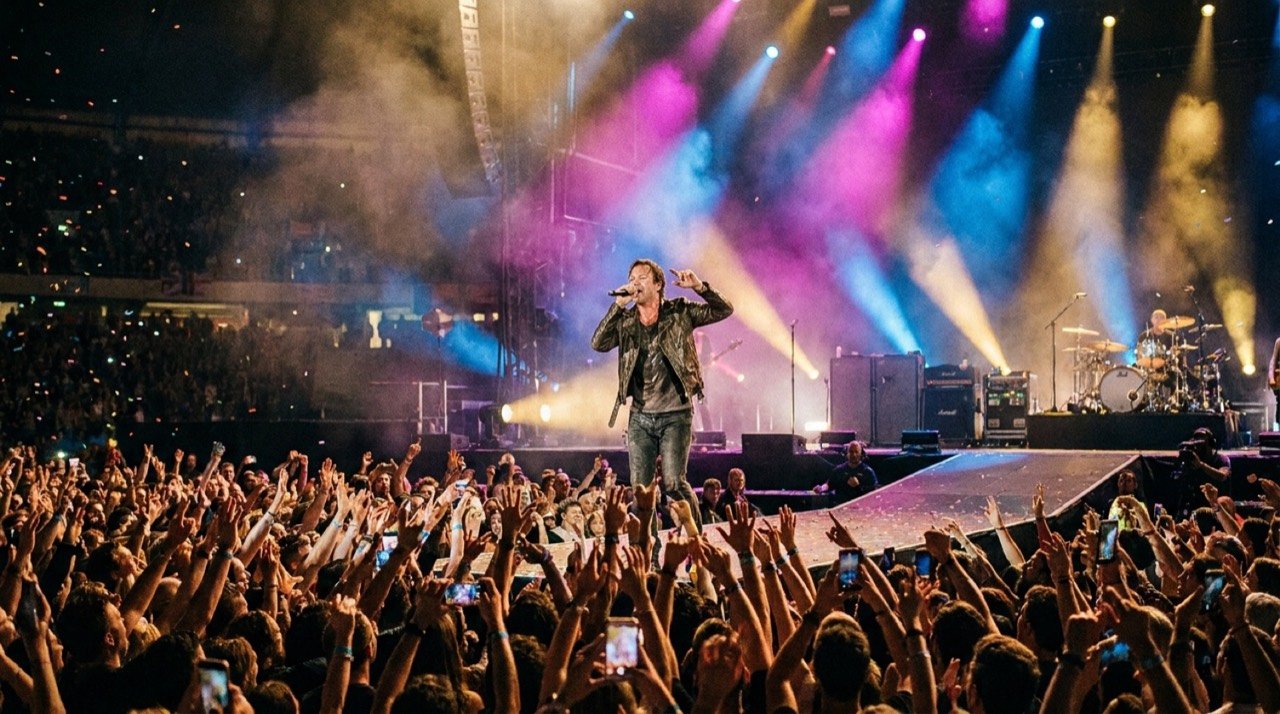
India's live-music scene is roaring back, with a packed festival calendar spanning genres, cities and audiences — and a fast-growing business behind it. From compact club nights to sprawling open-air gatherings, the breadth of programming reflects an appetite for live experiences that has expanded well beyond the traditional strongholds. Promoters report strong ticket demand for everything from intimate indie showcases to large-scale electronic and film-music concert tours, as audiences increasingly spend on experiences over things. The shift in spending priorities, particularly among younger audiences, has turned live music from an occasional treat into a regular fixture of social and cultural life.
What makes this moment worth pausing on is not simply that concerts are happening, but that they are happening at scale and with a regularity that did not exist a few years ago. A live-music sector that once revolved around a handful of marquee dates each year is beginning to resemble something closer to a functioning industry, with predictable seasons, recurring venues and a customer base that treats attendance as routine rather than exceptional. That transition, from novelty to habit, tends to be the point at which an emerging market starts attracting serious capital and serious scrutiny in equal measure.
A fuller calendar
The diversity of the line-up is striking, with festivals catering to a wide range of tastes and demographics. Independent artists find audiences at smaller, curated events, while big-ticket electronic and film-music tours draw large crowds, giving the calendar a depth and variety that supports a year-round circuit rather than a handful of marquee dates. That variety also broadens the geography of live music, as events spread to more cities and reach audiences who once had few opportunities to attend major shows close to home.
This broadening geography deserves particular attention. A live-music economy concentrated in two or three metros is inherently fragile — dependent on a small number of venues, a small number of promoters and a small number of local administrations to get permissions and logistics right. As festivals and tours reach a wider spread of cities, the risk is distributed too, and so is the opportunity. Local vendors, venue owners and civic authorities in smaller cities gain a stake in getting this right, which is itself a quiet but meaningful shift in how the country's cultural economy is organised.
The experience economy
The boom has spawned a wider ecosystem of stage designers, sound engineers, hospitality vendors and content creators, turning festivals into significant local economic events. A single large festival can generate work across many trades and inject spending into the surrounding area, from accommodation and food to transport and local services. As one festival organiser put it, "the live circuit has become a lifeline for independent artists — and a serious business in its own right."
That framing is worth taking seriously. It signals a shift in how the industry understands itself: not as a collection of one-off events staged around a few big names, but as a recurring economic activity with its own supply chains, labour markets and seasonal rhythms. Once an industry starts thinking in those terms, it also starts making longer-term investments — in equipment, in trained crews, in venues built or retrofitted for repeated use — rather than treating each event as a standalone gamble. That is typically the difference between a boom that fades and one that compounds.
Why it matters
For independent musicians in particular, the live circuit offers a vital source of income and exposure at a time when recorded music alone rarely pays the bills. The growth of touring and festivals provides a stage on which emerging acts can build followings and sustain careers, strengthening the broader creative economy. This is not a marginal point: in a streaming-dominated market where recorded output is monetised at fractions of a rupee per play, live performance has become one of the few reliable channels through which artists can convert an audience into an income.
Four threads capture the shape of what is happening: strong demand running the full range from indie showcases to stadium-scale tours; a broader shift in consumer spending toward experiences rather than goods; a supporting ecosystem of designers, engineers and vendors that has grown up around the circuit; and a genuinely new income stream for independent artists who might otherwise struggle to monetise their work. Each of these reinforces the others — more demand supports more infrastructure, more infrastructure makes more shows viable, and more viable shows give artists more reason to keep touring.
The outlook
Organisers are now investing in safety, crowd management and sustainability as festivals scale up to meet the surging appetite. As audiences grow, so do the responsibilities of running large gatherings well, and the industry's ability to handle crowds safely and operate responsibly will shape whether the current boom proves durable. This is the point at which growth stories in India's live sector have historically run into trouble: venues built for smaller crowds pressed into service for much larger ones, informal crowd-control arrangements that do not scale, and administrative processes that treat every event as a fresh negotiation rather than part of a repeatable system.
The stakes here extend beyond any single festival's balance sheet. Safety failures at large public gatherings tend to produce swift regulatory crackdowns that can chill an entire sector's growth for years, regardless of how well most operators were behaving. Conversely, a track record of well-run, well-regulated events tends to attract exactly the kind of institutional investment — from hospitality chains, ticketing platforms and municipal authorities alike — that turns a seasonal boom into permanent infrastructure. Organisers who treat safety spending as core to the business model, not an afterthought bolted on after a scare, are the ones most likely to still be operating five years from now.
The NE Times View
India's live-music surge is real money, not just vibes — ticketing, hospitality and gig work all ride on it. The test now is infrastructure and safety: too many venues still cut corners on crowd management and artist payments. If states treat concerts as a serious revenue stream rather than a permit headache, the experience economy could become a genuine job engine beyond the metros.
That last point bears repeating, because it is where policy could either accelerate or squander what is currently organic momentum. State and municipal governments that streamline permissions, invest in venue infrastructure and hold organisers to consistent safety standards stand to gain not just tax revenue but a durable, labour-intensive industry that spreads economic activity well beyond a handful of large cities. Governments that continue to treat each festival as a bureaucratic exception risk pushing organisers toward the same few permissive jurisdictions, concentrating the benefits and leaving the rest of the country's potential audiences and workers on the sidelines.
Key takeaways
- India's festival and touring calendar has broadened significantly, spanning genres, cities and audience types rather than a handful of annual marquee events.
- A supporting ecosystem of stage designers, sound engineers, hospitality vendors and content creators has turned festivals into meaningful local economic events.
- Live performance has become a critical income stream for independent artists in an era when recorded music alone rarely sustains a career.
- Safety, crowd management and sustainability investment will determine whether the current boom is durable or vulnerable to a single high-profile failure.
- Policy choices at the state and municipal level — treating concerts as a revenue and employment opportunity rather than a permitting burden — could determine whether the benefits spread beyond the metros.
You may also like to read
Busan's streaming festival returns with a record field as the Global OTT Awards crown the platform era
The Korea International Streaming Festival runs June 18-21 with its flagship Global OTT Awards drawing a record 231 submissions, signalling how Asia's streaming industry is building institutions to match its commercial clout.

How a $750,000 horror film became the biggest festival acquisition in box-office history
Curry Barker's 'Obsession', bought by Focus Features out of a Toronto midnight screening, has grossed roughly $286 million worldwide, eclipsing 'The Blair Witch Project' and rewriting the economics of festival dealmaking.

Netflix's Live-Action 'Avatar: The Last Airbender' Returns June 25 as Renewals Stack Up
The second season of Netflix's live-action 'Avatar' adaptation arrives June 25, headlining a month in which the streamer also confirmed a third and final season plus a wave of returning hits.
Billboard India Goes Live in 2026, Bringing Iconic Charts and Awards to the World's Fastest-Growing Music Market
The global music brand launches an India edition operated by Other Side Ventures and backed by entertainment lawyer Priyanka Khimani, with charts, editorial, a Power Player list and plans for an Indian Billboard Music Awards.
More from this section
More
72nd National Film Awards: Fans Back Mammootty, Allu Arjun, Sai Pallavi
Speculation around the 72nd National Film Awards is intensifying as fan communities across India's language film industries champion favourites including Mammootty, Allu Arjun and Sai Pallavi ahead of any official announcement.

Aamir Khan Marries Gauri Spratt in Private Pali Hill Ceremony
Aamir Khan and Gauri Spratt tied the knot at the actor's Pali Hill home in Mumbai on July 5, turning a deliberately small family ceremony into Bollywood's biggest story of the day.

Akanksha Chamola's Lock Upp 2 Confession Sets Reality TV Abuzz
A personal revelation by Akanksha Chamola ahead of Lock Upp 2 has handed the reality show a viral talking point, underlining how confession-driven formats continue to dominate Indian television conversation.