Jagdeep Dhankhar Recovering After Angioplasty, Two Stents Placed
The former Vice President underwent a successful cardiac procedure after days of chest heaviness and breathlessness, with hospital sources confirming two stents were placed to restore blood flow.
Commentary & Analysis ·

Former Vice President Jagdeep Dhankhar has undergone a successful angioplasty and received two stents, the Indian Express reported, citing hospital sources. The procedure followed several days of warning signs — chest heaviness while walking, shortness of breath and intermittent chest pain — that eventually prompted him to seek cardiac evaluation at Eternal Hospital. On the surface, this is a routine medical update about a senior public figure. Looked at more closely, though, it is a story about timing, about how symptoms are read or misread, and about a health burden that India has yet to fully reckon with.
What happened
According to the hospital-linked reporting, Dhankhar's symptoms had built up gradually over the preceding days rather than arriving as a sudden emergency. This is an important distinction. Cardiac events are often imagined, in popular understanding, as abrupt and dramatic — a collapse, a clutching of the chest, an ambulance called in a moment of crisis. Dhankhar's case, as reported, followed a quieter and in many ways more common trajectory: heaviness on exertion, breathlessness that crept in during ordinary walking, and intermittent chest pain that could plausibly have been dismissed as fatigue, indigestion or the ordinary wear of age. It was only after these signs persisted that he sought evaluation.
After assessment, doctors performed an angioplasty — a well-established procedure that restores blood flow through coronary arteries that have narrowed or become blocked — and placed two stents to keep the affected vessels open. This is standard, effective intervention for exactly the kind of presentation described, and the reported outcome, a successful procedure, is the best-case result for this type of cardiac event.
The limits of what is known
It is worth being precise about what is actually confirmed here, because health reporting on public figures easily drifts into speculation. The confirmed facts remain limited: a successful procedure, two stents placed, and a set of reported symptoms that preceded the intervention. There is, as yet, no detailed account of his broader cardiac history, no confirmed recovery timeline, and no word from Dhankhar himself, his family, or an official spokesperson beyond what has been relayed through hospital sources to the press. Any further detail on his condition or his path to recovery should be expected only from those authoritative channels — the family, the hospital, or an official statement — rather than from inference or extrapolation. Readers and other outlets would do well to treat anything beyond these bare facts with caution until confirmed.
Why a routine procedure still matters as news
An angioplasty with stent placement is, in cardiological terms, unremarkable — it is performed on a very large number of patients across India every year, and the technology and technique are mature and well understood. What makes this newsworthy is not the medical procedure itself but who it happened to and what it illustrates. Dhankhar is a former Vice President of India, a person who by virtue of his office would have had ready access to the country's best available medical care and, presumably, regular health monitoring. And yet the reported sequence of events suggests that even with that access, the warning signs were experienced over several days before action was taken. That gap between the first symptom and the decision to seek care is precisely where outcomes are often decided, for better or worse, in cardiac medicine.
The wider public-health backdrop
Beyond the health update for a former constitutional office-holder, the episode carries a broader resonance for India as a whole. Cardiovascular disease remains one of the country's biggest killers, and its burden is frequently described by health researchers as arriving earlier in life for Indians than for populations in many other parts of the world. Dhankhar's case illustrates a familiar and recurring pattern in that broader picture — symptoms that appear gradually, during the exertion of everyday activity like walking, rather than as a dramatic and unmistakable collapse. It is exactly this gradual, easy-to-rationalise presentation that makes coronary artery disease dangerous at a population level, because it gives people repeated opportunities to explain the discomfort away as something ordinary rather than something urgent.
High-profile health events like this one often prompt a wave of public awareness about the value of timely cardiac screening, particularly among people in middle age and older who may be carrying undiagnosed risk factors. When a familiar public figure's illness becomes national news, it tends to prompt exactly the kind of conversations — among families, in workplaces, between patients and doctors — that abstract public-health messaging rarely achieves on its own. In that sense, the visibility of Dhankhar's case may do more good for cardiac awareness than any number of general advisories.
Stakeholders and what comes next
For Dhankhar himself and his family, the immediate priority will be recovery and, in time, a return to normal activity under medical guidance — details that, as noted, will only be confirmed through official or family channels. For the hospital and treating doctors, the successful outcome of the procedure will stand as the relevant clinical fact, though further updates on his condition would similarly need to come from them directly. For the wider public, and particularly for readers in the age bracket where coronary artery disease becomes a meaningful risk, the more durable takeaway sits outside the specifics of this one case: it is a prompt to notice, and act on, the kind of gradual symptoms described here rather than waiting them out.
What should be watched next is limited but clear. Any statement from Dhankhar, his office, or the hospital regarding his ongoing recovery and return to public duties would be the next confirmed development. Beyond that, this episode is likely to fade from the news cycle quickly, as most such health updates do, unless complications arise — in which case the same caution about relying only on confirmed, official information would apply with even greater force.
The NE Times View
The most useful takeaway from this story is not political but personal. A former Vice President with access to the best care still experienced days of exertional chest discomfort before evaluation — a reminder of how easily such signals are rationalised away, whatever one's station or access to medical facilities. India's cardiac disease burden strikes younger and earlier than in much of the world, and the difference between a stent and a tragedy is often nothing more than the decision to get checked promptly rather than waiting for symptoms to resolve on their own. We wish Dhankhar a full recovery, and we hope his experience nudges readers who recognise similar symptoms in themselves or their families toward a doctor rather than a delay.
Key takeaways
- Jagdeep Dhankhar underwent a successful angioplasty and received two stents at Eternal Hospital, following days of chest heaviness, breathlessness and intermittent chest pain.
- The symptoms built up gradually rather than presenting as a sudden emergency, a pattern common in coronary artery disease.
- Confirmed details remain limited to the procedure and reported symptoms; further updates on his recovery should come only from family, hospital or official sources.
- The case underscores that even those with access to premier medical care can delay evaluation of warning signs, reflecting India's broader and comparatively early-onset cardiovascular disease burden.
- The NE Times views this as a timely prompt for readers to seek prompt medical evaluation of exertional chest symptoms rather than dismissing them.
You may also like to read
Supreme Court Fines Samay Raina, Ranveer Allahbadia and Ashish Chanchlani for Non-Compliance
India's Supreme Court imposed Rs 3 lakh costs on Samay Raina, Ranveer Allahbadia and Ashish Chanchlani after finding non-compliance with directions in a disability-related case.

CBSE Three-Language Policy Reaches Supreme Court as Schools, Parents and Teachers Raise Practical Concerns
The Supreme Court is hearing challenges to CBSE's Class 9 three-language policy, balancing multilingual education with concerns over teachers, books, choice and implementation timelines.
Bhojshala Dispute: Supreme Court Orders Nearby Space for Friday Namaz as Appeals Continue
The Supreme Court directed authorities to provide an adjacent space for Friday namaz near Bhojshala, barred structural changes without permission and prepared to hear appeals quickly.

IMD Warns of Heavier Rain in East and Northeast India as Monsoon Risks Shift Across the Country
IMD expects increased rainfall over east and northeast India, eastern Uttar Pradesh and the western Himalayas, while activity remains subdued in several western and southern regions.
More from this section
More
AICTE Industry Fellowship 2026: Rs 1.5 Lakh Scheme Closes July 5
The AICTE Industry Fellowship Programme 2026, which places technical-education faculty inside leading companies on a Rs 1.5 lakh monthly stipend, reached its application deadline on July 5.
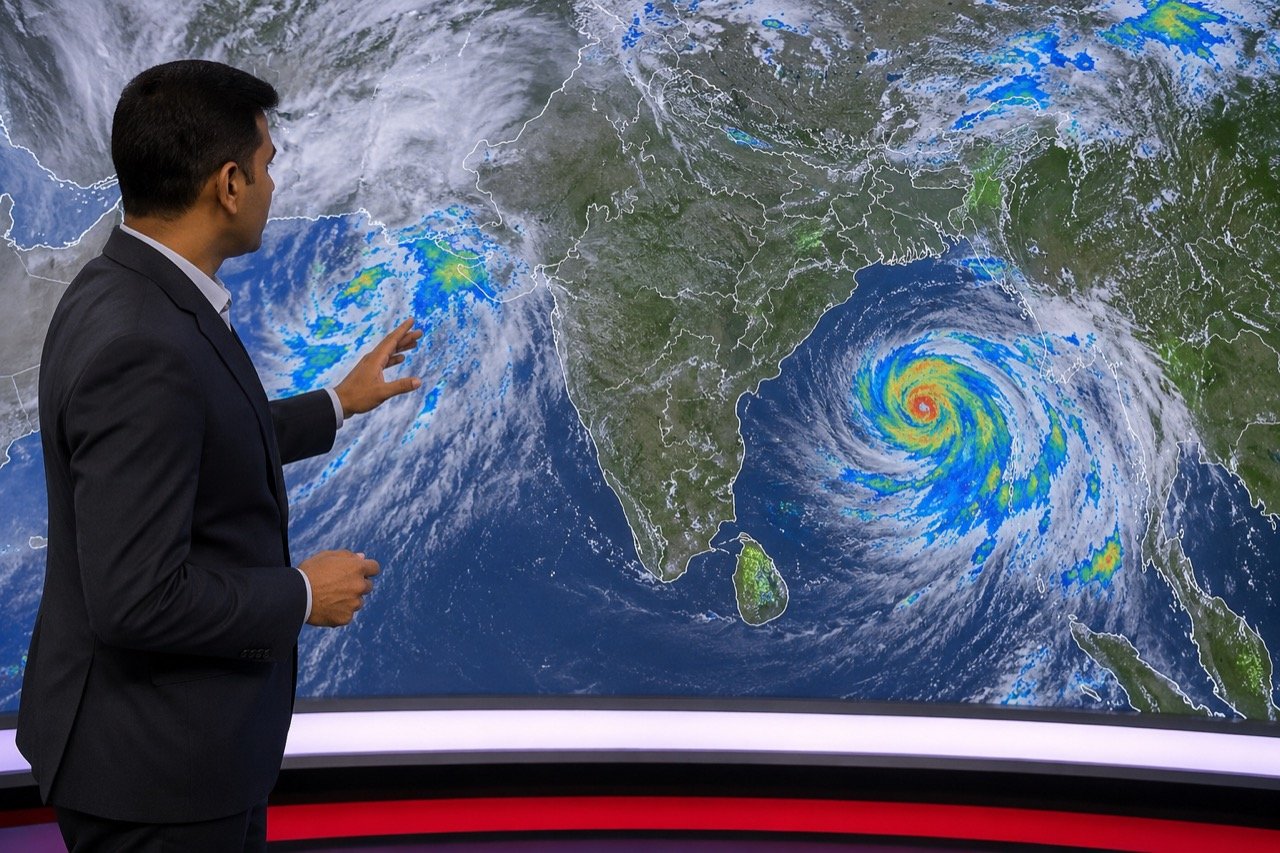
Bay of Bengal Low Pressure System Revives Monsoon Over Western India
A low-pressure system over the Bay of Bengal has pushed the monsoon back into an active phase, bringing steady heavy rain to Kerala, coastal Karnataka and Maharashtra, and putting Mumbai and Pune on preparedness watch.
Bishnoi Gang Suspects Injured in Haryana Encounter as Police Tighten Net
A joint Haryana-Delhi Police operation in Bahadurgarh left two suspected Lawrence Bishnoi gang members injured, spotlighting the multi-state coordination now central to India's fight against organised crime networks.