Anirudh's 2026 World Tour Pushes Tamil Film Music Onto Global Arenas
As Anirudh Ravichander lines up a 2026 international concert run across North America and beyond, Tamil film music is increasingly filling arenas once reserved for pop and rock headliners.
Commentary & Analysis ·
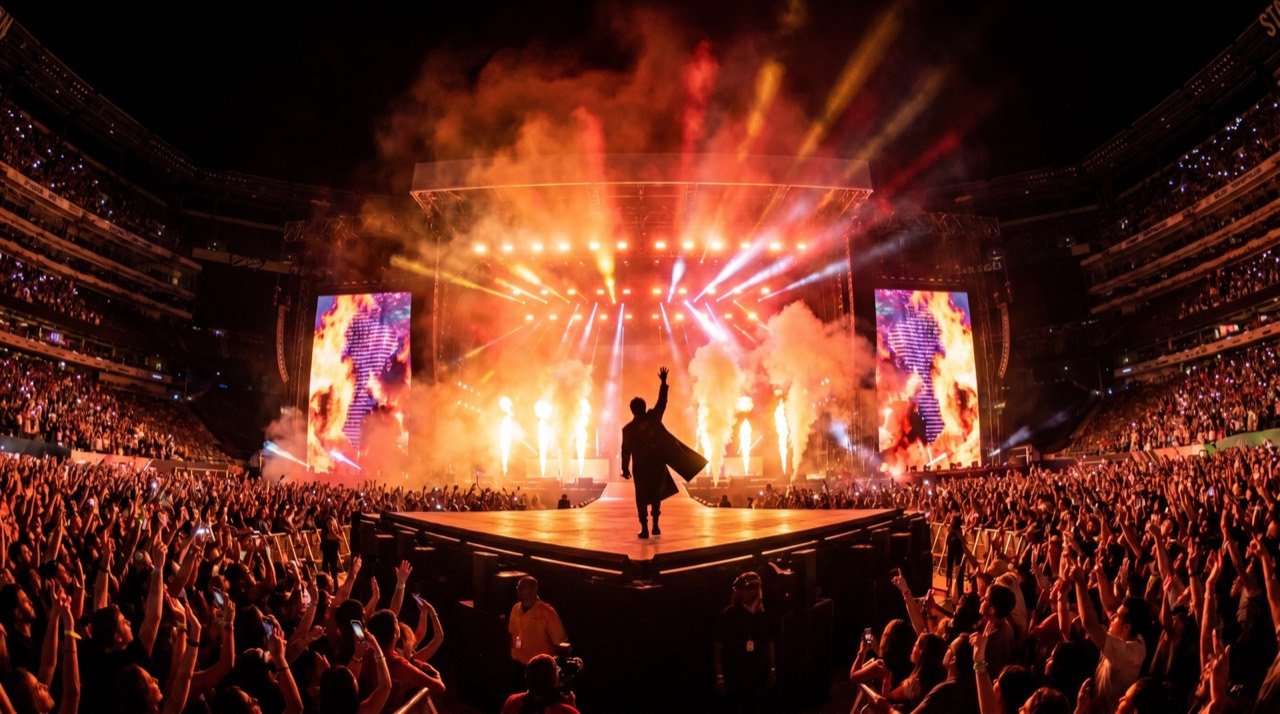
Anirudh Ravichander, the composer who has defined the sound of contemporary Tamil cinema, is set to take that sound abroad again with a 2026 concert run spanning North America and other international markets. The tour underlines a broader shift in which film-music composers, not just playback singers, have become bankable live headliners capable of selling out major venues. This is not a marginal development in the entertainment calendar. It reflects a structural change in how Tamil cinema's music travels, who profits from that journey, and what kind of live-entertainment product Indian regional cinema can now export at scale.
From soundtrack to stadium
Anirudh's live shows pair full-band arrangements with the chart-topping numbers that have anchored some of Tamil cinema's biggest films of the decade. His scheduled 2026 dates across the United States and Canada continue a touring model that treats film soundtracks as live spectacles in their own right, complete with crowd singalongs to tracks audiences first heard in cinemas. That distinction matters. A film score, however popular, is traditionally consumed passively, embedded within a narrative and experienced once in a theatre and then repeatedly through streaming. Turning that same material into a stadium event converts a byproduct of cinema into an independent commercial product, one that can be scheduled, ticketed and toured on its own commercial logic, detached from any single film's release cycle.
The format has proven durable. Where film-music concerts were once nostalgia exercises, revisiting decades-old hits for audiences seeking familiarity, Anirudh's shows lean on a steady pipeline of recent hits, giving each tour a contemporary setlist rather than a greatest-hits museum piece. This is a meaningful departure from the standard playbook of legacy concert circuits, and it is only possible because Anirudh has maintained an unusually high hit rate across successive Tamil film releases through the decade. A touring act built on nostalgia has a shelf life; one built on a continuously refreshed catalogue does not, provided the composer keeps producing work that lands with audiences.
Why the diaspora circuit matters
International dates are increasingly central to the economics of Tamil music stardom. A large, affluent diaspora across North America, the Gulf and Southeast Asia provides a ready audience willing to pay arena prices, and promoters have built a reliable circuit around it. This is worth dwelling on, because it explains why a composer's international touring calendar has become as commercially significant as any single film score. Diaspora audiences in these markets combine disposable income with strong cultural attachment to Tamil cinema, a combination that has historically been harder to monetise through domestic Indian ticket pricing alone. Arena-scale pricing abroad allows promoters and artists to capture value from an audience segment that streaming platforms and domestic box office cannot fully reach.
For composers, touring also deepens the personal brand that, in turn, drives streaming numbers back home. The relationship runs in both directions: a strong international tour reinforces a composer's stature in India, while continued chart success in India supplies the fresh material that keeps international audiences returning rather than drifting toward nostalgia-only programming. This feedback loop is precisely what a promoter operating in the diaspora circuit pointed to in describing audience expectations, noting that overseas audiences are not turning up merely for nostalgia but want the songs from the current year's films performed live. That observation captures the core commercial insight driving this touring model: recency, not merely reputation, is now a selling point.
A maturing live ecosystem
The rise of composer-led touring sits alongside a wider boom in India's live-music economy, where regional-language acts are commanding bookings that once went only to Bollywood or international names. This shift has implications well beyond Tamil cinema. It suggests that India's live-entertainment market is diversifying away from a Bollywood-and-international-headliner default and toward a more regionally plural structure, one in which South Indian, and specifically Tamil, acts can headline arenas on their own commercial merits rather than as supporting or niche bookings.
Anirudh's continued international presence helps normalise Tamil film music as a global live product rather than a niche export. Normalisation here is the operative word: once promoters, venues and audiences abroad come to expect Tamil film-music tours as a recurring, bookable category rather than an occasional novelty, the infrastructure around it, venues willing to book at scale, promoters with established relationships in the diaspora circuit, and audiences primed to buy tickets year after year, becomes self-reinforcing. That infrastructure, once built, lowers the barrier for other Tamil composers and artists to follow the same path.
What this means for the wider industry
As the 2026 dates firm up, the tour reinforces a trend years in the making: that the most exportable face of Tamil cinema may increasingly be its music, carried to global stages by the composers who make it. This has consequences for how the Tamil film industry thinks about its own economics. If a composer's live-touring revenue and brand value can rival or complement box-office and streaming income, then studios, producers and composers alike have new incentive to structure soundtrack releases, live rights and touring calendars as part of a coordinated commercial strategy rather than treating the concert circuit as an afterthought once a film has completed its theatrical run.
It also raises the stakes for how composers manage their own catalogues and public presence. A touring model that depends on a "steady pipeline of recent hits" places pressure on composers to sustain output and relevance across multiple film projects simultaneously, rather than relying on a small number of career-defining hits. For an industry watching this model succeed, the incentive to invest in composer-led international touring, and in the promotional and logistical infrastructure that supports it, is likely to grow.
The NE Times View
Anirudh filling overseas arenas marks a real shift, with Tamil film music now a standalone draw rather than an accompaniment to the films that birthed it. This is the diaspora economy maturing into a cultural export, and it should prompt the wider Indian music industry to take film composers seriously as live headline acts, not just studio names. The broader lesson extends beyond Tamil cinema: regional Indian music, when backed by a large and affluent diaspora audience and a composer capable of sustaining a contemporary catalogue, can support a genuine international touring economy independent of Bollywood's traditional dominance of that space. Whether other regional industries can replicate this model will depend on whether their composers can match Anirudh's combination of consistent hit-making and international audience-building.
Key takeaways
- Anirudh has 2026 concert dates lined up across the United States and Canada as part of a broader international touring run.
- His setlists draw on recent Tamil film hits rather than only older catalogue, keeping the format contemporary rather than nostalgia-driven.
- Film-music composers are increasingly headline live draws in their own right, distinct from playback singers and the films their music originated from.
- The North America, Gulf and Southeast Asia diaspora circuit underpins the economics of this touring model, offering arena-level ticket pricing that domestic markets cannot match.
- Live shows abroad reinforce streaming numbers and brand momentum back in India, creating a feedback loop between touring success and continued domestic relevance.
You may also like to read
Diljit Dosanjh's Aura World Tour Keeps Punjabi Pop On The Global Marquee
Diljit Dosanjh's Aura World Tour rolls on through 2026 with stadium-scale dates abroad, cementing the singer-actor's standing as one of India's most bankable global live performers.
Karan Aujla Takes Punjabi Pop Global With 'P-POP CULTURE' World Tour
After a record-setting India run that drew 75,000 to its Delhi opener, Karan Aujla's 'P-POP CULTURE' tour pushes through the US, UK, Europe and Canada across 2026.
The Strokes Break Six-Year Silence With 'Reality Awaits' and a Sprawling Global Tour
The New York band's first album since 2020 lands on 26 June, made with Rick Rubin in Costa Rica, while a 'Reality Awaits' world tour rolls across three continents into late October.
Deep Purple Return With 'SPLAT!', Their Heaviest Record in Years, and an 86-Show World Tour
The rock veterans reunite with producer Bob Ezrin for a 24th studio album built on a single philosophical idea, paired with a marathon tour across 28 countries and three continents.
More from this section
More
72nd National Film Awards: Fans Back Mammootty, Allu Arjun, Sai Pallavi
Speculation around the 72nd National Film Awards is intensifying as fan communities across India's language film industries champion favourites including Mammootty, Allu Arjun and Sai Pallavi ahead of any official announcement.
Aamir Khan Marries Gauri Spratt in Private Pali Hill Ceremony
Aamir Khan and Gauri Spratt tied the knot at the actor's Pali Hill home in Mumbai on July 5, turning a deliberately small family ceremony into Bollywood's biggest story of the day.

Akanksha Chamola's Lock Upp 2 Confession Sets Reality TV Abuzz
A personal revelation by Akanksha Chamola ahead of Lock Upp 2 has handed the reality show a viral talking point, underlining how confession-driven formats continue to dominate Indian television conversation.