Aadhaar App Crosses 31 Million Downloads as Digital ID Use Expands
India's Aadhaar mobile app has passed 31 million downloads, underlining how QR-based digital identity is becoming part of everyday verification across welfare, banking, telecom and travel.
Commentary & Analysis ·
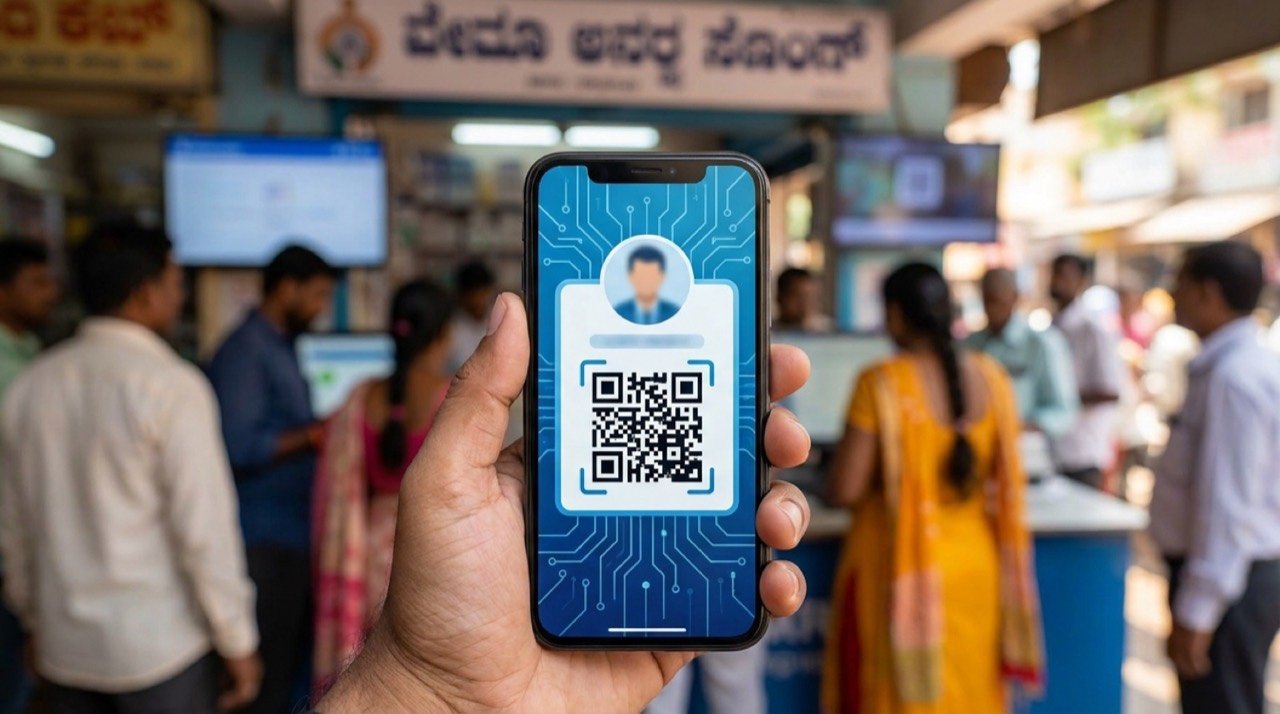
The Aadhaar mobile app has crossed 31 million downloads, according to reports citing official figures, a milestone that captures how quickly digital identity tools have woven themselves into daily life in India. The app lets users access their profile, present QR-code based identity proof and use related services, while authorities continue to push for safer digital handling of Aadhaar. On the surface, this is a simple adoption statistic. Beneath it, however, lies a more consequential story about how a country of well over a billion residents is quietly re-platforming the way it proves who it is, transaction by transaction, on the device most Indians now carry in their pocket.
Why the milestone matters
The number is more than a download statistic. Aadhaar-linked authentication is now embedded across welfare delivery, banking, telecom, travel, education and private-sector onboarding, touching nearly every formal transaction an Indian resident makes. When a system of that reach changes its primary interface, the effects are rarely confined to convenience. A widely used app changes how that authentication happens, moving it from physical cards and photocopies toward on-device, QR-based verification that can be shared selectively rather than handed over in full. This is a meaningful shift in the mechanics of identity proof: instead of surrendering a full document with every field visible to whoever asks for it, a resident can, in principle, share only what a given transaction requires. That distinction between full disclosure and selective disclosure is not a technical footnote. It is the difference between an identity system that leaks information by default and one that is built, at least in design intent, to minimise what is exposed.
It is also worth pausing on the scale involved. Aadhaar was conceived as a foundational identity layer for a population where physical documentation had historically been patchy, inconsistent or simply unavailable to large numbers of people, particularly the poor and those in remote areas. A biometric-backed digital identity was meant to solve a genuine inclusion problem: proving eligibility for subsidies, opening a bank account, or accessing a government scheme without a paper trail that many citizens could not easily produce. The app's download numbers suggest that this foundational layer has now matured into something residents actively reach for on their own initiative, rather than something imposed on them at a counter by an official demanding a photocopy.
What the app offers users
The app is designed to make routine identity tasks simpler and, in principle, more privacy-aware. Its appeal lies in reducing the need to carry or photocopy documents while keeping the user in control of what is shared. Among its stated features are profile access and management from a mobile device, QR-code based identity proof for quick verification, consent-based sharing instead of full document handover, reduced reliance on physical Aadhaar cards and photocopies, and reminders to keep linked mobile numbers updated. Each of these, taken individually, sounds modest. Taken together, they represent an attempt to redesign the everyday friction of proving identity in India, replacing a paper-based ritual with a digital one that is faster for the citizen and, ideally, leaves a narrower footprint of exposed personal data.
The emphasis on consent-based sharing deserves particular attention. Historically, presenting an Aadhaar card meant handing over a document containing a full name, address, date of birth, photograph and a twelve-digit number that could be recorded, copied or misused by whoever received it. A QR-code system built around selective disclosure changes that dynamic, at least in theory, by allowing a person to prove a specific fact, such as being of a certain age or being the person named on a record, without exposing every other field on the document. Whether this promise is fully realised in practice depends heavily on how consistently it is implemented by the banks, telecom operators, travel operators and private businesses that increasingly demand Aadhaar-based verification.
Data safety stays central
For users, the priorities remain data safety, consent-based sharing and keeping mobile numbers current so that authentication and one-time passwords work reliably. This last point is easy to overlook but practically significant. Aadhaar-linked authentication frequently depends on a registered mobile number to deliver one-time passwords, and a stale or disconnected number can lock a person out of services that now assume seamless digital verification. As more essential services migrate to this authentication model, a small administrative lapse, forgetting to update a phone number after changing operators, for instance, could translate into real difficulty accessing a bank account, a subsidy or a travel booking.
Misplaced trust or careless sharing of identity details remains a real risk as adoption widens. The very qualities that make the app convenient, its portability, its ease of use, its integration into so many services, also make it an attractive target for those seeking to exploit lapses in user vigilance or gaps in institutional handling of Aadhaar data. For policymakers, the download figures signal genuine public demand for easier digital identity management. They also raise the stakes on getting privacy safeguards, grievance redress and security right. A system used by tens of millions cannot afford ambiguity in how complaints are handled, how breaches are disclosed, or how liability is assigned when something goes wrong.
Weighing convenience against exposure
The tension at the heart of this milestone is not new to digital identity systems anywhere in the world, but it is especially pronounced in a system as central as Aadhaar. As India continues to build out public digital infrastructure, the trajectory of the Aadhaar app will be watched closely by regulators, banks and citizens alike. The more sectors that plug into Aadhaar-based verification, welfare, banking, telecom, travel, education, private-sector onboarding, the more valuable the underlying data becomes as a single thread connecting a person's financial, civic and personal life. That concentration of value is precisely what makes robust safeguards non-negotiable rather than aspirational.
The challenge ahead is to match rising convenience with equally robust protection of the identity data that now underpins so much of daily life. This is not simply a matter of encryption or app design. It is a matter of institutional discipline: ensuring that every entity asking for a QR scan, from a bank teller to a hotel front desk to a telecom retailer, actually respects the boundaries of consent-based sharing rather than treating the scan as a pretext to extract more information than is needed. It is also a matter of legal clarity, so that citizens know precisely what recourse they have if their data is misused, and regulators have the authority and the mechanisms to act quickly when it is.
The NE Times View
Thirty-one million downloads is impressive convenience, but scale is also the warning. As QR-based identity seeps into banking, telecom and travel, the question shifts from adoption to safeguards: who can demand a scan, how is consent recorded, and where does the data rest. India should pair this momentum with enforceable privacy guardrails, lest a tool for inclusion harden into routine, frictionless surveillance. The distinction between an identity system that empowers citizens and one that quietly normalises the collection and cross-referencing of their movements and transactions rests almost entirely on the strength of the rules governing consent, data retention and redress. Momentum alone does not settle that question; policy design does.
Key takeaways
- The Aadhaar app has crossed 31 million downloads, reflecting genuine public demand for easier digital identity management as India expands its public digital infrastructure.
- The app shifts identity verification away from physical cards and photocopies toward QR-code based, consent-based sharing, in principle reducing the amount of personal data exposed in routine transactions.
- Aadhaar-linked authentication now touches welfare, banking, telecom, travel, education and private-sector onboarding, making reliability of linked mobile numbers and careful data handling essential for users.
- Rising adoption raises the stakes on privacy safeguards, grievance redress and security, since a system used by tens of millions leaves little room for ambiguity when something goes wrong.
- The central challenge going forward is pairing convenience with enforceable privacy guardrails, so that a tool built for inclusion does not harden into routine surveillance.
You may also like to read

Meta Backs CRED With $900 Million As Kunal Shah Is Tapped To Lead WhatsApp Globally
Meta is investing about $900 million in Indian fintech CRED and has chosen founder Kunal Shah to lead WhatsApp globally, a twin move that ties one of the world's biggest platforms ever closer to Indian consumer technology.

Kunal Shah Named WhatsApp Global CEO as Meta Leads $900 Million CRED Round
CRED founder Kunal Shah has been named global CEO of WhatsApp as Meta leads a $900 million round valuing the Indian fintech at about $4.5 billion, placing a homegrown founder atop one of the world's biggest apps.
Kalshi Bars India Users as Prediction-Market Crackdown Widens
US event-contract platform Kalshi has added India to its restricted jurisdictions, barring Indian users from trading as MeitY tightens its squeeze on offshore betting and prediction-market platforms.

UPI Goes Cross-Border In Cambodia As India Builds Out Global Payments Corridor
Indian travellers can now scan and pay at millions of Cambodian merchants, while a new India-Nepal remittance link extends UPI's footprint to its tenth international market.
More from this section
More
CG Semi Sanand Plant Opens, Boosting India's Semiconductor Drive
Prime Minister Narendra Modi inaugurated CG Semi's chip assembly and test facility in Sanand, Gujarat, giving India's semiconductor mission a working manufacturing milestone rather than another policy promise.

Chinese E-Rickshaw Apps Banned in India Over Remote Disable Risk
The Centre has ordered the removal of three Chinese apps — BAT-BMS, Lossigy and Epoch-i-ion — over fears they could remotely disable battery-run e-rickshaws, turning mobility software into a public safety concern.

Connected Car Rules: India Plans Vehicle Software Update Norms
With cars increasingly run by software, the government is reportedly preparing update and security norms aimed at preventing vehicle hijacking and governing how connected cars in India are patched and protected.