Delhi's Expired Food Racket Shows Why a Raid Is Not a System
A 40,000-pack seizure in Okhla proves FSSAI can catch fraud after the fact — but without traceability reform, enforcement will always be one step behind.
Opinion & Analysis ·
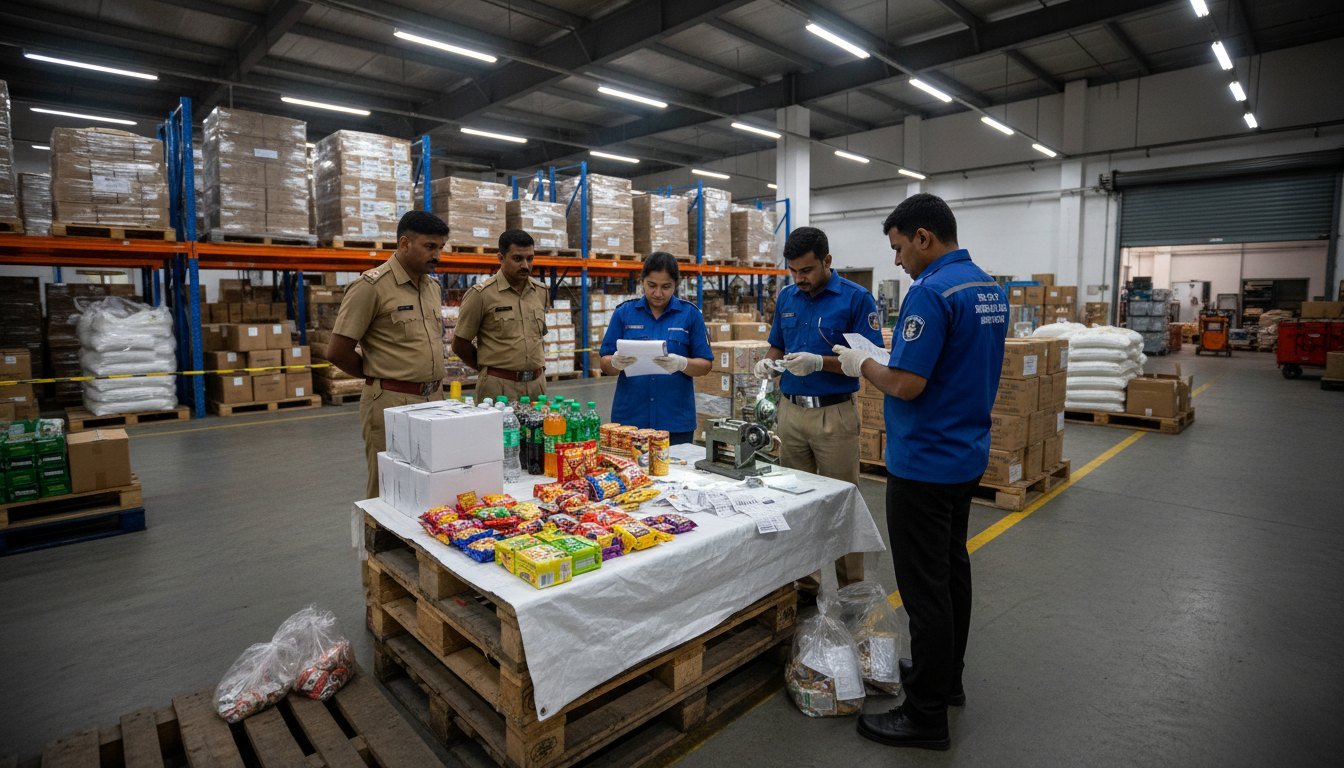
More than 40,000 packaged food items seized in a single Okhla warehouse should not read as a triumph. It should read as an indictment. When FSSAI walks into one relabelling operation and finds tens of thousands of packs bearing forged manufacturing or expiry information, the honest question is not "how good was this raid" but "how did fraud of this scale go undetected for so long." We at The NE Times believe the Delhi expired food racket exposes a regulatory posture built to react to scandals rather than prevent them, and that a single seizure, however satisfying, is worth little unless it forces permanent changes to how packaged food is tracked, sold and disposed of in this country.
A raid is not a system
FSSAI has done its job in Okhla. Investigators are now working through the harder questions: which goods were expired, which labels were altered, where the stock originated and how far the network reached. That is the correct sequence. But a seizure is a snapshot of one warehouse on one day. It tells us nothing about the warehouses not raided, the cartons already trucked out before inspectors arrived, or the printing equipment and buyers further down a chain that, by the regulator's own account, may extend well beyond the premises searched. A system that depends on periodic raids to catch fraud of this scale is, by design, always one step behind it.
This is not a criticism of the officers who carried out the operation. It is a criticism of the conditions that allowed a relabelling operation to reach a scale of 40,000-plus packs before anyone caught it. Fraud on that scale implies routine, practised handling: date stickers applied as a matter of course, cartons swapped, batch codes erased or overprinted, damaged goods repacked into counterfeit branded material. That is an assembly line, not a one-off scam, and assembly lines require suppliers, storage and buyers who ask no questions — all evidently available long enough to accumulate the volume seized.
The trust that packaging exists to protect
Packaged food is fundamentally a trust product. A shopper cannot taste-test a sealed carton, cannot inspect a factory floor, cannot verify a batch code against a manufacturer's ledger. All of that verification is meant to have already happened, and the label is the only evidence the buyer ever sees of it. That is precisely what makes relabelling such a corrosive crime: it does not just falsify a date, it counterfeits the entire chain of custody the label is supposed to certify. A consumer who buys a product with a forged expiry date has been deprived of the one piece of information they were relying on, and will typically never know it unless they fall ill or the fraud is caught, on their behalf, after the fact.
The mechanics described around this case — new date stickers on old stock, replaced outer cartons with untouched inner packs, erased or overprinted batch codes, damaged goods repacked into counterfeit branded material — are not exotic. They are the standard toolkit of relabelling fraud, and a toolkit used once, at scale, in a major distribution hub like Okhla, can be used again unless the underlying opportunity is closed off.
The honest counterargument, and why it is not enough
The fairest objection to our argument is that not all near-expiry stock handling is criminal, and that treating every discount bin as suspect would be unfair to legitimate retailers and consumers alike. That objection is correct as far as it goes. Legitimate clearance of near-expiry goods reduces food waste and can offer real value to buyers, provided the information on the pack remains honest. The crime here is not proximity to an expiry date; it is falsification of it. We accept that distinction fully and would not want a crackdown to treat every small trader clearing stock at a discount as a criminal suspect.
But that fair distinction cuts against complacency, not for it. If the line between legal clearance and criminal fraud is simply whether the label tells the truth, then the case for stronger, more continuous enforcement rests on checking that line far more often than a warehouse raid allows. A legitimate discount economy is exactly why a black-market relabelling economy can hide inside it so easily — near-expiry stock moving at low prices looks identical whether it is honest or fraudulent. That is an argument for more traceability, not less scrutiny.
What accountability actually requires
A seizure without a completed traceability trail is an unfinished job. Every packaged product should be linked to a manufacturer, a batch, a production date and a documented distribution chain, so that when a case like this breaks, investigators are not starting from zero. Retailers who knowingly bought altered goods should face tougher penalties than a shopkeeper genuinely deceived by a supplier — the two are not morally equivalent, and treating them as though they were lets the real organisers hide behind smaller, sympathetic defendants. Penalties overall must be severe enough that the fraud stops being profitable; a fine smaller than the margin on 40,000 relabelled packs is a business cost, not a deterrent.
Equally, investigators must resist treating the warehouse as the endpoint rather than the starting point. Transport records, payment trails and communications connect a single seized site to the printing equipment, the source of the original expired stock and the buyers prepared to accept it. Closing one warehouse while leaving that network intact does not dismantle the racket; it relocates it. The test of whether this action mattered is not the size of the seizure but whether, a year from now, the case is remembered as the one that mapped a network, or the one that simply closed a single address.
The bottom line
- A 40,000-pack seizure in Okhla is evidence of fraud at an operational scale, and operations of that scale do not arise from a single lapse — they point to gaps in traceability that FSSAI must now close, not merely publicise.
- The distinction between legitimate near-expiry clearance and criminal relabelling is real and worth defending, but it only strengthens the case for tighter batch-level tracking, since fraud hides most easily inside a legitimate discount economy.
- Penalties and follow-up investigation must reach the source of supply, the printing equipment and the buyers, not stop at the warehouse door, and must distinguish deceived small retailers from knowing participants in the fraud.
- The measure of success is not the raid itself but what follows it: a complete recall, a mapped supply chain, and reforms that make this specific style of relabelling meaningfully harder to repeat.
You may also like to read

Monsoon Readiness Is Not a Weather Problem. It Is a Governance Failure
IMD's forecasts are sharp enough to save lives; what killed two children in Mukhmelpur was not bad weather but nobody owning the hazard before the rain came.
Delhi Expired Food Racket: FSSAI Seizes More Than 40,000 Packs in Okhla Relabelling Raid
The enforcement action exposes how forged dates and repackaging can move unsafe or substandard goods back into the market, and why traceability matters for consumers.

Aadhaar's 31 Million Downloads Are the Quiet Engine of India's Payments Ambition
India's digital payments push is really an identity project in disguise, and the country is scaling it faster than it is building the privacy guardrails to match.
Aadhaar's Convenience Must Not Outrun Its Consent
Thirty-one million Aadhaar downloads and a relaunched Aarogya Setu prove Indians want digital identity — but adoption is not proof that consent is being honoured.