The Joint Family, Redesigned: Multigenerational Living Returns to Indian Homes
Rising real-estate and living costs are reviving the multigenerational household, but the 2026 version is built on flexible rooms, work-from-home corners and shared smart systems.
Commentary & Analysis ·

The Indian joint family never fully disappeared, but for a generation it felt like a fading arrangement, something urban India was gradually leaving behind as nuclear households became the aspirational norm. In 2026 it is back in a new form, driven less by tradition alone than by economics, and reshaped by the way Indians now live and work under one roof. What is emerging is not a simple return to the past but a recalibrated version of an old institution, one that borrows the emotional architecture of the joint family while rebuilding its physical architecture from scratch.
Why families are pooling roofs again
Soaring real-estate prices and the rising cost of everyday living have pushed families to share the financial burden of housing and utilities across generations. By combining incomes and splitting expenses, multigenerational households make sense of urban property prices that would stretch a single earner or young couple to breaking point. This is a straightforwardly economic calculation: when a mortgage or rent payment is divided across two or three earning adults rather than carried by one household, the arithmetic of homeownership in an expensive city changes considerably. For many families, the decision to live together again is less about wanting to and more about needing to, at least in the first instance.
Designers say the demand is reshaping the future of Indian housing, with buyers increasingly asking for homes that can hold parents, children and grandparents with dignity and a degree of privacy for each. That phrase, dignity and privacy, is doing a lot of work. It signals that today's multigenerational household is not simply the old joint family reassembled, where hierarchy and shared space were taken for granted, but a negotiated arrangement in which each generation expects, and is increasingly designed to receive, its own zone of autonomy. Developers and architects who once built primarily for the nuclear family unit are now having to think in terms of layered households, and that shift in demand is filtering into how new residential projects are conceived from the ground up.
Rooms that do more than one job
The defining feature of the 2026 home is flexibility. With work-from-home culture firmly entrenched, living rooms double as workspaces and bedrooms carry study corners, while foldable furniture and modular units let families reconfigure space through the day. This is a direct legacy of the pandemic-era normalisation of remote and hybrid work, which never fully reversed and has instead become a permanent feature of how urban Indian professionals structure their day. A home that must accommodate a working adult on video calls, a child attending online classes, and grandparents seeking a quiet corner for rest or prayer, all within the same square footage that once housed a single family unit, cannot afford rooms with only one purpose.
Increasingly, homes also map out dedicated zones for caregiving and for cultural and religious practices, reflecting the fact that a multigenerational household is not just an economic unit but a functioning ecosystem of different needs and rhythms. Among the recurring features driving this redesign are shared housing costs across generations that help absorb high property prices, adaptable rooms that flex between living, working and study through the day, foldable and modular furniture that reconfigures compact urban homes, and smart security and home-management devices that keep shared households running smoothly. Each of these elements addresses a distinct pressure point: cost, space, flexibility and the practical logistics of managing a larger household, and together they form the blueprint that architects are now working from.
The caregiving dimension
It is worth pausing on what dedicated caregiving zones actually represent. As Indian society ages and life expectancy rises, more households are managing the needs of elderly parents alongside young children, sometimes simultaneously. A home designed with a caregiving zone in mind is, in effect, acknowledging that eldercare is now a mainstream household planning consideration rather than an afterthought. This has implications well beyond interior design: it suggests families are increasingly choosing to keep ageing relatives at home rather than in institutional care, a choice shaped both by cultural preference and by the practical reality that professional elder care remains expensive and unevenly available in much of urban India. A home built to support this choice, with accessible layouts, proximity to shared living spaces, and room for caregiving equipment or assistance, makes that preference more sustainable for the families making it.
Privacy, technology and the future
Sharing a home across three generations only works if everyone can also retreat. Architects report rising demand for adaptable rooms and varying degrees of privacy as families evolve, alongside smart devices that make managing a busy household and keeping older relatives safe far easier than before. This is perhaps the most telling detail in the whole trend: the demand is not simply for more space, but for smarter boundaries within existing space. Technology is doing quiet but significant work here, monitoring devices and home-management systems reduce the friction of coordinating a larger household, while also offering reassurance that ageing parents living under the same roof, but perhaps in a separate wing or annexe, are safe without requiring constant direct supervision.
An architect specialising in residential design put the shift plainly: the new multigenerational home is not nostalgia for the old joint family, it is a practical answer to housing costs, built with flexible rooms and a bit of breathing space for everyone. That framing captures the tension at the heart of this trend. Families are choosing togetherness, but they are choosing a version of it engineered to avoid the friction that made earlier generations of joint families difficult for some members, particularly younger adults and women, who often bore the brunt of reduced privacy and autonomy in traditional joint households. The success of this new model depends heavily on whether design can actually deliver that breathing space, rather than merely promising it on a floor plan.
A distinctly contemporary household
What emerges is a distinctly contemporary Indian household: culturally familiar in its togetherness, but engineered for remote work, caregiving and the realities of urban property prices. For a growing number of families in 2026, sharing a home is not a step backward but a deliberate, design-led choice. This distinction matters because it reframes multigenerational living away from a narrative of economic hardship alone and towards one of adaptive, intentional planning. Families are not simply crowding together because they have no other option; increasingly, they are actively designing homes that make cohabitation comfortable, workable and even desirable, treating it as a lifestyle decision rather than a fallback position.
For India's housing and construction sector, this has knock-on implications worth watching. Developers who ignore the shift risk building units that no longer match how buyers actually want to live, while those who anticipate demand for flexible, multi-zone housing may find a durable market advantage. It also raises questions for urban planning more broadly: if multigenerational households become a lasting feature of Indian cities rather than a temporary response to a housing squeeze, the ripple effects could extend to how apartment complexes are zoned, how amenities are shared, and how future housing stock is designed from the outset rather than retrofitted.
The NE Times View
The redesigned joint family, with flexible rooms and shared smart systems, is a pragmatic answer to punishing real-estate costs and a quiet rebalancing of how India houses itself. This revival is driven as much by economic necessity as by sentiment, and its success will hinge on design that preserves privacy and autonomy, so cohabitation feels like a genuine choice rather than a compromise forced by unaffordable cities. The distinction between necessity and choice will not always be clean in practice, many families will find themselves somewhere between the two, but the direction of travel in housing design, towards flexibility, dedicated caregiving space and technology-assisted privacy, suggests the industry is at least attempting to build homes worthy of the arrangement being asked of them.
Key takeaways
- Rising property prices and living costs are the primary driver of the return to multigenerational living in India, with shared incomes making urban housing affordable across generations.
- Homes in 2026 are being designed around flexibility, with rooms serving multiple functions such as living, working and studying, aided by foldable and modular furniture.
- Dedicated caregiving zones and spaces for cultural and religious practice reflect the household's role as more than an economic unit, supporting ageing relatives and family traditions alike.
- Smart security and home-management technology is central to making shared households function smoothly and to keeping older relatives safe.
- The lasting success of this trend depends on whether design can deliver genuine privacy and autonomy, turning cohabitation into a deliberate choice rather than a forced compromise.
You may also like to read
Earthy Tones and Indoor Greens: The Mood Indian Homes Are Chasing in 2026
As monsoon light turns flat and grey, Indian interiors in 2026 lean into warm earthy palettes, humidity-loving plants and layered lighting to keep spaces cosy and alive.
Monsoon Home Care 2026: A Practical Checklist Before the Rains Settle In
From rooftop waterproofing to keeping electronics and wardrobes safe from damp, here is how Indian households are monsoon-proofing their homes this season.
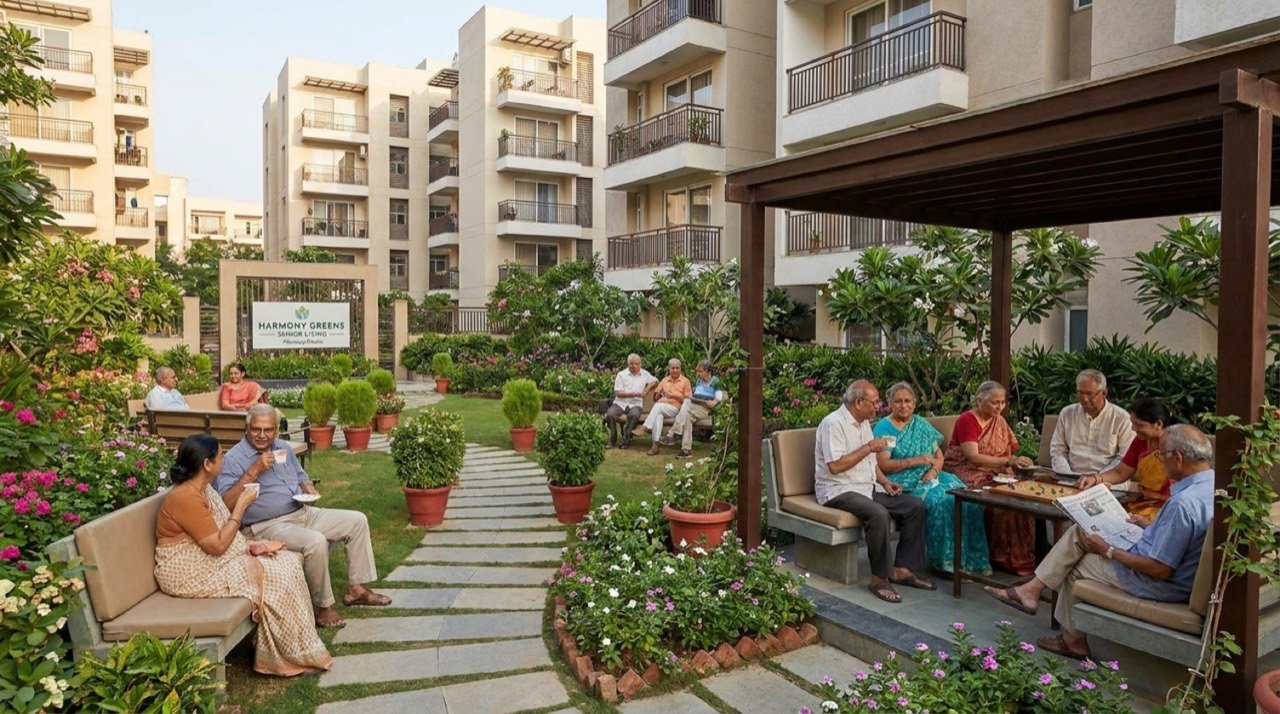
India's Senior Living Market Booms as Retirees Choose Managed Communities
India's senior living market is projected to surge from about $4.47 billion in 2026 to $14.14 billion by 2031, as ageing retirees increasingly opt for safe, service-led managed communities.
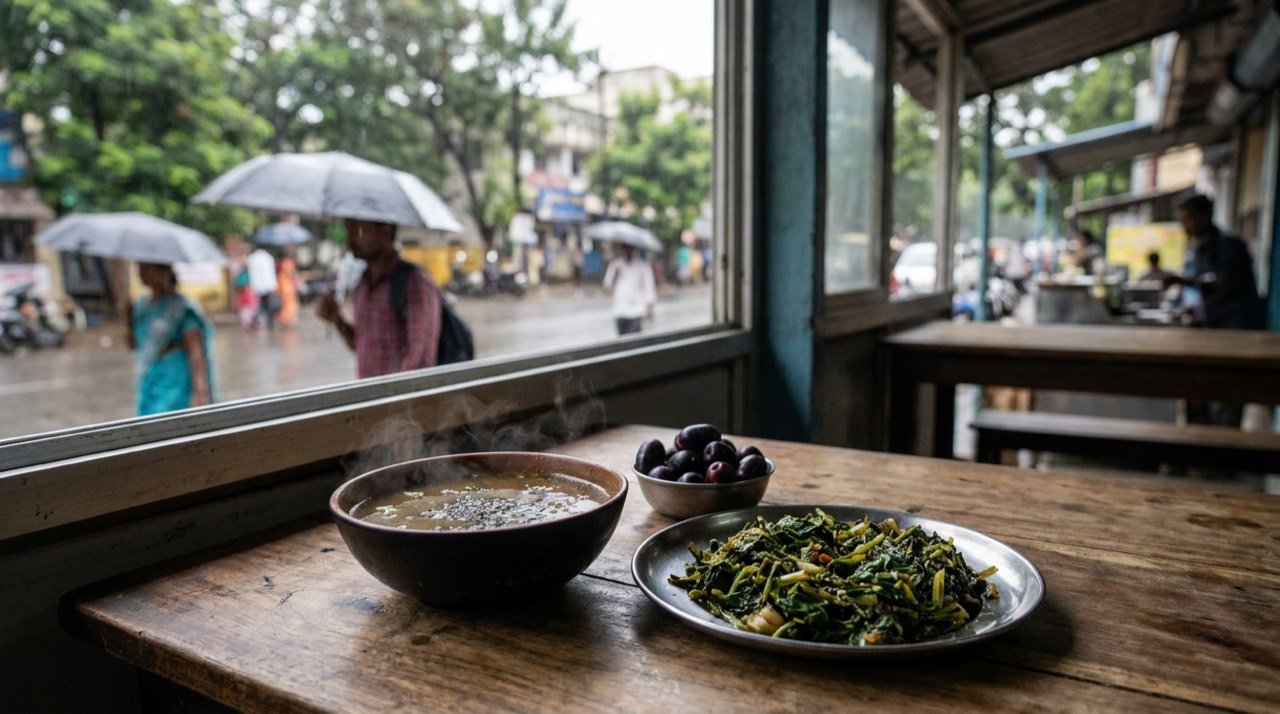
India's Monsoon Plate Returns to Its Roots as Seasonal Eating Goes Mainstream in 2026
From Kerala's ten-leaf stir-fries to jamun, rasam and warming spices, India's monsoon kitchens are blending ancestral ritucharya wisdom with the 2026 obsession with gut health and immunity.
More from this section
More
Bengaluru Lamborghini-Auto Swap: Entrepreneur's Gesture Goes Viral
A Bengaluru entrepreneur's spontaneous decision to trade seats with an auto-rickshaw driver, putting the cabbie behind a Lamborghini's wheel, has charmed social media and become the city's feel-good story of the week.
India's Monsoon Plate Returns to Its Roots as Seasonal Eating Goes Mainstream in 2026
From Kerala's ten-leaf stir-fries to jamun, rasam and warming spices, India's monsoon kitchens are blending ancestral ritucharya wisdom with the 2026 obsession with gut health and immunity.
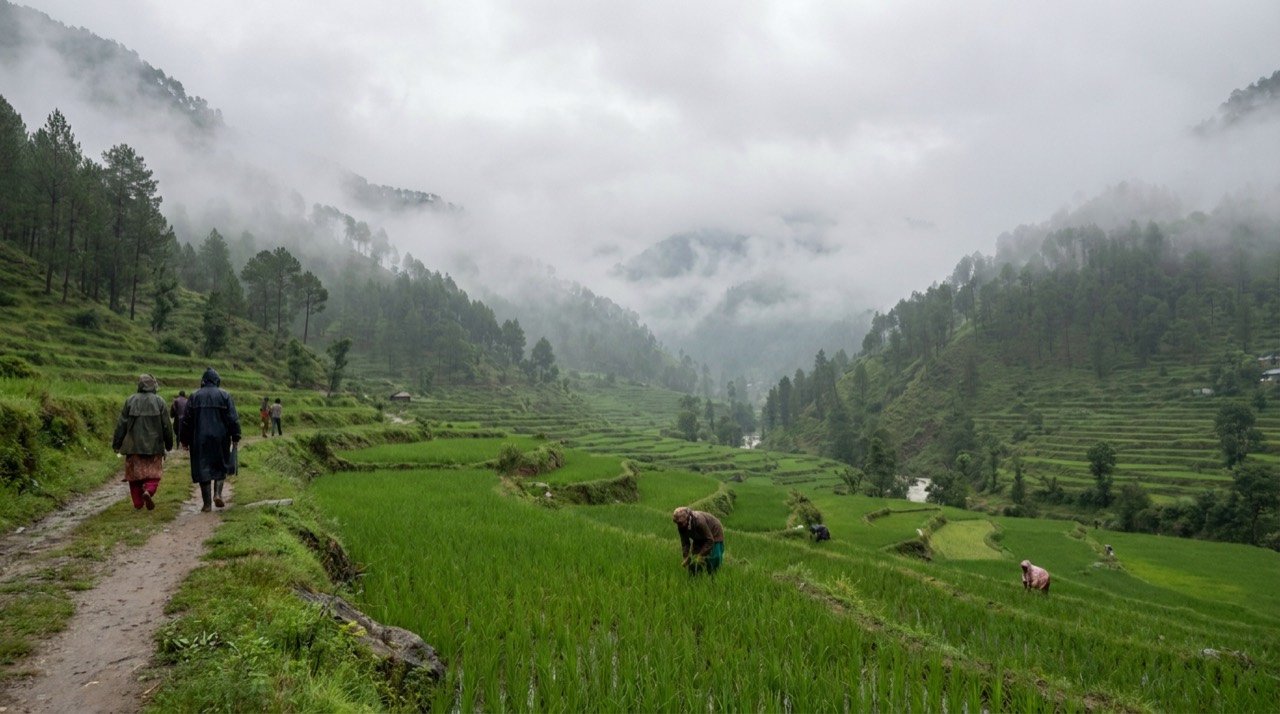
Misty Valleys and Cheaper Fares: India's Offbeat Monsoon Travel Boom in 2026
With domestic fares falling sharply and travellers seeking solitude, offbeat Himalayan hamlets, the rain-soaked Northeast and Ladakh's rain-shadow deserts are redrawing India's monsoon travel map in 2026.