Bengaluru Lamborghini-Auto Swap: Entrepreneur's Gesture Goes Viral
A Bengaluru entrepreneur's spontaneous decision to trade seats with an auto-rickshaw driver, putting the cabbie behind a Lamborghini's wheel, has charmed social media and become the city's feel-good story of the week.
Commentary & Analysis ·
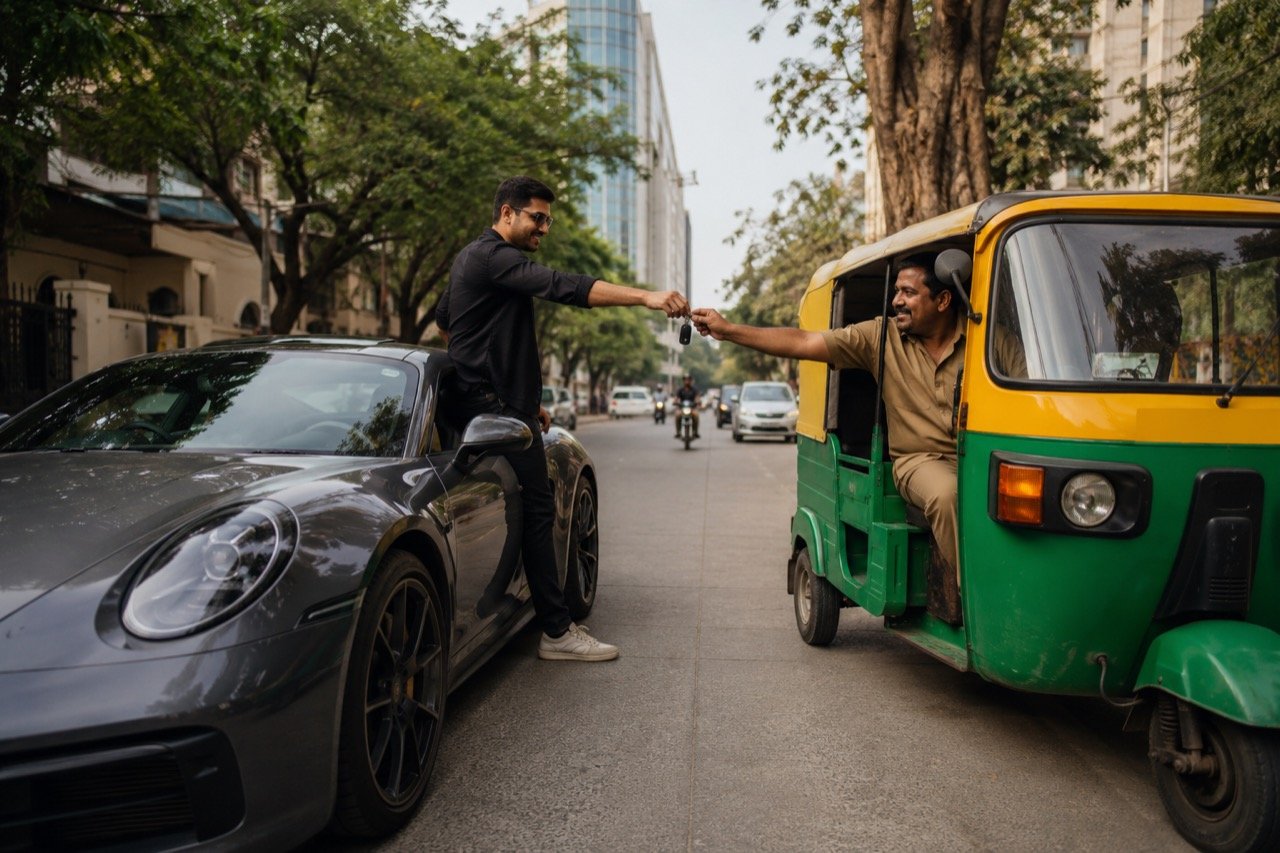
Bengaluru has a new viral moment, and for once it has nothing to do with traffic complaints or startup funding rounds. An entrepreneur in the city briefly swapped his Lamborghini with an auto-rickshaw driver, an exchange that NDTV's latest coverage flagged as one of the most-shared human-interest stories of the day. In a metropolis whose civic identity is so thoroughly bound up with technology money on one hand and gridlocked commutes on the other, a story that sidesteps both and simply shows two people trading places was always likely to travel fast.
Why a simple swap struck a chord
The visual does most of the work: a multi-crore supercar and the humble three-wheeler side by side, their drivers trading places. It compresses the contrasts of urban India, aspiration and everyday hustle, into a single frame that is instantly shareable. Bengaluru's internet culture, already rich with startup-wealth lore and auto-driver anecdotes, gave the clip a ready-made audience primed to engage with exactly this kind of juxtaposition.
Part of the appeal lies in how legible the image is without any caption at all. Anyone who has navigated Bengaluru's roads instantly understands the visual grammar being played with here: the Lamborghini as shorthand for the city's tech-fuelled wealth, the auto-rickshaw as shorthand for the daily grind that keeps the city moving. Putting the two side by side, and then having their drivers change seats, does not require an explainer thread or a moralising caption. The image communicates on its own, which is precisely why it spread across feeds so quickly and across such varied audiences, from those who follow startup culture closely to those who have never heard of the entrepreneur involved.
The mechanics of a viral moment
What happens next is likely to be more social-media reaction than official follow-up. These moments tend to live and die online, fuelled by reposts, memes and the occasional interview with the participants. There is no policy angle to chase, no regulatory body to comment, no controversy to adjudicate. That absence of an official track is, in its own way, part of the story's charm and also its limitation: it will burn brightly for a news cycle or two and then recede, as most purely feel-good viral clips do, without leaving behind the kind of institutional record that a policy story or a court case might.
The auto driver's reaction, by most accounts a mix of disbelief and delight, is the emotional core that keeps the story circulating. It is worth pausing on why that reaction matters so much to how the clip has been received. Viral content lives or dies on authenticity, and an unscripted, visibly genuine response from someone who did not expect to be handed the wheel of a supercar for even a few minutes reads as real in a way that staged publicity stunts rarely do. That authenticity is doing a lot of the work in making audiences want to share the clip further, tag friends, and add their own captions.
The lighter side of city life
Viral city stories travel because they are visually surprising and emotionally easy to share. This one needs no exaggerated social commentary to work; it is simply a playful, respectful exchange between two people on opposite ends of the mobility spectrum, and audiences responded to exactly that. Bengaluru, in particular, has developed a distinct genre of such stories over the past several years, from tales of generous tipping to unexpected acts of civic courtesy caught on camera, and this swap slots comfortably into that lineage.
It is also worth noting how such moments function as a kind of pressure valve for a city that spends a great deal of its digital energy complaining about traffic, infrastructure and the widening gap between old and new wealth. A story that offers warmth rather than grievance, even briefly, gives the city's online commentariat something else to talk about, and that shift in tone, however temporary, has its own value.
Reading the moment without overreading it
There is an obvious temptation to extract a larger lesson from two minutes of footage, to declare it a statement on inequality, or class, or the changing nature of urban camaraderie. The more honest reading is smaller and, in some ways, more useful: this was a spontaneous, good-natured gesture between two individuals, amplified by an audience hungry for exactly that kind of content on a given day. Assigning it more weight than that risks the kind of over-interpretation that has become common in viral-story coverage, where a fleeting clip is pressed into service as evidence of sweeping social change.
At the same time, dismissing the moment entirely would miss something real. Gestures of this kind, however brief, do shape the texture of public life in a city. They offer a counter-example, however small, to the more common narrative of auto drivers as background figures in the commutes of the wealthy, and they remind audiences that courtesy across economic lines is possible and, when it happens, worth noticing.
The NE Times View
In a news cycle crowded with conflict and policy fights, there is real value in a story whose only agenda is human connection. The swap works because it flattens hierarchy for a moment without pretending to erase it, and Bengaluru's response shows how hungry urban India is for warmth in its feeds. We would caution against reading grand sociology into a two-minute clip, but we would equally caution against dismissing it: small public gestures of respect shape how a city sees itself. If the moment nudges a few more people to treat auto drivers as equals rather than extras in their commute, it will have earned its virality.
This article is original commentary and analysis by The NE Times. Background facts were referenced from NDTV.
Key takeaways
- An entrepreneur in Bengaluru briefly swapped his Lamborghini with an auto-rickshaw driver, and NDTV flagged the exchange as one of the day's most-shared human-interest stories.
- The clip's power lies in its visual contrast, a supercar and a three-wheeler side by side, which needs no caption to communicate the aspiration-versus-hustle dynamic of urban India.
- The auto driver's genuine, unscripted reaction of disbelief and delight is the emotional core sustaining the story's spread online.
- The story is likely to remain a social-media phenomenon rather than generate any official follow-up, as these human-interest moments typically do.
- The NE Times reads the moment as a modest but meaningful gesture of respect rather than evidence of any broader social shift, while noting such gestures still matter to how a city sees itself.
You may also like to read
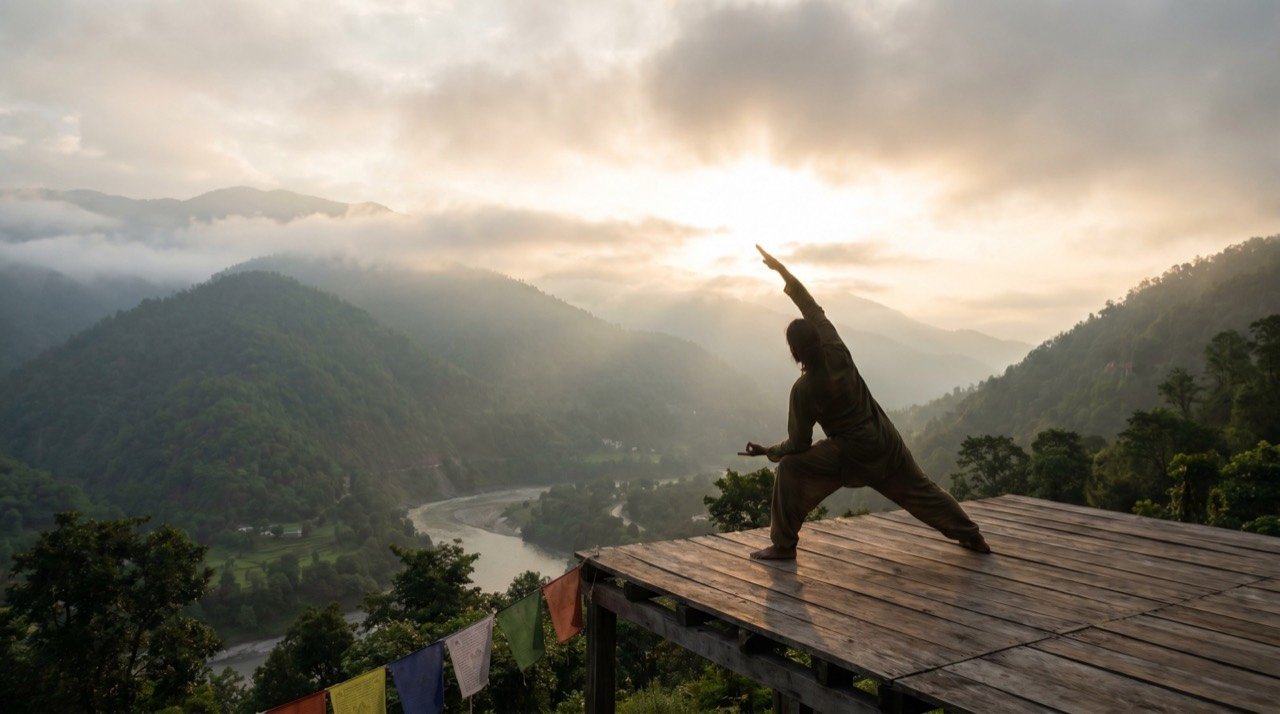
Filter Kaapi Meets Matcha: How Bengaluru's Cafes Outgrew the Third Wave in 2026
India's coffee capital is moving past flat-white minimalism into something more layered, from hyper-local filter-kaapi joints honouring South Indian roots to matcha-led tea rooms and single-origin obsessives.
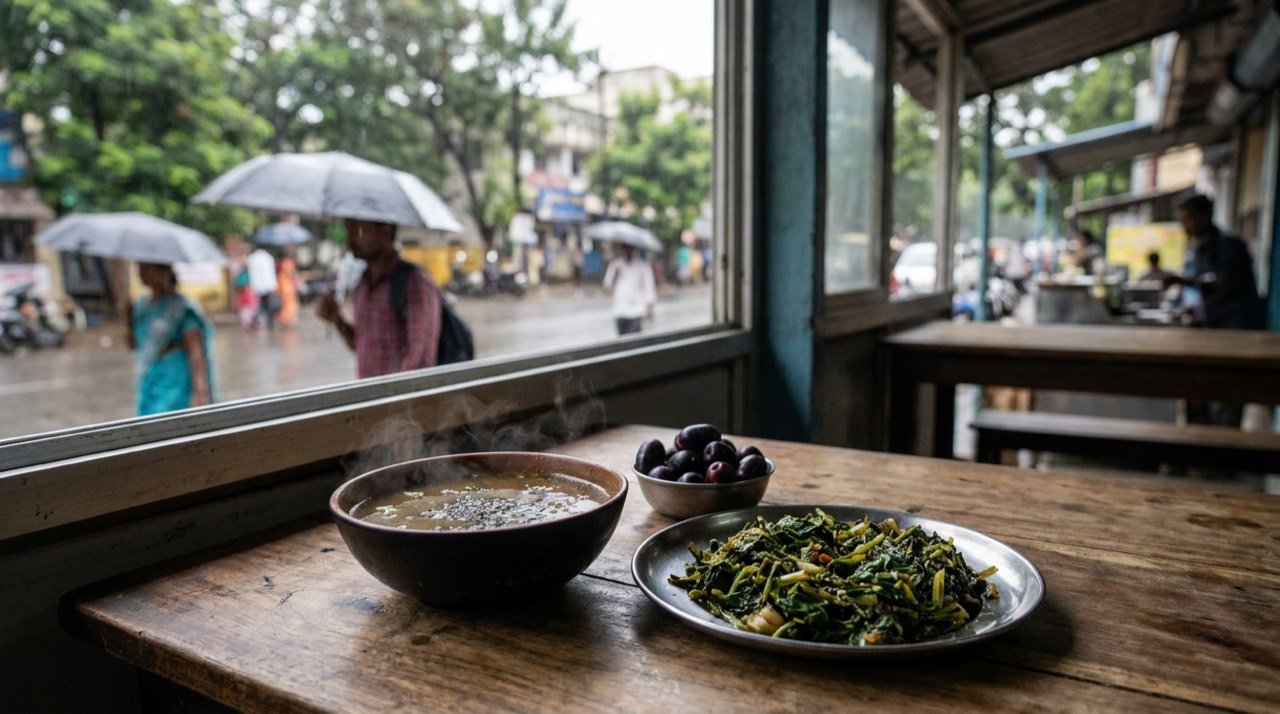
India's Monsoon Plate Returns to Its Roots as Seasonal Eating Goes Mainstream in 2026
From Kerala's ten-leaf stir-fries to jamun, rasam and warming spices, India's monsoon kitchens are blending ancestral ritucharya wisdom with the 2026 obsession with gut health and immunity.
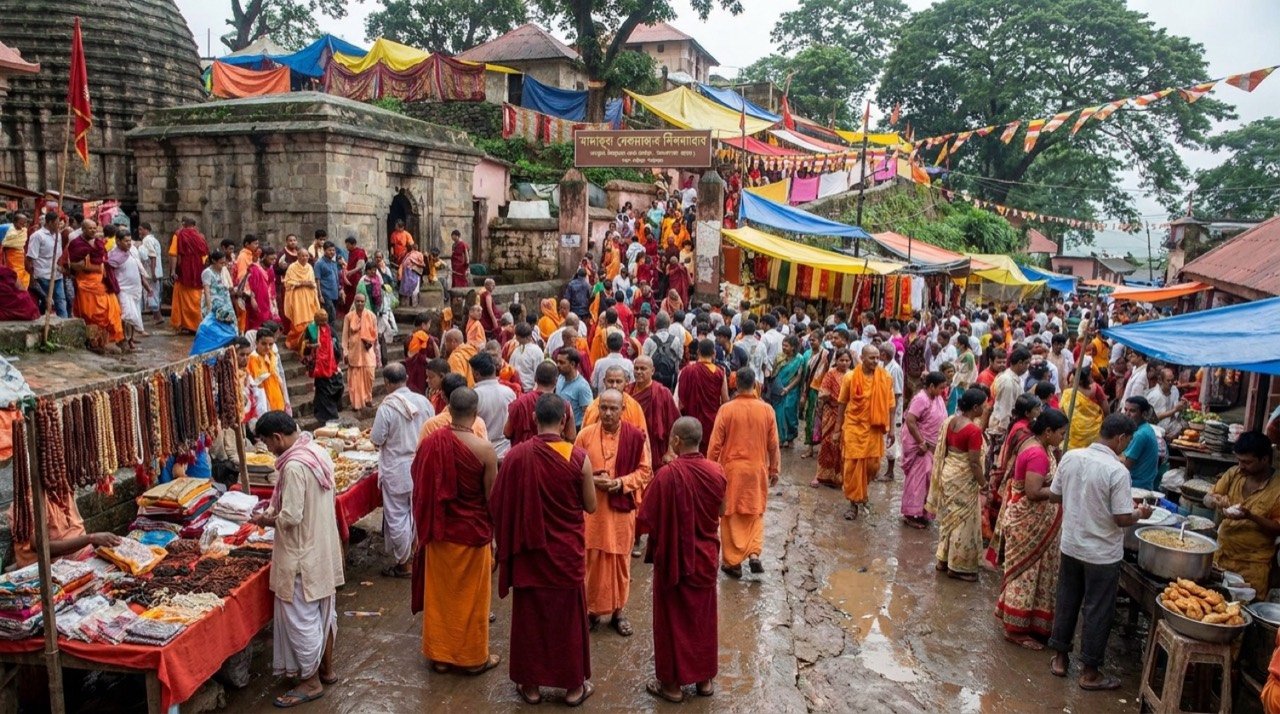
Ambubachi Mela Opens at Kamakhya Temple, Drawing Pilgrims and Livelihoods
The annual Ambubachi Mela at Guwahati's Kamakhya Temple has begun, drawing lakhs of pilgrims, sadhus and traders to one of India's most revered Shakti Peethas on Nilachal Hill.
Misty Valleys and Cheaper Fares: India's Offbeat Monsoon Travel Boom in 2026
With domestic fares falling sharply and travellers seeking solitude, offbeat Himalayan hamlets, the rain-soaked Northeast and Ladakh's rain-shadow deserts are redrawing India's monsoon travel map in 2026.
More from this section
MoreIndia's Monsoon Plate Returns to Its Roots as Seasonal Eating Goes Mainstream in 2026
From Kerala's ten-leaf stir-fries to jamun, rasam and warming spices, India's monsoon kitchens are blending ancestral ritucharya wisdom with the 2026 obsession with gut health and immunity.
Misty Valleys and Cheaper Fares: India's Offbeat Monsoon Travel Boom in 2026
With domestic fares falling sharply and travellers seeking solitude, offbeat Himalayan hamlets, the rain-soaked Northeast and Ladakh's rain-shadow deserts are redrawing India's monsoon travel map in 2026.
Young India Walks Away From the Savings Account as SIP Inflows Hit Record Highs in 2026
Monthly SIP inflows have surged past record levels and active accounts near 10 crore, as a generation of young Indians treats savings accounts as liquidity tools and turns to market-linked wealth creation.