India Tech Layoffs 2026: Second Worst Hit as AI Reshapes Hiring
A new report places India second globally for tech job losses in 2026, with over 50,000 cuts worldwide and AI-driven restructuring forcing workers and companies to rethink roles, skills and career paths.
Commentary & Analysis ·

India has emerged as the second worst-hit country in the global wave of technology layoffs in 2026, according to figures highlighted in NDTV's technology coverage. With more than 50,000 job losses recorded worldwide this year, the data ties India's outsized exposure directly to the accelerating adoption of artificial intelligence across the sector. For a country whose modern growth story has been inseparable from its technology and services industry, a ranking this high on the global layoff table is not a footnote. It is a signal that the foundations of that growth model are being tested in real time, and that the test is arriving faster than most institutions, corporate or governmental, appear prepared for.
Restructuring, not just cutting
The more accurate reading of the numbers is not that AI is simply destroying jobs, but that companies are reorganising work around automation, productivity targets and cost control. Some roles are shrinking, others are being redesigned, and entirely new skill demands are appearing. This distinction matters because it shapes how policymakers, companies and workers ought to respond. A pure destruction narrative would suggest the answer is protecting existing jobs at any cost. A restructuring narrative suggests something harder and more urgent: building the capacity to move workers from the roles being hollowed out into the roles being created, before the gap between the two becomes permanent. For employees, the shift feels abrupt because AI adoption is outpacing conventional reskilling pathways. Training cycles that once took years to design and deploy are being outrun by tools that can absorb entire categories of routine work within a single product cycle. That mismatch in speed, between how fast technology changes and how slowly institutions adapt, is arguably the central tension of this moment.
Where the risk is concentrated
Pressure is heaviest on support functions, repetitive coding work, software testing, customer operations and entry-level positions, the layers of the industry that automation reaches first. This is a familiar pattern in technological transitions: the tasks that are most codifiable, most repeatable and most measurable are also the tasks most easily handed to automated systems. India's technology sector has historically built much of its scale precisely on these categories of work, offering cost-effective, high-volume services to global clients. That same specialisation, which powered decades of growth, is now the area of greatest exposure. On the other side of the ledger, roles in AI engineering, cybersecurity and data are expected to keep growing, deepening the divide between workers whose skills are being automated and those whose skills automate. This bifurcation is likely to have consequences well beyond individual careers. It risks widening income and opportunity gaps within the very workforce that the technology sector was supposed to lift collectively, and it raises the uncomfortable possibility of a two-tier industry, one tier building and directing AI systems, the other displaced by them.
Why entry-level workers face the sharpest edge
Among the most exposed groups are those at the start of their careers, precisely the cohort that India's technology sector has long absorbed in enormous numbers each year through campus hiring and structured training programmes. Entry-level and junior roles have traditionally served as the on-ramp through which fresh graduates gained industry experience before moving into more specialised work. If automation compresses or eliminates that on-ramp, the effects will not be confined to this year's layoff numbers. They will ripple forward into the career trajectories of an entire generation of graduates who may find fewer starting points from which to build expertise, and into the training pipelines of universities and coaching institutes that have geared their curricula toward the industry's traditional entry requirements.
The next signals to watch
The next signals worth watching are company-wise layoff disclosures and hiring trends in AI-adjacent roles, which will show whether the churn is a one-time correction or a durable reshaping of India's technology workforce. If layoffs concentrate in a handful of firms undergoing one-off restructuring, that would suggest a correction, painful but bounded. If, instead, layoffs persist across the sector while AI-adjacent hiring fails to absorb displaced workers at a comparable scale, that would confirm a structural shift requiring a far more deliberate policy and corporate response. Observers should also watch whether reskilling commitments announced by companies translate into measurable placement outcomes, rather than remaining as public relations gestures accompanying layoff announcements.
The NE Times View
India's ranking near the top of the layoff table should be read as a policy alarm, not just an industry statistic. The country's services-led growth model was built on the very roles now most exposed to automation, and vague corporate promises of reskilling are no substitute for funded, credible transition pathways. Companies that benefited from India's talent arbitrage owe their workforces responsible planning, and government skilling missions must pivot toward AI-era competencies with real urgency. The opportunity is genuine, India could staff the world's AI build-out, but only if the transition is managed rather than merely endured by workers. Managing that transition will require honesty from all sides: companies acknowledging the scale of disruption rather than framing it purely as efficiency gains, government skilling programmes moving with a speed that matches the pace of the technology itself, and educational institutions redesigning curricula well ahead of the point at which today's graduates enter a workforce that no longer resembles the one their courses were built for. Absent that coordinated urgency, India risks converting a moment of technological opportunity into a prolonged period of labour market strain.
Key takeaways
- India ranks second worst-hit globally in 2026 technology layoffs, amid more than 50,000 job losses worldwide tied to AI adoption.
- The disruption is better understood as restructuring around automation and productivity than as blanket job destruction.
- Support functions, repetitive coding, software testing, customer operations and entry-level roles face the heaviest exposure, while AI engineering, cybersecurity and data roles keep growing.
- Watch company-wise layoff disclosures and AI-adjacent hiring trends to determine whether this is a one-time correction or a durable workforce reshaping.
- The NE Times View: this is a policy alarm requiring funded, credible reskilling pathways from both companies and government, not vague promises.
You may also like to read

Infosys Says AI Will Amplify Its Services, Not Replace the Company
Infosys leadership says artificial intelligence will not displace the IT major but will demand new skills, learning and operating models, reframing India's services sector around reskilling and proven productivity.

India Tech Funding Climbs to $7.2 Billion in H1 2026 Even as Deal Count Slumps
Indian tech startups raised $7.2 billion in the first half of 2026, up 12 per cent year-on-year, but the number of funding rounds fell sharply as capital concentrated in a handful of mega-deals.
India Backs Homegrown Space Tech With First Technology Adoption Fund Grants
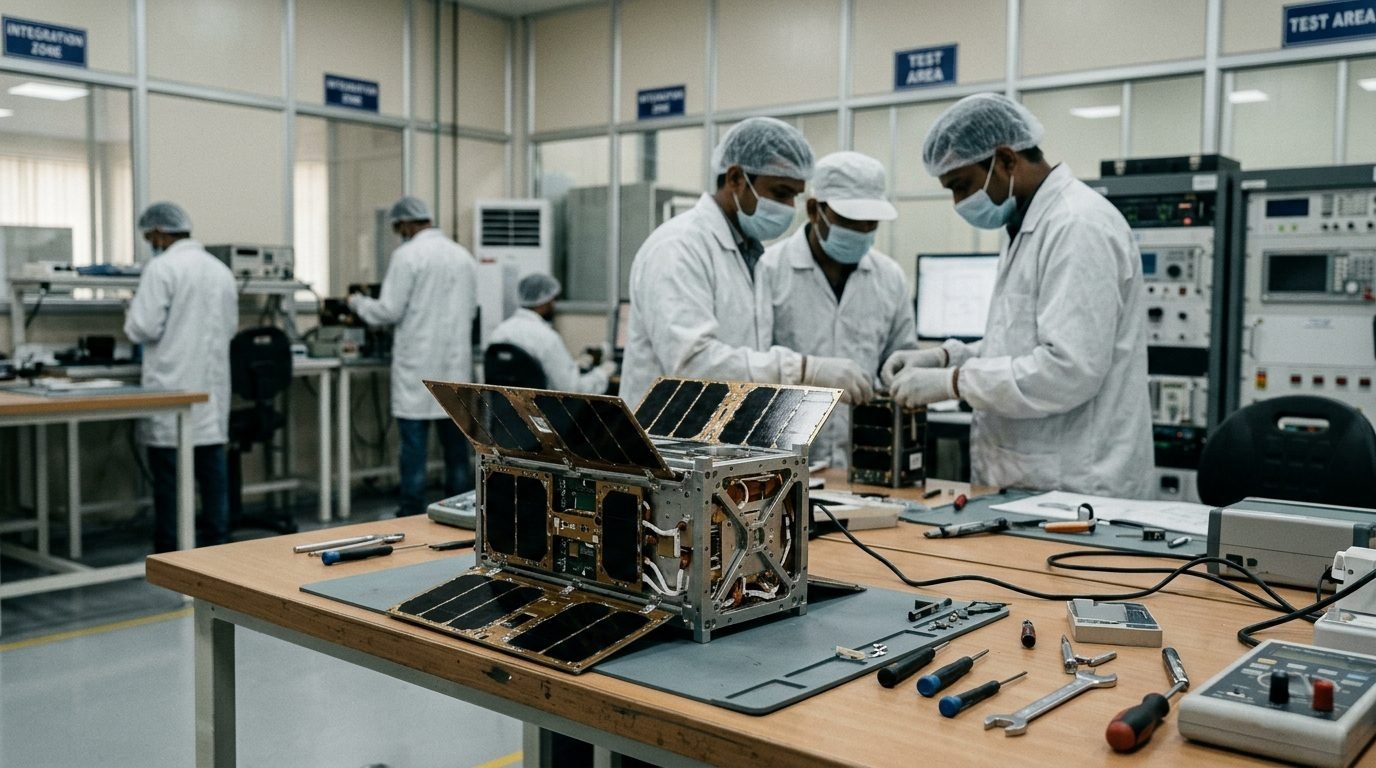
Space regulator IN-SPACe has picked TakeMe2Space, SatSure and Astrobase for its maiden funding round, spotlighting an AI-powered star tracker built in Hyderabad.

India IT Hiring Rebounds: Tech Job Openings Rise 14% in July
Active technology job openings in India rose 14 per cent month on month in July, per Xpheno data reported by Business Standard, signalling an early hiring revival after three months of softer demand in the IT services sector.
More from this section
More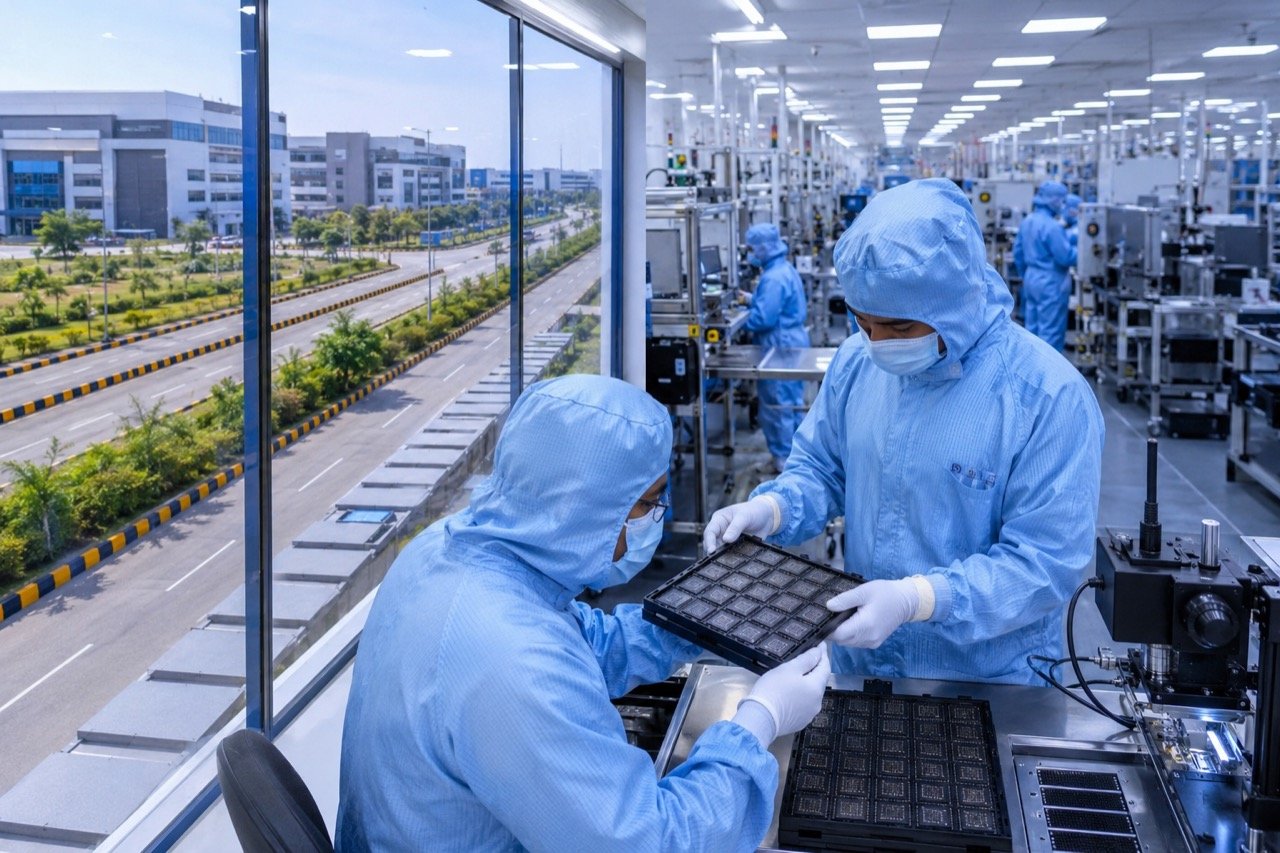
CG Semi Sanand Plant Opens, Boosting India's Semiconductor Drive
Prime Minister Narendra Modi inaugurated CG Semi's chip assembly and test facility in Sanand, Gujarat, giving India's semiconductor mission a working manufacturing milestone rather than another policy promise.

Chinese E-Rickshaw Apps Banned in India Over Remote Disable Risk
The Centre has ordered the removal of three Chinese apps — BAT-BMS, Lossigy and Epoch-i-ion — over fears they could remotely disable battery-run e-rickshaws, turning mobility software into a public safety concern.

Connected Car Rules: India Plans Vehicle Software Update Norms
With cars increasingly run by software, the government is reportedly preparing update and security norms aimed at preventing vehicle hijacking and governing how connected cars in India are patched and protected.